In a powerful gesture of interfaith unity and a call for regional calm, Pope Leo XIV journeyed to Lebanon on Monday, December 1, 2025, to offer prayers for peace at a sacred site revered by both Christians and Muslims.
A Historic Pilgrimage for Unity
The pontiff's destination was the Catholic basilica in the mountain town of Harissa, a major pilgrimage site overlooking the Mediterranean Sea. His specific focus was the tomb of a saint whose legacy bridges the divide between the region's two major faiths. This deliberate choice highlighted a message of shared spirituality and common hope amidst ongoing tensions.
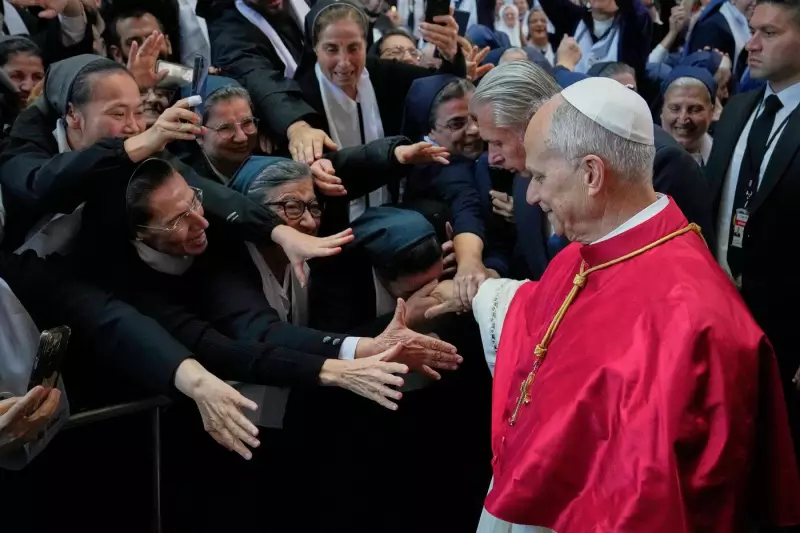
Upon his arrival, Pope Leo XIV was greeted warmly by a group of nuns, who reached out to him as he entered the holy grounds. The visual, captured by Associated Press photographer Hussein Malla, symbolized the connection between the spiritual leader and the local faithful.

The Significance of the Shared Sacred Site
The act of praying at this particular tomb carries profound symbolic weight in Lebanon, a nation with a complex history of sectarian division. By honoring a figure respected across religious lines, the Pope's visit aimed to reinforce the common ground between communities. His prayers explicitly invoked peace, a poignant appeal in a country and a wider Middle Eastern region that has faced significant instability and conflict.
The visit was not merely a religious ceremony but a diplomatic and humanitarian statement. It placed a global spotlight on Lebanon's unique position as a mosaic of faiths and its ongoing struggles.
A Message Beyond Borders
While the event was centered in Lebanon, its resonance is global. The Pope's pilgrimage serves as a reminder of the potential for interfaith dialogue to foster reconciliation. In a world often marked by religious strife, such public acts of veneration at a shared site challenge narratives of division.
The journey of Pope Leo XIV to Harissa stands as a landmark moment in his papacy, emphasizing a commitment to peacebuilding through spiritual kinship. It underscores the idea that sacred spaces and figures can sometimes unite people in ways that political discourse cannot, offering a beacon of hope for peaceful coexistence.