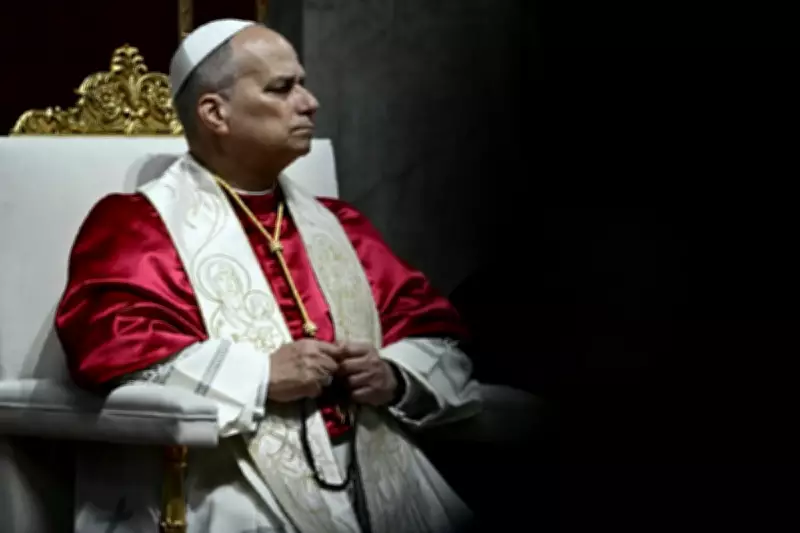
In a powerful and impassioned address that resonated across the globe, Pope Leo issued a fervent call for peace on Saturday, urging billions worldwide to reject warfare and embrace love, moderation, and constructive politics. The American pontiff delivered his message during a prayer vigil for peace at St. Peter's Basilica, marking one of his most direct condemnations of ongoing global conflicts to date.
A Plea to End Violence and Embrace Dialogue
Pope Leo, known for his measured and soft-spoken demeanor, departed from his usual tone to deliver a fiery speech that lashed out against warmongers. "Enough of the idolatry of self and money! Enough of the display of power! Enough of war!" he declared, his voice echoing through the historic basilica. The 70-year-old leader of the world's 1.4 billion Catholics emphasized that true strength lies in serving life, not in perpetuating violence.
The pontiff specifically addressed world leaders, imploring them to shift their focus from rearmament to reconciliation. "To them we cry out: Stop! It is time for peace! Sit at the table of dialogue and mediation, not at the table where rearmament is planned and deadly actions are decided!" he urged, though he refrained from naming specific politicians or countries, maintaining his customary diplomatic approach.

Building a Kingdom of Peace in Everyday Life
Central to Pope Leo's message was his vision of establishing a "Kingdom of peace" that begins at the most fundamental levels of society. He called on ordinary citizens to cultivate this peace "in our homes, schools, neighbourhoods, and civil and religious communities." This kingdom, he explained, should counter polemics and resignation through friendship and a culture of encounter, fostering environments where dignity, understanding, and forgiveness prevail.
"Let us believe once again in love, moderation and good politics," the pope encouraged, painting a stark contrast between his vision of peace and the current state of global affairs. He described a world where "there never seem to be enough graves, for people continue to crucify one another and eliminate life, with no regard to justice and mercy."
Faith as a Foundation for Facing Historical Challenges
Pope Leo emphasized that faith is essential for navigating what he called "this dramatic hour in history." He described the Kingdom of God as a "bulwark against that delusion of omnipotence that surrounds us and is becoming increasingly unpredictable and aggressive." In this kingdom, he envisioned a place with "no sword, no drone, no vengeance, no trivialisation of evil, no unjust profit," but rather a commitment to human dignity and reconciliation.
The pontiff's address comes amid escalating tensions in multiple global hotspots, including the Middle East. Just one day before this speech, he had condemned the "senseless and inhuman violence" spreading across the Holy Land, demonstrating his increasing focus on conflict resolution. Pope Leo, who was elected last May following the death of his predecessor Francis, has consistently advocated for de-escalation in international disputes, particularly urging diplomatic solutions to the US-Israeli tensions with Iran.
A Moderate Voice Growing More Vocal
While Pope Leo is widely regarded as a moderate bridge-builder within the Catholic Church, his recent addresses have shown a growing willingness to directly confront global conflicts. His Saturday speech represented some of his most pointed criticism yet of the wave of violence inflaming international relations. The Chicago native's measured tones belied the urgency of his message, creating a powerful juxtaposition between his delivery and the gravity of his words.
By calling on both world leaders and ordinary citizens to reject violence and embrace peace, Pope Leo positioned faith as both a personal refuge and a collective responsibility. His vision of peace extending from individual homes to international diplomacy reflects a comprehensive approach to conflict resolution that acknowledges the interconnectedness of personal, community, and global harmony.