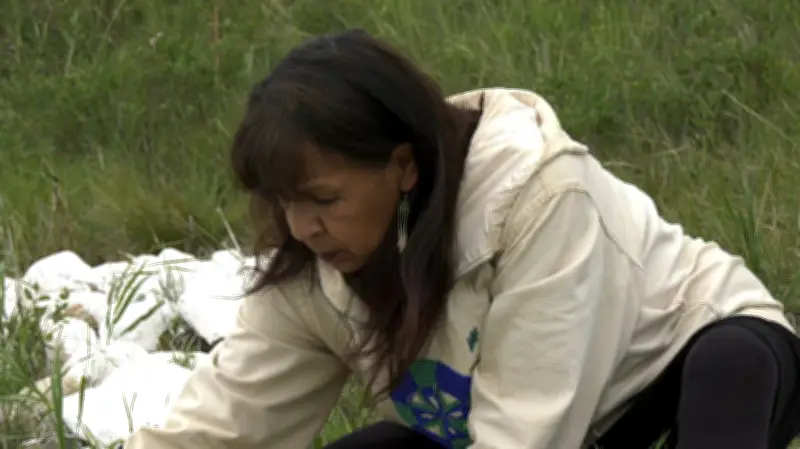
A striking new white rock buffalo art formation near Regina Beach has been unveiled, serving as a powerful tribute to Indigenous history and community. The installation was featured this week on Indigenous Circle, a segment hosted by Mick Favel.
A symbol of resilience and heritage
The buffalo, a culturally significant animal for many Indigenous peoples, represents strength, resilience, and sustenance. The white color of the rocks adds a spiritual dimension, often associated with purity and sacredness in Indigenous traditions. The art piece is designed to be a lasting landmark that educates and inspires visitors about the rich Indigenous heritage of the region.
Local community members and Indigenous leaders participated in the unveiling ceremony, which included prayers, songs, and speeches highlighting the importance of preserving and sharing Indigenous stories. The rock formation is intended to be a place of reflection and learning for all who visit.

Community involvement and vision
The project was a collaborative effort involving local artists, Indigenous knowledge keepers, and volunteers. According to Favel, the vision was to create something that would stand the test of time and serve as a reminder of the deep connections Indigenous peoples have with the land. The location near Regina Beach was chosen for its visibility and accessibility, allowing both residents and tourists to engage with the artwork.
Funding for the project came from community fundraising and grants aimed at promoting Indigenous culture and reconciliation. The organizers hope that the white rock buffalo will become a destination point that encourages dialogue about Indigenous history and contemporary issues.
Impact on tourism and education
The installation is expected to boost local tourism, drawing visitors interested in Indigenous art and culture. Interpretive signage is planned to provide context about the significance of the buffalo and the stories behind the creation. Local schools have already expressed interest in incorporating visits to the site into their curriculum.
Indigenous elders have praised the initiative, noting that public art like this helps to correct historical erasures and fosters a greater understanding among non-Indigenous Canadians. The white rock buffalo now joins other Indigenous landmarks in Saskatchewan that aim to celebrate and preserve Indigenous heritage.