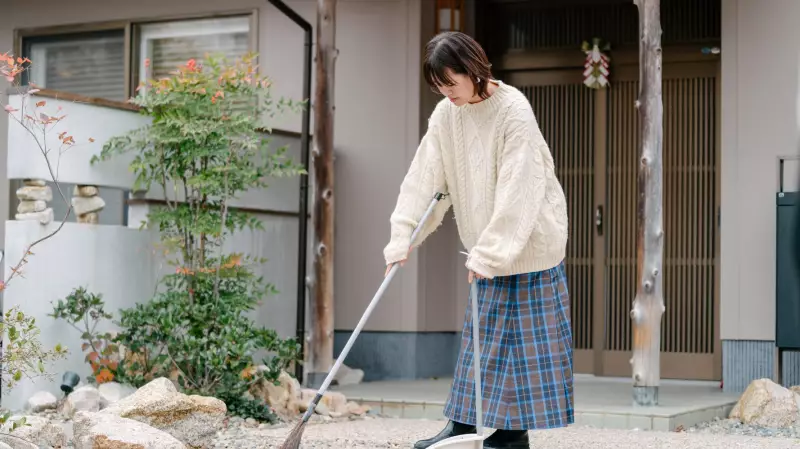
As the calendar year draws to a close, a familiar blend of holiday chaos and ritual unfolds. Between shopping, travel, and parties, many feel a pull to organize, declutter, and reset their homes for a fresh start in January. In Japan, this impulse is channeled through a centuries-old practice known as ōsōji.
What is Ōsōji? The "Great Cleaning"
Ōsōji (大掃除) translates literally to "Great Cleaning," explains Yumi Nagasawa of the Japan Society. It is a significant annual event conducted before the New Year. Think of it as a deep seasonal clean, but one that happens in December rather than spring.
For many, it's a secular tradition to tidy up for holiday gatherings. For others, it carries spiritual weight. Famed organizing consultant Marie Kondo explores ōsōji in her book "Letter From Japan." She notes that while similar in spirit to spring cleaning, ōsōji's timing at year's end makes it a chance to reflect on the past twelve months and prepare for the arrival of Toshigami-sama, the New Year's deity believed to bring happiness and good fortune.

A Ritual with Royal Roots
The tradition's origins are ancient. Most experts trace ōsōji back to the Heian period (794–1185), with some roots possibly in the Asuka period (592–710). It began as a ritual purification at the Imperial Court called susuharai, or "sweeping away the soot," says lecturer Kaitlyn Ugoretz.
In medieval Japan, soot from lamps and hearths accumulated heavily. Purifying the Imperial Palace was seen as a way to protect the entire realm from evil forces. Servants would spend weeks cleaning the palace with bamboo brooms and rags, later celebrating with mochi and sake.
Over centuries, the practice spread from nobles and temples to ordinary households. By the Edo Period (1603–1868), the government even set an official cleaning day for Edo castle on December 13 of the lunar calendar, a day considered lucky for all tasks except weddings, Nagasawa adds.
Ōsōji in Modern Japan and Beyond
Today, the custom remains a key part of year-end preparations. Temples and shrines perform major cleanings around December 13, while families undertake thorough home cleans. The ritual fosters community in schools, where students daily clean their classrooms, notes Simon Wright of Japan House London.
However, practice is evolving. A 2024 survey by Duskin found only 51.1% of households conducted ōsōji, down from 71.7% in 2008. Lack of time was a major reason. Innovation is also present, like Tokyo's Kanda Shrine blessing a fleet of Roomba vacuums to assist with cleaning in 2023.
Experts caution against exoticizing ōsōji as a uniquely Japanese trait. Ugoretz emphasizes that the desire for a fresh start through cleaning is universal, with parallels in Western spring cleaning. Japanese people, she notes, are as diverse in their tidiness as anyone else.
For those inspired, Marie Kondo suggests trying a personal version. "Even if you choose just one small area," she says, cleaning it with gratitude can become an act of appreciation and reflection, helping you begin the new year with a renewed feeling.