Artist's Search for 1984 Mural Reveals Hidden Montreal Skating History
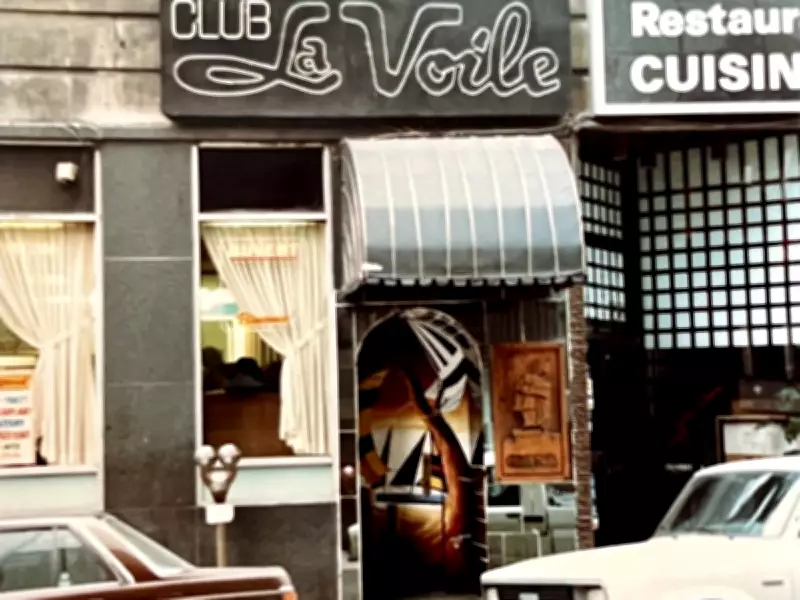
Cynthia Yacowar recently returned to 2022 Stanley Street with a simple goal: to discover whether the mural she painted in 1984 at the entrance of Club La Voile had survived the decades. What she uncovered instead was a much larger story about Montreal's tendency to bury its cultural heritage, sometimes literally beneath new developments.
The Hidden Arena Beneath Downtown Montreal
While investigating the fate of her artwork, Yacowar noticed two unmarked industrial metal barricade doors nearby. Following an inexplicable pull, she contacted the building's current owners and gained access to what lay behind them. Inside, she discovered a vast, hollowed-out space—a forgotten arena hidden in plain sight within Montreal's downtown core.
"It felt like stumbling into a forgotten cathedral or an archaeological dig," Yacowar described. "An entire world excavated and stripped back to its bones."

Research revealed this was the former Montreal Winter Club, built in 1912 and designed by the city's famed Maxwell brothers. Between 1920 and 1941, the venue hosted national and international figure skating championships, including a world title victory by Norwegian legend Sonja Henie.
From Prestigious Venue to Naval Drill Hall
The building's golden age ended in 1943 when the federal government occupied it for the Canadian Naval Reserve unit HMCS Donnacona, which converted the Winter Club into a drill hall. Despite its remarkable history, the building lost its federal heritage status when the Naval Reserve left in 2007 and has since sat largely unused, awaiting redevelopment while its past slipped further from public memory.
What struck Yacowar most was how completely invisible the arena remains from the street. Thousands of people pass by daily on Stanley Street, unaware of the century of history concealed behind the building's walls.
Nightclub Connections and Organized Crime Secrets
The discovery held personal significance for Yacowar, who worked as the club artist at La Voile during Montreal's wild 1980s nightlife era. She recalled how the downtown nightclub district—stretching from Stanley westward toward Crescent and Bishop Streets—was defined by neon signs, mirrored facades, and club music vibrating through walls.
One night during that period, two men connected to organized biker groups showed her a hidden panel at the back of the smoky club. What appeared to be solid wall pivoted open to reveal an impossibly vast, echoing darkness.
"We crossed through that darkness and emerged inside September's—a large, well-known club on Drummond Street, one block west—without ever stepping outside," Yacowar recalled. "That passage was the club's hidden route to slip away during police raids."
Only now does she understand that the void she entered that night was the gutted interior of the grand skating hall itself—the same space she rediscovered decades later in broad daylight.
Montreal's Pattern of Cultural Erasure
Yacowar, a lifelong Montrealer, has watched beloved pieces of the city's cultural and architectural fabric disappear or be fundamentally altered. Places like Le Spectrum, the Seville Theatre, and the Empress Theatre (later Cinema V) once pulsed with life but are now gone, abandoned, or hollowed beyond recognition.
"My childhood dream of becoming an archaeologist was never about ancient civilizations alone," she explained. "It was about understanding how places accumulate meaning—and how easily that meaning can be erased."
Heritage at a Crossroads
The city has begun re-examining the site's historical significance as redevelopment is being considered. This raises difficult questions: Will any part of this space be preserved, documented, or integrated into future development? Or will it be buried once again, its history erased by a project that sees only a downtown lot rather than a century of culture?
"Montreal's past is not an inconvenience," Yacowar emphasized. "It is a resource, a living archive that gives the city its richness, its oddities, its sense of continuity and soul."

As a surrealist artist drawn to what exists beyond the visible, discovering the buried arena felt like stepping inside the very kind of space that has always inspired her work. While she didn't find her old mural, she discovered something more important: a reminder that Montreal is full of unacknowledged stories, hidden structures, and cultural layers waiting to be recognized before they disappear forever.