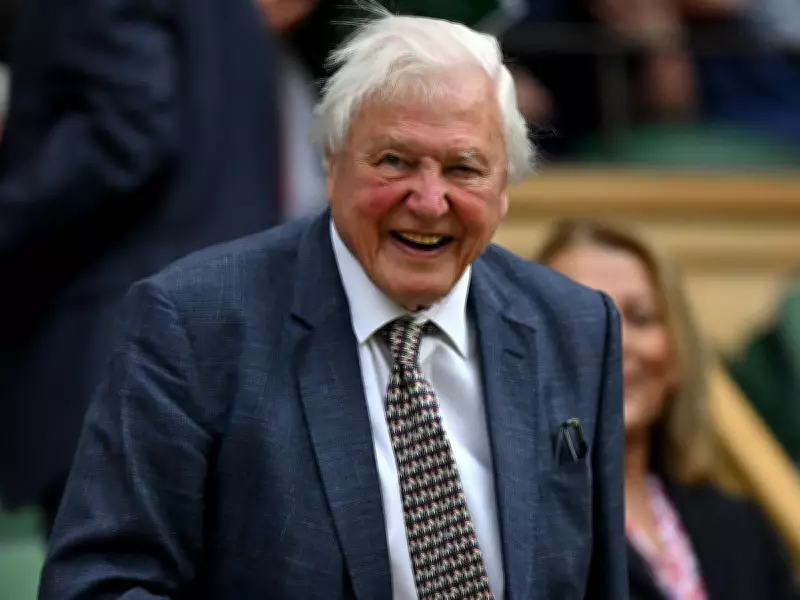
Two weeks ago, Britain marked the centennial of the birth of Her Late Majesty Queen Elizabeth II. This Friday, May 8, marks the centennial of one of the few Britons to rival her global recognition: Sir David Attenborough.
A Life Celebrated
Sir David is very much alive and active. The BBC is celebrating its most celebrated personality, the world’s storyteller of nature, with a flowering of commemorations. Still working, he is now telling the stories of his greatest stories. So prolific has he been that a century of life seems too short to have accomplished all he has.
Fifty Years of Life on Earth
It was 50 years ago that production began for Life on Earth, the series that introduced the viewing public to the man who would introduce them to the splendours of the natural world. The landmark Blue Planet series exploring the oceans was released 25 years ago, when Sir David was a mere youth at 75. Twenty years ago, at 80, he released Planet Earth, telling the stories of mountains, rainforests, and grasslands as if the whole planet were one magnificent menagerie of which he was the convivial host.

The Voice of Nature
It is not the pictures alone that make Sir David such a marvellous companion; it is the voice. Many might not recognize his face at first glance. When his brother, the actor and director Lord Richard Attenborough, was cast as the elderly scientific entrepreneur in Jurassic Park, many mistakenly assumed it was David. But the voice makes him instantly recognizable as an old friend, a welcome companion for a ramble in the countryside.
There are actors hired to provide the “voice of God” when thought necessary; Sir David’s voice is not that. His capacity to whisper at full volume is singular, and his whisperings make it seem that rushing waterfalls and crawling tortoises are speaking directly to you. He is not the voice of God, but the voice of God’s creation.
A New Documentary for the Centennial
For his hundredth birthday, Sir David has narrated a new documentary about his own work, telling the story of his cavorting with Rwandan gorillas in the late 1970s, thanks to the pioneering work of Dian Fossey. That encounter made him famous, as the gorillas were friendly enough to loll about in the grass with Sir David and his camera crew.
April’s Artemis II mission reminded us of the power of photographs from space. The first “earthrise” shot in 1968 changed the way Earth was seen and understood. That was the wide shot; Sir David’s programs provided the close-ups — leaves budding in time-lapse, insects scurrying, orcas devouring a walrus, rains making the desert bloom. Both astronauts and the BBC employed technological breakthroughs to help us see what had never been seen before. The astronauts went to space; BBC cameramen took the latest equipment under the seas and into the jungles, feats of photography as sublime as any painter could imagine.
Naturalists like Sir David delight in showing that trees, whales, and gorillas have their own language. Sir David is their great translator, the human voice of nature.