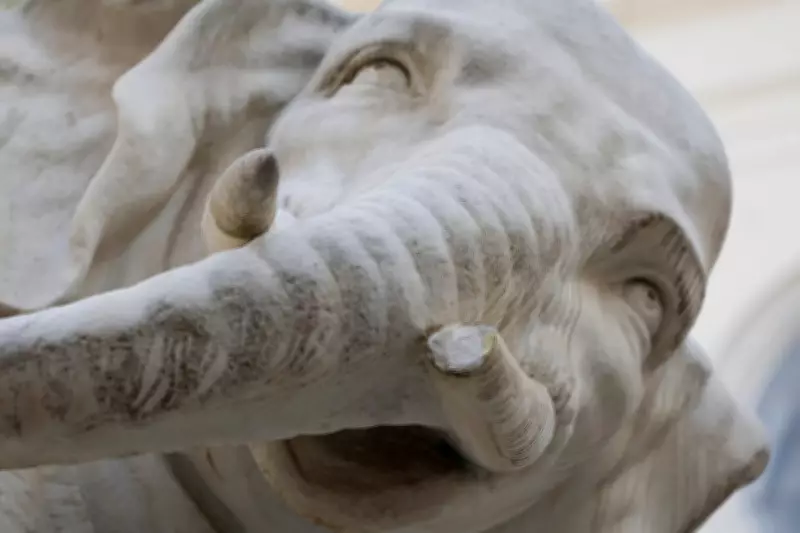
Rome's Iconic Bernini Elephant Statue Damaged Again as Tusk Tip Goes Missing
In a disheartening repeat incident, the beloved Elephant and Obelisk monument in Rome, a masterpiece by the renowned Baroque sculptor Gian Lorenzo Bernini, has once again suffered damage. Police authorities confirmed on Wednesday, February 18, 2026, that the tip of the statue's left tusk is missing, marking the second such occurrence for this cultural treasure.
Police Discovery and Investigation Details
Law enforcement officials made a critical discovery over the weekend when they found an 11-centimeter (approximately 4-inch) marble fragment in close proximity to the statue. This fragment is believed to be the missing piece from the elephant's tusk, sparking an immediate investigation into how the damage occurred. The police are examining surveillance footage and interviewing potential witnesses to determine whether this was an act of vandalism, accidental damage, or natural wear and tear.
The monument, located in Piazza della Minerva near the Pantheon, has long been a symbol of Rome's rich artistic heritage. Created in the 17th century, it features an elephant carrying an ancient Egyptian obelisk, showcasing Bernini's skill in blending sculpture with architectural elements. This is not the first time the statue has faced such issues; previous damage to the tusks has required restoration efforts, highlighting the ongoing challenges in preserving outdoor historical artworks.

Historical Significance and Preservation Concerns
Gian Lorenzo Bernini, a pivotal figure in the Baroque period, designed this sculpture in 1667, and it has since become an integral part of Rome's urban landscape. The elephant, often affectionately called "Bernini's elephant" by locals and tourists alike, represents wisdom and strength, with the obelisk symbolizing divine knowledge. Its repeated damage raises significant concerns about the vulnerability of public art in high-traffic areas.
Conservation experts emphasize that marble sculptures, especially those exposed to environmental factors and human interaction, are prone to deterioration. The recent incident underscores the need for enhanced protective measures, such as improved barriers or monitoring systems, to safeguard such irreplaceable works. Authorities are considering temporary closures or increased security patrols around the monument to prevent future occurrences.
Community Reaction and Broader Implications
The news has sparked widespread concern among Romans and art enthusiasts globally, with many expressing sadness over the damage to this iconic piece. Social media platforms have seen an outpouring of support for restoration efforts, with calls for greater public awareness about preserving cultural heritage. This event also mirrors broader issues faced by historical sites worldwide, where balancing public access with conservation needs remains a persistent challenge.
As the police investigation continues, officials are urging anyone with information to come forward. The focus is not only on repairing the damage but also on implementing long-term strategies to protect Bernini's legacy. This incident serves as a poignant reminder of the fragility of our shared cultural treasures and the collective responsibility to preserve them for future generations.