As UFOs and unidentified aerial phenomena (UAP) move from fringe conspiracy theories to mainstream discussion, a new question emerges: what does the existence of alien life mean for religion? The jury is still out, but theologians, clergy, and believers are grappling with profound implications.
Faith in the Age of Disclosure
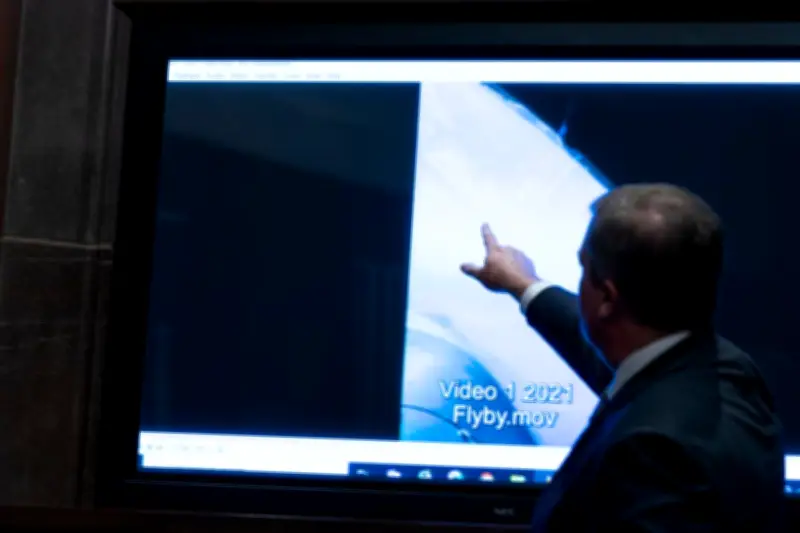
Recent government hearings, declassified military footage, and increased media coverage have brought UAPs into the public spotlight. For many religious communities, this raises existential questions. Could extraterrestrial beings fit into creation stories? Would they have souls? Are they part of God's plan?
"The possibility of alien life doesn't necessarily undermine faith," says Dr. Sarah Jenkins, a professor of comparative religion at Harvard University. "Many traditions already account for otherworldly beings, such as angels or demons. The challenge is integrating new scientific discoveries into ancient texts."

Different Faiths, Different Perspectives
- Christianity: Some denominations view aliens as fellow creations, while others see them as a test of faith. Pope Francis has stated he would baptize an alien if asked.
- Islam: The Quran mentions multiple heavens and beings, leaving room for extraterrestrial life. Islamic scholars debate whether aliens would be subject to Islamic law.
- Judaism: Jewish teachings emphasize the uniqueness of humanity, but some rabbis argue that God's creation is vast and unknown.
- Buddhism: With its concept of countless worlds and rebirth, Buddhism may be the most accommodating to alien life.
Challenges for Organized Religion
Religious institutions face practical challenges. If alien life is discovered, how do they incorporate it into rituals, doctrines, and moral teachings? Some fear that proof of intelligent extraterrestrials could undermine the central role of humanity in the cosmos.
"Religion has always adapted to new knowledge," says Reverend Mark Thompson of the Interfaith Alliance. "The discovery of alien life would be another Copernican shift, but faith is resilient."
Public Opinion Divided
A recent Pew Research Center survey found that 45% of Americans believe that the discovery of alien life would challenge their religious beliefs, while 40% say it would not. Among those who attend religious services regularly, the number is higher.
Meanwhile, UFO enthusiasts and secular groups argue that religion may become obsolete if aliens are proven to exist. But many scholars disagree, noting that religion addresses questions of meaning and morality that science cannot answer.
As humanity stands on the brink of potential contact, the dialogue between science and faith continues. Whether aliens are microbes or intelligent beings, their discovery will undoubtedly reshape our understanding of ourselves and our place in the universe.