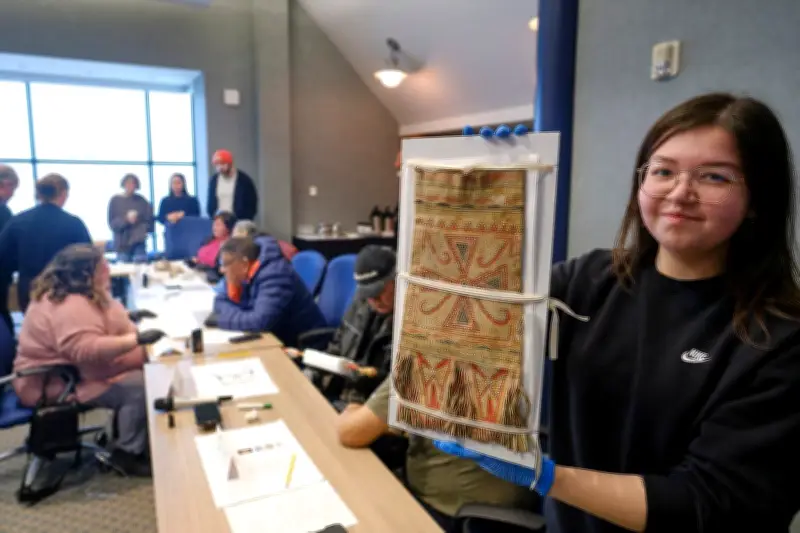
Archeologists are accusing the Newfoundland and Labrador government of employing 'colonial logic' in a dispute with the Innu Nation over the return of Indigenous artifacts. The controversy centers on thousands of items excavated from Innu ancestral lands that are currently held at The Rooms provincial art gallery in St. John's.
Artifacts at the Heart of the Dispute
The artifacts, including stone tools and ceremonial objects, were removed from Innu territory in Labrador during archaeological digs conducted between the 1960s and 1990s. The Innu Nation has long sought their repatriation, arguing that the items are central to their cultural identity and spiritual practices. However, the provincial government has resisted, claiming that the artifacts are part of the province's shared heritage and should remain in public institutions.
According to a statement from the Archeology Association of Newfoundland and Labrador, the government's position reflects 'a colonial mindset that prioritizes state ownership over Indigenous sovereignty.' The association further noted that similar disputes have been resolved in other provinces by returning artifacts to Indigenous communities.

Government Response and Innu Reaction
In response, the provincial Department of Tourism, Culture, Arts and Recreation argued that the artifacts are 'irreplaceable pieces of Newfoundland and Labrador's history' and that their removal would hinder research and public education. The department also cited logistical challenges in transferring custody.
Innu Nation Grand Chief Simon Pokue criticized the government's stance, stating, 'These are not just objects; they are our ancestors' belongings. Holding them against our will is a continuation of the colonial policies that sought to erase our existence.' He added that the Innu are prepared to take legal action if necessary.
Broader Implications for Indigenous Rights
The dispute has drawn attention from national Indigenous organizations and legal experts, who see it as a test case for Canada's commitment to reconciliation. The United Nations Declaration on the Rights of Indigenous Peoples (UNDRIP), which Canada has adopted, affirms the right of Indigenous peoples to repatriate their cultural heritage. However, implementation varies across provinces.
Dr. Sarah Thompson, an archeologist at Memorial University, noted that 'the government's argument about shared heritage ignores the fact that these artifacts were taken without consent. True reconciliation requires returning them to the communities they belong to.'
Next Steps
The Innu Nation has called for a third-party mediation process to resolve the impasse. Meanwhile, the Archeology Association has urged the provincial government to reconsider its position, warning that the dispute could damage relationships with Indigenous communities and hinder future research collaborations.
The Rooms has declined to comment, referring inquiries to the government. The issue is expected to be raised in the provincial legislature in the coming weeks.