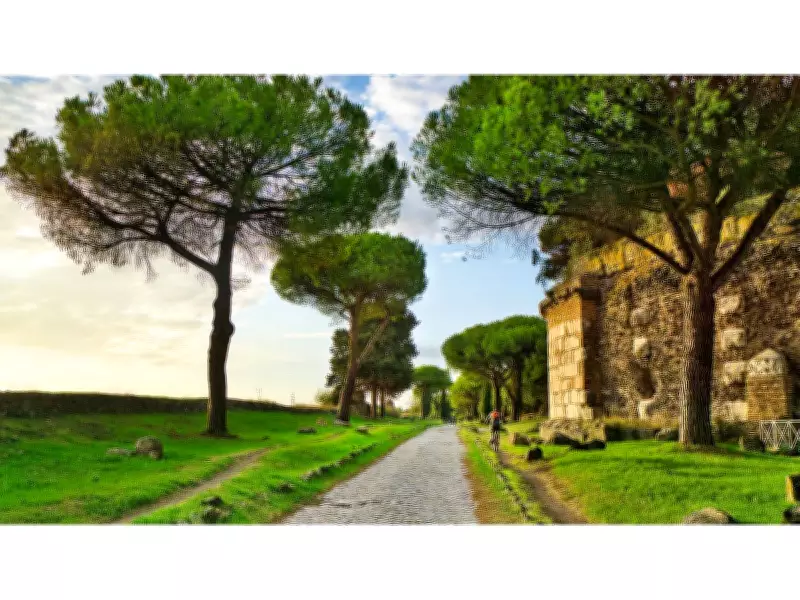
The initiative known as "Antichi Cammini d'Italia" is taking shape as an integrated project designed to enhance five major historic and religious pilgrimage routes that traverse Italy and converge in the Lazio region and Rome. These routes include the Via Francigena, the Way of Saint Francis, the Way of Saint Benedict, the Romea Strata, and the Via Romea Germanica. The primary objective is to position Italy as a leading global destination for walking tourism while highlighting a widespread heritage that has not yet been fully incorporated into mainstream tourism flows.
Five Routes, One Destination: Lazio and Rome
Three of these five routes have been certified as Cultural Routes of the Council of Europe: the Via Francigena since 1994, the Via Romea Germanica since 2020, and the Romea Strata since June 17, 2025. The Way of Saint Francis and the Way of Saint Benedict lead to locations central to Franciscan and Benedictine spirituality, such as the Holy Valley of Rieti, Subiaco, and Montecassino. All five routes share a common point of convergence in Lazio, which serves as the experiential heart of the project, spanning from the Tuscia of Viterbo to the Holy Valley of Rieti, the Aniene Valley, and the Eternal City.
Slow Tourism, Sustainability, and More Balanced Flows
Antichi Cammini d'Italia responds to a significant shift in travel preferences, characterized by a growing demand for slow, authentic, and sustainable experiences. The itineraries promoted by the project offer alternatives to traditional tourist destinations, helping to alleviate pressure on overcrowded circuits and extend visitor flows across a broader calendar and into lesser-known areas. This tourism offering appeals to a diverse audience, including pilgrims, walkers, cultural travelers, outdoor and wellness enthusiasts, families, and individuals seeking a more direct connection with local territories and their communities.

Technological Innovation: Smart Signage
One of the project's most distinctive features is an integrated smart signage system deployed along the five itineraries. Sixty devices provide travelers with free Wi-Fi and Bluetooth Low Energy beacon technology linked to the Italia.it app. When visitors enter the range of a beacon, they receive a push notification inviting them to discover the stage they are on and the surrounding tourism offerings, including technical route information, geolocated maps, Point of Interest sheets, and multimedia content dedicated to historical, artistic, religious, and scenic sites. This model combines the physical experience of walking with the digital dimension, providing travelers with accessible tools for orientation and real-time interpretation.
Alongside this, an extensive mapping process of Points of Interest has resulted in the creation of more than 1,000 information sheets for churches, monuments, natural areas, squares, fountains, and other identity-defining places along the routes. Over 40% of the highlighted sites are outstanding assets that are still underrepresented in international tourism circuits, representing a heritage that the project helps bring to light, promoting a more authentic and sustainable way of experiencing the territory. Italia.it serves as the system's central digital hub, where all content is consolidated and made accessible to travelers.