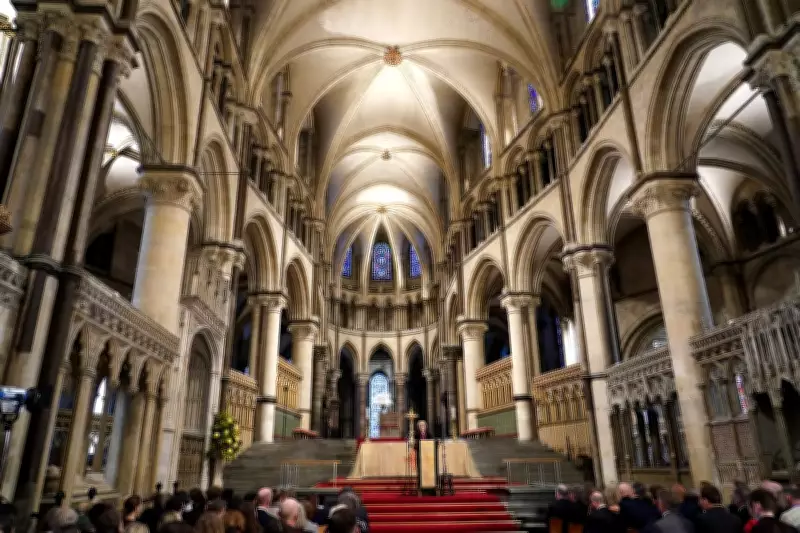
Conservative Anglicans Mount Direct Challenge to Archbishop of Canterbury with Rival Leadership Structure
A significant schism is unfolding within the global Anglican Communion as conservative factions have launched a direct challenge to the authority of the Archbishop of Canterbury, Sarah Mullally, by establishing a rival leadership framework. This move represents a dramatic escalation in long-standing theological disputes over issues such as sexuality, marriage, and biblical interpretation that have simmered for decades.
A Global Communion at a Crossroads
The Anglican Communion, a worldwide family of churches with an estimated 85 million adherents, finds itself at a critical juncture. The Archbishop of Canterbury, based at Canterbury Cathedral in England, has traditionally served as the spiritual leader and a focal point of unity for this diverse communion. However, conservative groups, particularly from regions like Africa and parts of North America, have grown increasingly vocal in their opposition to more progressive stances on social issues adopted by churches in Western nations, including the Church of England under Archbishop Mullally's leadership.
This new rival leadership initiative is not merely a protest but an organized attempt to create an alternative center of authority. It signals a potential formal split, with conservative Anglicans seeking to redirect allegiance and governance away from Canterbury. The challenge underscores deep-seated disagreements that have persisted despite numerous attempts at reconciliation and dialogue within the communion's structures.

The Implications for Unity and Doctrine
The establishment of a competing leadership body poses profound questions about the future cohesion of the Anglican Communion. For centuries, the role of the Archbishop of Canterbury has been symbolic of historical and spiritual continuity. This direct challenge threatens to fragment that unity, potentially leading to parallel Anglican communions with divergent doctrines and practices.
Archbishop Sarah Mullally, who assumed her role in late 2025, now faces one of the most formidable tests of her tenure. Her leadership is being contested not on administrative grounds but on core theological principles. The conservative coalition argues that the communion's traditional teachings are being compromised, necessitating a new structure to preserve orthodox Anglican identity.
Key points of contention include:
- Diverging views on the blessing of same-sex unions and LGBTQ+ inclusion within clergy.
- Interpretations of scripture and authority in a modern context.
- The balance between provincial autonomy and global communion-wide discipline.
This development is likely to have ripple effects across the 85 million-strong global community, affecting dioceses, parishes, and international Anglican partnerships. It also raises practical concerns about shared resources, missionary work, and ecumenical relations with other Christian denominations.
A Historical Precedent and Future Trajectory
While tensions are not new, the move to institute a formal rival leadership marks a significant intensification. Previous disputes have led to the formation of breakaway groups like the Global Anglican Future Conference (GAFCON), but this latest action represents a more direct and structural challenge to the Canterbury-based hierarchy.
The coming months will be crucial in determining whether this leads to a permanent realignment within global Anglicanism. Dialogue efforts may be strained as both sides dig in on their positions. The outcome will not only shape the future of the Anglican Communion but also serve as a case study in how major religious institutions navigate profound doctrinal and cultural shifts in the 21st century.