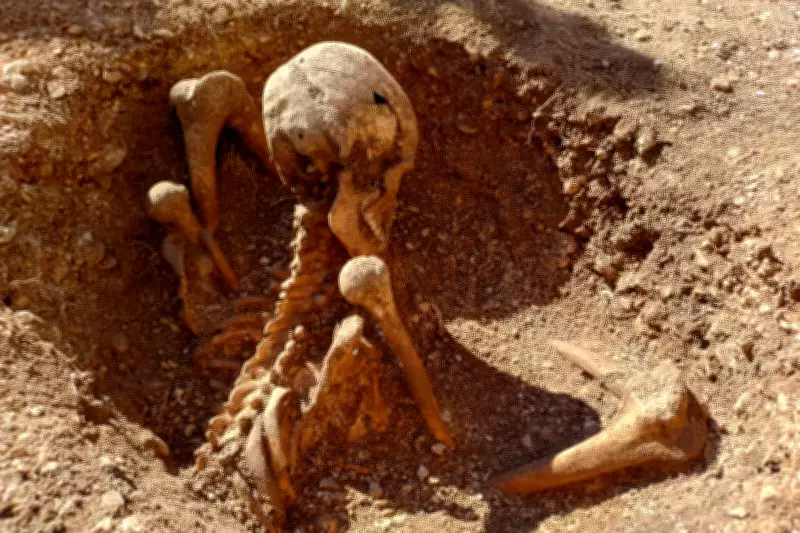
Mysterious Ancient Skeletons Discovered in Upright Seated Position in France
Archaeologists conducting a dig in central Dijon, France, have made a remarkable discovery: ancient Gallic burial sites containing skeletons positioned in an unusual upright seated posture. The find, which occurred on March 17, 2026, has captured the attention of the scientific community and sparked widespread intrigue about the funerary practices of ancient civilizations in the region.
Unearthing a Historical Enigma
The excavation site, meticulously documented by archaeologists, revealed multiple burial plots where the skeletal remains were arranged in a seated position rather than the more common supine or flexed postures typically associated with ancient interments. This upright configuration is particularly rare and suggests a deliberate, culturally significant burial ritual employed by the Gallic people who once inhabited the area.
Initial analyses indicate that the skeletons date back to the Gallic period, a time spanning from roughly the 5th century BC to the Roman conquest. The precise dating and further anthropological studies are ongoing, but the posture alone presents a fascinating puzzle for researchers seeking to understand the beliefs and customs of these ancient communities.

Significance and Ongoing Research
The discovery challenges conventional understandings of Gallic burial practices. While cremation and inhumation in flat graves are well-documented, seated burials are an anomaly that could point to:
- Specific social or spiritual status of the individuals interred.
- Unique regional variations in funerary rites not previously recorded.
- Ritualistic practices intended to honor the dead in a manner that prepared them for an afterlife or maintained a connection to the living community.
Archaeologists on site, including those working with agencies like AFP, have emphasized the need for careful, methodical study. The skeletons and associated artifacts will undergo detailed laboratory examination, including isotopic analysis to determine diet and origin, DNA testing to explore genetic links, and thorough osteological review to assess age, sex, and potential causes of death.
Broader Implications for Archaeology
This find in Dijon adds a significant chapter to the archaeological record of pre-Roman France. It underscores the diversity of ancient European cultures and reminds us that historical narratives are continually refined by new evidence. The upright seated skeletons serve as a poignant reminder of the complexity of human history and the enduring mysteries that lie buried beneath our feet.
As research progresses, the archaeological team hopes to publish comprehensive findings that will shed light on this enigmatic practice. The site itself is being preserved, with plans for potential future public engagement to share this unique window into the Gallic past with a wider audience.