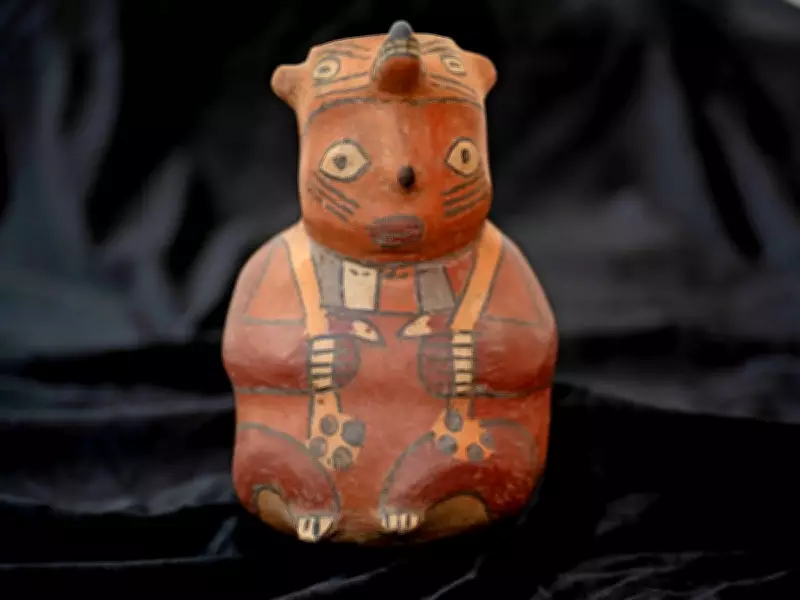
Ancient Andean Cosmovision Exhibition Opens at MOA with 2,500-Year-Old Artifacts
VANCOUVER – A groundbreaking exhibition at the Museum of Anthropology (MOA) at the University of British Columbia is set to transport visitors into the spiritual universe of ancient Andean cultures. Tupananchiskama: Ancient Andean Cosmovision opens on March 19, 2026, and will run through January 3, 2027, featuring nearly 100 artifacts that reveal how these civilizations perceived humanity's relationship with the cosmos.
Exploring Spiritual Connections Through Ancient Objects
The exhibition centers on how ancient Andean societies understood the universe, with artifacts that include wind instruments, ceramics, and an animated projection of a Milky Way painting. These items, some dating back more than 2,500 years, come from a collection donated by the late American art historian and UBC professor Alan R. Sawyer, who specialized in pre-Columbian Andean art.
Peruvian anthropology professor Luis Manuel González, who curated the exhibition, explained his approach: "I selected pieces that reflect the cosmovision—objects that illustrate how people comprehended the world, the deceased, time, and space—while highlighting the diversity of cultures like the Moche of northern Peru and the Nazca of the southern coast."

Symbols and Sacred Forces in Andean Beliefs
Key symbols in the exhibition include the chakana, a representation of the Southern Cross constellation, and step designs found across various Andean patterns. González emphasized the personal significance of the project, noting his mixed Indigenous, European, and African heritage: "This was a personal journey to reconnect with these cultures, share our story, and invite others to do the same."
Among the artifacts, González expressed particular admiration for the wind instruments, such as trumpets, whistle vessels, pan pipes, and ocarinas. "In the Andean cosmovision, wind is not merely air; it is a sacred force that bridges the physical and spiritual realms," he said. "It carries prayers, messages from mountain spirits known as apus, and the energy of ancestors. I hope visitors pause at the wind cabinet, close their eyes, and feel transported, gaining a new appreciation for sound's power to connect us to our forebears."
Contemporary Art Meets Ancient Astronomy
The exhibition also features a painting of the Milky Way by contemporary Peruvian artist Miguel Araoz Cartagena, which reflects Inca astronomical beliefs. The Inca recognized not only star-based constellations but also "dark constellations" formed by the shadowed areas of the Milky Way, showcasing their sophisticated dual system of celestial observation.
González's curation process began with a survey of over 1,000 items in the Sawyer collection, leading to a presentation that convinced MOA staff of the exhibition's potential to delve into the philosophical core of Andean cultures. "We realized this exhibit could explore the very heart of Andean philosophies," he remarked.
Exhibition Details and Accessibility
Tupananchiskama: Ancient Andean Cosmovision will be on display at the Museum of Anthropology at UBC from March 19, 2026, to January 3, 2027. Admission is free on opening night, March 19, from 6 p.m. to 9 p.m. For more information, visit moa.ubc.ca.
The exhibition promises to offer a profound insight into ancient spiritual practices, inviting attendees to experience the enduring legacy of Andean cosmovision through artifacts that have withstood millennia.