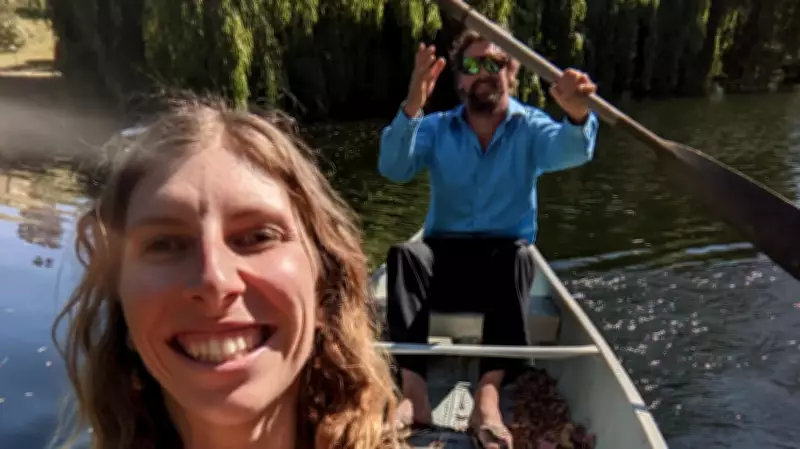
Alison Kaplan met Doug on a 20-day rafting trip through the Grand Canyon, where she was the sole passenger in his boat. Doug, a former raft guide and waterman, was soft-spoken and ruggedly handsome. Kaplan, a rafting novice who thought rain gear could substitute for a dry suit, had joined the trip on a whim.
The first day was awkward. Both introverts, they struggled with small talk. Doug asked about her work, school, and upbringing; she repeated the questions back. They discussed hobbies—climbing for her, surfing for him—and how they ended up on the trip. But conversation never flowed, and they often fell into silence. Occasionally, Doug explained rafting intricacies: spotting eddies, choosing lines, or ferry angles. Mostly, they watched the canyon walls float by.
Over the next days, the grandeur of the Grand Canyon gave them plenty to observe, but the long silences made Kaplan nervous. She felt her social skills were lacking, especially when entire days passed without an interesting topic. Doug’s reticence didn't help. She imagined others would crack his shell or find better things to discuss than Pringles flavors.

Looking at other rafts, everyone seemed engaged in lively conversation. Kaplan wondered if Doug wished for a more exciting companion. When others visited their raft, they commented on its peacefulness, but Kaplan wondered if they meant boring. One visitor asked, “This is what you guys do all day?” They nodded.
Each evening, the five rafts convened on shore. Kaplan felt relieved to rejoin the group. She was better at joining conversations than carrying them. In groups, she cracked jokes and showed her competitive side. One evening, an acquaintance said, “I never realized how funny you are!” Kaplan felt validated but frustrated, sensing two personalities: goofy in groups, shy one-on-one.
Kaplan noticed Doug was equally quiet with others. He seemed content and self-assured, but she wondered if he felt insecure about his quietness. She could have switched boats but returned to Doug’s daily. He was one of the best boaters, and she trusted him not to flip the raft. Partly self-preservation, but also a challenge: could she build a real friendship with this silent man?
As they descended deeper, quiet hours became more comfortable. They developed a rhythm and a code of nonverbal communication. Doug would pour tea, then refill and pass the cup without a word. When Kaplan reapplied sunscreen, she’d offer it; he nodded for zinc, shook his head for spray. Sometimes he’d offer the oars, but she had no idea what she was doing, so he directed her with concise commands, jumping in to avoid rocks.
Occasionally, one would break the silence to scream “Sheep!” pointing out bighorn sheep on canyon walls. The most words Doug spoke came during a flat stretch when he played ukulele and serenaded her with an album-length concert, ending with “I Don’t Want To Live on the Moon” by Ernie from Sesame Street, complete with a mouth trumpet solo. Kaplan felt she was finally getting to know him.
After almost two weeks of eight-hour days alone in a boat, Kaplan sensed more than a quiet friendship. She developed a crush on the stoic captain but told herself it was just part of the experience—every novice rafter develops a crush on their guide. Yet, as they grew more comfortable, they didn’t grow more talkative. There was no sudden shift; she got to know Doug through experience rather than words.
By the trip’s end, Kaplan was smitten but hadn’t told him, afraid of breaking the spell. When they finally kissed days later, they acted on nonverbal cues. Doug grinned and said, “We should keep hanging out.” They spent weeks together, doing activities: biking, hiking, tennis, cooking, playing cards, reading aloud. Kaplan wondered if the spark would fade when they ran out of things to talk about, but it’s been over four years and hasn’t happened.
Kaplan reflects that if they’d met at a party or on a two-day trip, they would have written each other off. On a dating app, she’d have called it awkward. But 200 hours of silence on a raft built a bond that grew into the healthiest relationship she’s known. She suggests we may put too much importance on initial sparks and easy conversation. Neither turned out to be who they thought they met that first day, and she’s glad they had time to realize it.

A few weeks ago, Doug insisted Kaplan accompany him to find the perfect medium-sized pot—stainless steel, rounded sides, long metal handle, strainer lid. As she prattled on about a big idea, Doug smiled and said, “You know, sometimes you really talk a lot.”