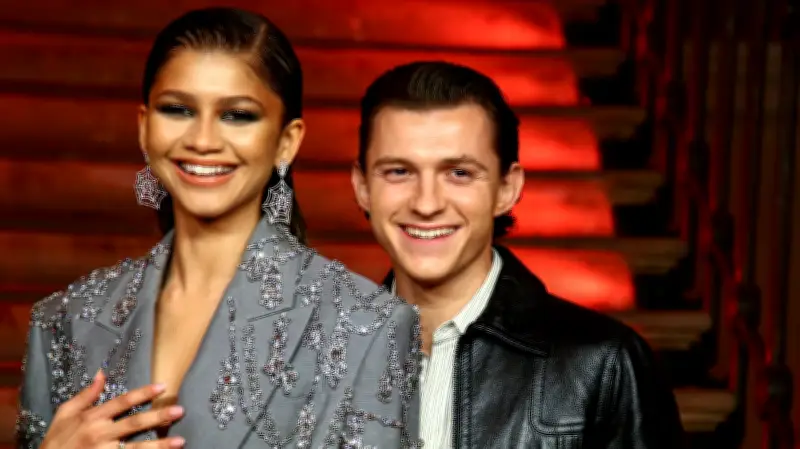
Since Zendaya and Tom Holland are reportedly married and on a global press tour for their upcoming film, 'Spider-Man: Brand New Day,' the lore around their relationship is flowing. Many media outlets are revisiting the moment Zendaya witnessed Holland's now-iconic performance of Rihanna's 'Umbrella' on 'Lip Sync Battle' in 2017.
The Moment She Fell for Him
A source close to the 'Euphoria' star claims that, according to Zendaya herself, this was the moment she fell for him. While it may seem like a cheesy detail, it's worthy of examination from a queer lens. That performance, in which Holland wore a fabulous bob while Zendaya watched nearby, has become a ubiquitous meme that oozes non-toxic masculinity.
'It's not just sexy, but it shows how amazingly talented he is,' a source told The Daily Mail. 'It takes a lot of confidence for a straight guy to pull off drag.'

The Queer Appeal of Gender Fluidity
Queer people know all too well how sexy it is to play with gender fluidity by expressing yourself outside the binary. Having the confidence to shatter the norm assigned to your gender identity and embrace another version of yourself is hot. If this is truly the moment that got Zendaya hooked, it also gets at something deeper about why drag continues to resonate far beyond queer communities.
At its best, drag exposes the absurdity of gender roles by treating them as performance. Drag queens parody femininity, highlighting the extent to which gender roles are things we're all forced into. By breaking down the barriers of who we're told we're 'supposed' to be, we can get to a more authentic core of who we are.
Relevance in Today's Hyper-Masculine Era
This feels particularly relevant now. We live in an era dominated by influencers who market hyper-masculinity to millions of young men across TikTok, Instagram, and YouTube. Entire industries have emerged around 'looksmaxxing,' not showing or communicating emotions that make us look vulnerable, and harmful ideas about what a man should be. Content creators such as Clavicular, a popular influencer whose entire brand showcases extreme forms of physical and social masculinity, perpetuate this outdated and dismissive trope.
Ironically, Clavicular's masculinity is also a form of drag, but without the self-awareness. Drag queens understand that gender is a performance and often treat it with humor, while the manosphere treats gender as a rigid set of rules that would leave them worthless if questioned.
The Essence of Authenticity
When Zendaya fell for the drag queen version of Tom Holland, she innately felt something that queer people have felt forever: that when someone breaks free of what they are supposed to be, they reveal the essence of who they truly are. To show up unencumbered by oppressive expectations is objectively attractive. You don't have to have same-sex attraction or identify as trans to have a quintessentially queer approach to life. Clearly, straight men like the 'Spider-Man' star are doing it, and it's pretty great to see.
Perhaps that's why Holland's 'Lip Sync' performance remains so memorable. Beyond the choreography and spectacle, there was something undeniably attractive about watching someone who appeared completely unafraid of being who they were, beyond the performance of being a man. There's nothing sexier than that.