Candi Staton's Anthem Sparks a Movement
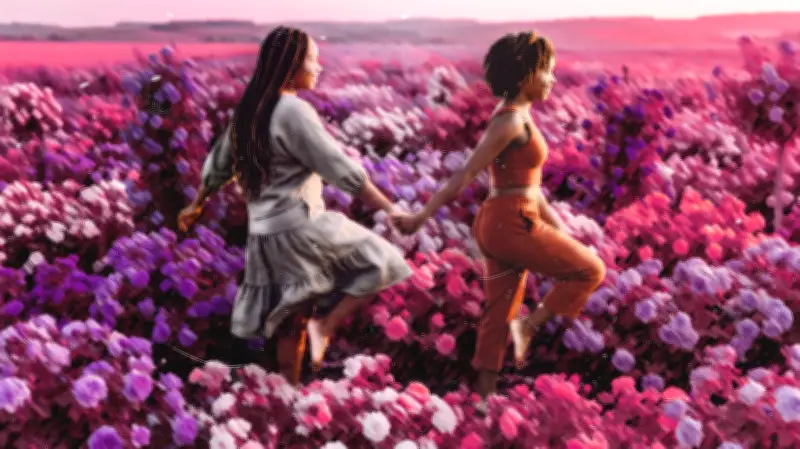
Candi Staton, the 'Queen of Southern Soul,' once said that her 1976 disco hit 'Young Hearts Run Free' had longevity because 'every generation can identify with it.' That seems true given its recent resurgence on social media. Since early this year, social media users have posted videos of themselves running blissfully in slow motion with the song playing in the background, captioned with a spin on the title: 'Young hos run free.' There are more than 1 million TikTok posts and more than 73,000 Instagram Reels using the song. The lyrics, such as 'What's the sense in sharing this one and only life / Ending up just another lost and lonely wife?' are contemplative and somber, but also uplifting, especially the words to the next generation: 'Encourage the babies every time they say / Self-preservation is what's really going on today.' Staton, now 86, told The Guardian in 2015, 'In my life, I had fallen into a well and the song is me trying to give advice to younger women: Don't have babies with him, because he'll be busy loving every other woman he can, but you'll be stuck. Know that there's a future behind every choice, and you're not always going to like it. The song is telling them to run free.'
The 'Young Ho' Trend: From Tweet to Phenomenon
'Young Hearts Run Free,' which turns 50 this year, is a key component of a larger trend that started with a tweet in November. User @Bean_____1 posted on X, formerly known as Twitter: 'Young hos cook everything on high.' The tweet was meant as a dig at young women who buck societal norms and take control of their lives. However, those six words transformed into an online exhibition of modern-day feminism and microfeminist acts, a marker of modern womanhood, and a moment of joy amid relentless attacks on human rights. Gen Z and millennials, particularly Black and queer people, have been using the 'young ho' trend to promote carefree, playful living and embrace the chaos of young adulthood. Currently, there are more than 424,000 posts on TikTok and 92,000 posts on Instagram with the #YoungHo hashtag.
The trend is not just a funny meme. It has spread innovative ideas, like using a cocktail shaker to clean rice, a wax stick to lay down eyebrow hairs, braiding gel to hang posters on a wall, or a cheese grater to steam food. At the same time, social media users use the trend to condemn and subvert patriarchal conditioning — by not prioritizing societal norms about marriage, family planning, and caregiving over self-worth and power — and honoring a commitment to do things their way. It is also a culmination of Black and queer ideas reshaping resistance movements into a new form.

Voices from the Trend: Embracing Imperfection
Helen Getu, a 24-year-old creative producer, said she first came across the trend on TikTok and decided to make her own video laying out various 'young ho' tendencies. In the video, Getu described young hos as people who never answer phone calls, take three to five days to text back, use Apple Pay instead of a physical card, leave a job quickly after experiencing disrespect or toxicity, and watch TV on their iPads. 'Most people who really relate to this are young, in school, maybe trying to figure their lives out, and sometimes it's frowned upon to not have your life together,' said Getu, an alumna of Howard University and Johns Hopkins University. She explained that it allows people to embrace imperfection and all the flaws and messiness that come with youth and young adulthood. 'We're gonna be whimsical, we're gonna be ourselves, we're gonna touch grass while everything else is pretty much getting destroyed around us,' Getu said, referencing the present state of the world. 'We're still trying to have that sense of sanity, and also that sense of freedom.'
Culture critic Taylor Crumpton, who created a buzz among the Beyhive and other internet users for her viral Time magazine story 'Beyoncé Has Always Been Country,' told HuffPost, 'There's power in whimsy.' She added, 'In the sense of resistance work, I think it's an easy way to identify or mark yourself as not being one of those girls who are just really obsessed with being subservient,' calling it a 'grave mistake' to underestimate the power of the trend.

Reclamation of the Word 'Ho'
This is not the first time a derogatory word against women has been reclaimed and shifted into something playful. Rapper Cardi B made a famous proclamation in 2014 that 'a hoe never gets cold.' The impact of that statement online has lasted for years, and in 2021, Cardi B's theory was even validated by a research study. Model Samirah Raheem had an iconic interview with right-wing pundit Jesse Lee Peterson at model Amber Rose's slut walk event in Los Angeles in 2017. Social media users applauded her for taking the misogynistic power out of the word 'slut.' 'It doesn't matter what a woman's sexual history is,' Raheem declared. 'A slut is just a word that you and a few fellow penises made. Your mama's a slut, your grandma's a slut. Everybody.' The same reclamation of language occurred with derogatory words for Black and LGBTQ+ people — such as the 'N-word' or 'queer.' Not everyone embraces the reclamation, and the same is true of the young ho trend. Some social media users have replaced 'ho' with 'queen' or comparable substitutions. Regardless, the young ho trend is just the latest example of young, Black and LGBTQ+ people's innovative approach to language reclamation and the creation of popular slang terms.
'I'm a millennial feminist, and so my understanding of ho is that it feels derogatory,' said Leah Barlow, an assistant professor of liberal studies at North Carolina Agricultural and Technical State University. 'However, what I do think the meaning and how things have shifted to me speaks to the beauty of feminism and Gen Z feminism, and its ability to take something that was meant to be derogatory and completely turn it on its head.'
Thee Lady Philosophy, who hosts 'The Things You Can't Touch' podcast and regularly adds to cultural and philosophical discourse online through her TikTok account, told HuffPost that the spelling of 'ho,' in which the 'e' is dropped, is the perfect indication that the trend is a product of African American Vernacular English. She also argued that someone choosing to embrace 'ho' and similar terms removes the dominion these words have over how someone operates in the world. 'These words are used to shame women into hiding, to shame them into disappearing. It's the whole notion of 'women should be seen and not heard,'' Lady Philosophy said. 'It's that 'I don't care' attitude that allows people to be liberated by words and concepts that are oppressing them in the first place.' Crumpton shared a similar sentiment: ''Young ho' is just another example of Black genius, of taking something and then making it so multi-layered. We're bringing all of these things in that you wouldn't have thought of from just 'young' and 'ho.'' She continued, 'Black women not only proclaim words or phrases that can be considered by some as polarizing or derogatory, we add this secret meaning on top of it, where it becomes a term of jest, but also a unifier.'
Who Can Be a Young Ho?
Barlow, who last year unintentionally sparked a crusade by Black educators and experts to share information in a class-style format on TikTok dubbed 'HillmanTok,' argued that the original post was 'steeped' in a particular narrative, more than likely about Black women. The trend itself is a byproduct of Black feminism, or womanism, born because feminism has historically excluded Black women and women of color. 'In reality, white women's and Black women's experiences in this country have been different, and therefore their understanding of feminism has been different. And this, to me, feels like an extension of that, and it's really amazing to see, especially in this political moment,' Barlow said. 'Black feminism has always rejected these ideas. Black women have always been in the workforce. Black women have always had to take on the extra labor, and Black women have done so, and then shifted the terms and conditions by which womanhood is expected to do or to be.'
Thee Lady Philosophy also said participation from non-Black people 'with decorum, with appreciation,' and in moderation is generally acceptable. 'I don't believe in exclusion, but I do believe in appropriation, and a lot of the time when Black women are speaking, the white voice comes and overshadows it,' she said. 'With this trend, I haven't seen that happen.' Lady Philosophy identified the trend as a political statement for 'all women to take part if we truly want to achieve liberation, and if we really want to achieve the dismantling of certain structures.'
The Young Ho Trend as Feminist Resistance and Counterculture
Today's young people, especially Gen Z, have a different relationship to gender roles, household upkeep, romance, commitment, love and sexuality than previous generations, according to several studies. Interest in marriage seems to be dwindling. The Pew Research Center found in 2025 that 74% of boys want marriage in the future vs. 61% of girls, a significant disparity compared to 1993 when 83% of girls were interested in marriage vs. 76% of boys. In 2024, Pew reported that 57% of young men ages 18 to 34 say they want children one day, compared to just 45% of young women. Moreover, the 2025 U.S. fertility rate was 23% lower than its peak in 2007 — about 700,000 fewer babies — the Centers for Disease Control and Prevention reported in April. Women generally have to be more concerned with risks associated with marriage, relationships and parenthood, including domestic violence, uxoricide, infidelity, and burnout from emotional and physical labor. Young women are out-earning their male peers in numerous U.S. cities and navigating a dating pool with incels, red-pill enthusiasts, and MAGA fanatics. The word 'embarrassing' comes to mind for many Gen Zers at the mere mention of having a boyfriend. There are also attacks on reproductive rights, the orgasm gap, and the disproportionate burden of sex on women.
In comes the young ho trend, a counterculture born in direct response to women's progress. Adrienne Bitar, a Cornell University lecturer whose research focuses on cultural and American studies, told HuffPost that the trend mirrors previous waves of feminism in which women rejected patriarchal conditioning and expectations. 'The idea that housework oppresses women by occupying the time that could be better spent doing whatever they please is well recognized in feminist literature,' Bitar said, referencing first-wave feminism (1848-1920). Many young ho videos feature innovative ideas about how to get things done faster, more efficiently or more creatively. Self-proclaimed young hos taking on the concept of cooking everything on high as a badge of honor embrace the sentiment that the kitchen is not where life starts and ends. The #YoungHo hashtag is filled with women pushing back on rigid patriarchal norms, showing dedication to balancing careers with an enjoyable life, and choosing to prioritize self-fulfillment over relationships, children and unnecessary labor.
Rejecting Modesty, Embracing Self
Barlow said artistic expression is vital in 'pushing back from these rigid standards of what young women should be,' especially in a moment when trad-wife culture is on the rise. A couple of songs have been attached to the trend: 'Bounce' by Saucy Santana (2025) and 'Brrrrrdadumdum' by Joe Moses (2023). With these songs playing, many social media users dance by shaking their chests to the beat. Some men online have bashed participation, arguing that people who call themselves 'a young ho' and do the dance move are 'degrading' themselves. Lady Philosophy said the dance move is political because it defies the undue expectation of modesty that men have historically placed on women. 'I believe that nothing is inherently sexual apart from the act of sexual intercourse in and of itself,' Lady Philosophy said. 'What institutions, what rules, what regulations are in place that are allowing you to feel comfortable sexualizing women so far that you dehumanize them to the point where you say they're not worthy of any respect because they're shaking natural body parts.'
Crumpton said the move had been passed down from femme Black gay men from the South. 'A lot of them, back in the day, and still to this day, engaged in sex work and were sex workers. So I think for me, it speaks to this intersection of sex work, Black, queer and trans folk, music [and] pop culture,' she added. Barlow expanded on the Black and LGBTQ+ aspects: 'I think we can expand our understanding of queer, too. It really is an example of embracing of self and embracing of individuality and the ability of women, in this case, but all people, to sort of name themselves even outside of sort of projected standards.'
The Absurdity Is What Is So Enticing
The memeification of this trend has given it staying power and made it an effective tool. 'It allows the concept of feminism and the feminist movement to descend into reality,' Lady Philosophy said. 'It makes me smile from ear to ear because it's so playful. I think there's something about the playfulness that makes it just palatable enough to go under the radar as a radical movement. The absurdity is what is so enticing.' The trend alone is not enough to break cycles or undo the harm the patriarchy has caused, but it is a necessary component of resistance and a catalyst for change. Moments of joy and laughter, like what we see in this trend, are what keep people moving forward and feeling recharged. Young hos refusing to get married or have kids, young hos prioritizing their peace and pleasure — all of these acts of micro-feminism and micro-resistance — add up over time. So, even if misogyny and patriarchy never let up, at least young hos are realizing the importance of running free one chest bounce at a time.