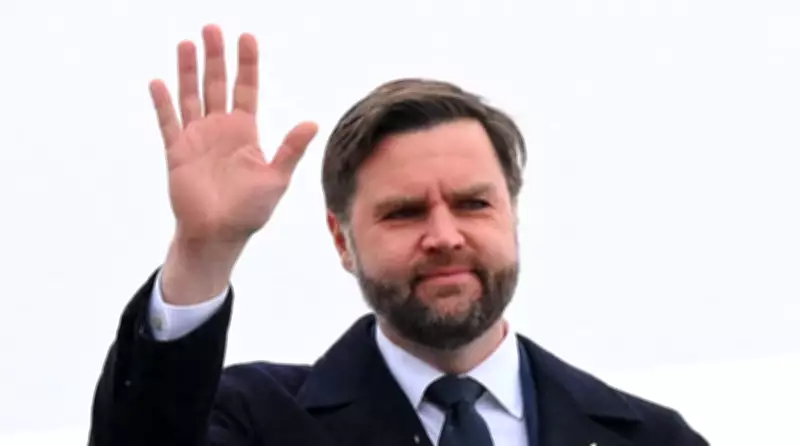
Vice President JD Vance Sparks Controversy with Comments on Olympic Athletes and Politics
Vice President JD Vance has ignited a significant controversy this week after clips circulated online showing him scolding American athletes competing at the Milan Cortina Winter Olympics. Vance told reporters that he believes U.S. Olympic participants who speak out about the political climate back home should concentrate on their athletic performance rather than "pop off about politics."
Vance's Remarks Draw Immediate Backlash
"Yes, you're going to have some Olympic athletes who pop off about politics, I feel like that happens every Olympics," Vance stated. "My advice to them would be to try to bring the country together, and when you're representing the country you're representing Democrats and Republicans. You're there to play a sport. And you're there to represent your country and hopefully win a medal. You're not there to pop off about politics."
The Vice President continued his remarks by suggesting that athletes should anticipate pushback when entering political discussions. "I think recognize that the way to bring the country together is not to show up in a foreign country and attack the president of the United States, but it's to play your sport and represent the country well."

Athletes Respond to Political Pressure
American athletes at the Games have been facing questions about the Trump administration's immigration policies, creating a complex situation for competitors. American freeskier Hunter Hess expressed having "mixed emotions" about representing Team USA amid current political circumstances.
"There's obviously a lot going on that I'm not the biggest fan of, and I think a lot of people aren't ... If it aligns with my moral values I feel like I'm representing it," Hess explained. "Just because I'm wearing the flag doesn't mean I represent everything that's going on in the U.S."
The skier added that his motivation comes from personal connections rather than political alignment: "I just kind of want to do it for my friends and my family and the people that support me getting here."
Conservative Criticism and Presidential Response
Like Vance, several other conservative figures have criticized American athletes for speaking out against U.S. Immigration and Customs Enforcement actions. President Donald Trump directly attacked Hess over his remarks, calling him a "real loser" on his Truth Social platform.
"U.S. Olympic Skier, Hunter Hess, a real Loser, says he doesn't represent his Country in the current Winter Olympics," the president wrote. "If that's the case, he shouldn't have tried out for the Team, and it's too bad he's on it. Very hard to root for someone like this. MAKE AMERICA GREAT AGAIN!"
Social Media Erupts with Criticism
People on social media platform X criticized Vance—who was booed at the Winter Olympics Opening Ceremony in Milan last week—by highlighting how athletes throughout history have used their platforms to address political issues and protest injustices.
One user noted: "The very essence of being American is having the freedom to speak your mind about your country and your government." Another commented: "It's people like JD Vance, who put these athletes in this incredibly stressful position where they have to be asked if they represent the cruelty coming out of..."
Several comparisons were drawn to historical figures who faced similar criticism for political activism. "Yeah, this is what they said to Muhammad Ali and Jesse Owens and Jackie Robinson," one user pointed out, while another observed: "Bring the country together he said, ironic from the most divisive administration in our life time."
Expert Perspective on Athlete Activism
Rick Burton, emeritus professor of sport management at Syracuse University's Falk College of Sport, emphasized that professional athletes calling attention to political issues represents a longstanding tradition rather than a new phenomenon.
"Sport history is filled with athletes who challenged the status quo," Burton told HuffPost. "Babe Ruth, Muhammad Ali, Billie Jean King, Colin Kaepernick, LeBron James, Megan Rapinoe and countless others have spoken up about issues they felt needed addressing."

Burton, who served as chief marketing officer of the U.S. Olympic Committee for the Beijing 2008 Summer Olympics, described Vance's remarks about U.S. Olympians as "unusual but not unprecedented." He noted: "Other politicians, such as President Richard Nixon, waded into the sports ecosystem, suggesting athletes should not share political opinions different from what the administration wanted projected."
The professor explained that while Americans have the right to "believe they have a right to free speech," high-profile athletes and entertainers "also recognize that unpopular free speech can generate backlash."
"Some want to generate the backlash to make a point. Others are surprised that their free speech bothered powerful entities," Burton stated, adding: "It will continue in an age when social media makes communicating with a large audience immediately possible."
As the Olympics continue through February 22nd, observers will be watching to see how many more athletes choose to speak their minds despite political pressure to remain silent about contentious issues.