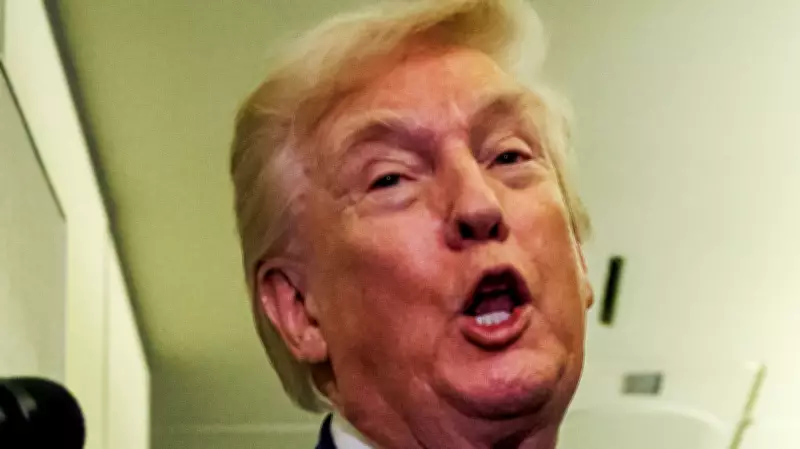
Trump's Fiery Critique of Bad Bunny's Super Bowl Halftime Performance
Former President Donald Trump ignited a social media firestorm on Sunday with a series of scathing posts targeting Bad Bunny's halftime performance at Super Bowl LX. Taking to his Truth Social platform, Trump expressed strong disapproval of the show, which was predominantly delivered in Spanish, mirroring the Puerto Rican superstar's award-winning musical style.
Language and Patriotism at the Center of Controversy
"Nobody understands a word this guy is saying," Trump complained in his initial post, highlighting his frustration with the linguistic aspect of the performance. He escalated his criticism by declaring the show "an affront to the Greatness of America" and characterizing it as "a 'slap in the face' to our Country." These remarks quickly circulated online, drawing both support and condemnation from various quarters.
The performance itself, held at Levi's Stadium in Santa Clara, California, on February 8, 2026, was not overtly political in nature. However, certain elements invited interpretation. One notable segment featured Bad Bunny dancing and singing atop mock electrical poles, a visual many observers connected to Puerto Rico's ongoing struggles with power outages nearly a decade after Hurricane Maria. The most direct message appeared on the stadium's video screen, displaying the words: "The only thing more powerful than hate is love."

Historical Context and Artistic Messaging
This sentiment echoed Bad Bunny's previous statements, notably from his Grammy Awards speech where he voiced opposition to Trump's immigration policies with the phrase "ICE out" while advocating for unity and love. Interestingly, during the Super Bowl show, he also expressed "God bless America" and extended blessings to all nations across the hemisphere, naming each one individually. This blend of critique and patriotic expression created a complex narrative around the performance.
Despite Trump's disapproval, the halftime show received overwhelmingly positive reviews from a wide range of media outlets spanning the political spectrum. Publications from USA Today to Billboard and The Wall Street Journal praised the production's energy and creativity. Trump dismissed these accolades, writing, "There is nothing inspirational about this mess of a Halftime Show and watch, it will get great reviews from the Fake News Media, because they haven’t got a clue of what is going on in the REAL WORLD." He further digressed to criticize the NFL's kickoff rule, adding another layer to his commentary.
Swift and Widespread Backlash from Critics
The response from Trump's critics was immediate and voluminous across social media platforms. Many highlighted what they perceived as hypocrisy, given Trump's own controversies. One user pointedly remarked, "The guy mentioned 3800 times in the Epstein files is especially concerned for young children watching a show." Others labeled him a "whiny loser" and mocked his reaction, with comments like "Imagine being the most powerful man in the world and being this much of a whiney victim BITCH. Good god what a child."
Conversely, Bad Bunny's performance was celebrated for its inclusive message. One supporter noted, "Meanwhile Bad Bunny with a more presidential message. TOGETHER WE ARE AMERICA." Another added, "The Bad Bunny halftime show was brilliant and innovative. 100% class. Trump should take notes." The contrast between Trump's critique and the public's reception led many to conclude that the show's success was underscored by his negative reaction, with one observer stating, "This is how you know Bad Bunny’s halftime show was a big success."
Broader Cultural and Political Implications
The incident reflects deeper cultural divides, as noted by commentators who referenced Trump's previous controversial posts, including an AI-generated cartoon depicting the Obamas as apes. One critic connected these actions, saying, "This from the despicable, racist man who posted a meme portraying our only Black President and his wife as apes." Others framed the episode within a larger political narrative, suggesting it signifies a shift in cultural influence, with one post asserting, "We were all told Trump won a cultural mandate in 2024. Within just one year, Trump is back to yelling from the cultural sidelines."

In summary, Trump's outburst over Bad Bunny's Super Bowl halftime performance has reignited debates about language, patriotism, and cultural representation in America. While the show itself emphasized themes of love and unity, the political fallout highlights ongoing tensions in the national discourse, demonstrating how major entertainment events can become flashpoints for broader ideological conflicts.