When world leaders meet, their words often make headlines, but their bodies tell a different story. The encounters between former President Donald Trump and Chinese President Xi Jinping provided a fascinating case study in diplomatic body language that spoke volumes about their relationship and respective positions on the global stage.
The Power Dynamics in Plain Sight
Body language experts analyzing their interactions noted several telling moments that revealed underlying tensions and power struggles. During their meetings, Trump often employed his signature assertive gestures—firm handshakes, direct eye contact, and expansive postures that command space. These non-verbal cues consistently communicated confidence and dominance.
Meanwhile, President Xi maintained the composed, measured demeanor characteristic of Chinese diplomatic protocol. His movements were more restrained, his expressions carefully controlled, reflecting both cultural norms and strategic positioning.

Handshake Diplomacy Under the Microscope
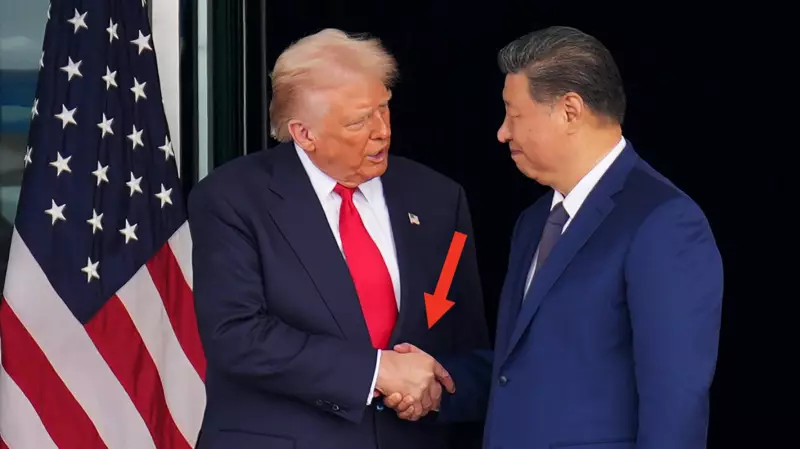
One particularly revealing moment came during their famous handshakes. Trump, known for his "power grip" approach, seemed to test the physical boundaries of their interaction. Xi, while reciprocating firmly, maintained his composure without engaging in the overt power plays that characterized Trump's style with other world leaders.
This subtle dance of hand pressure, duration, and posture offered insights into how both leaders viewed the US-China relationship—a complex mix of cooperation and competition playing out in micro-interactions.
Seating Arrangements and Spatial Politics
The spatial dynamics during their meetings also told a compelling story. The positioning at negotiation tables, the distance maintained during photo opportunities, and even the arrangement of flags all contributed to a non-verbal dialogue about status and influence.
Experts noted that Trump often positioned himself centrally, while Xi's placement reflected both protocol and strategic messaging about China's rising global stature.
What Their Eyes Revealed
Eye contact analysis showed distinct patterns. Trump maintained direct, sustained eye contact during discussions, a behavior typically associated with dominance in Western cultures. Xi's gaze was more measured, breaking contact at strategic moments in ways that aligned with Chinese communication norms while maintaining engagement.
The Unspoken Messages Behind the Smiles
Their facial expressions during public appearances provided another layer of insight. While both leaders presented diplomatic smiles for cameras, micro-expressions often revealed more complex emotions beneath the surface. Moments of tension, assessment, and calculation flashed across their faces in the split-seconds between posed photographs.
These brief, uncontrolled expressions offered glimpses into the genuine dynamics of their relationship—moments where the diplomatic masks slipped to reveal the real individuals beneath.
Broader Implications for US-China Relations
The body language between Trump and Xi serves as a metaphor for the larger geopolitical relationship between their nations. The push-and-pull, the testing of boundaries, and the careful balancing of cooperation and competition all manifested in their physical interactions.
Understanding these non-verbal cues provides valuable context for interpreting the state of US-China relations and predicting how personal dynamics between leaders might influence broader diplomatic outcomes.
As global politics continues to evolve, the silent language of diplomacy remains a crucial element in understanding international relations—proving that sometimes, the most important conversations happen without a single word being spoken.