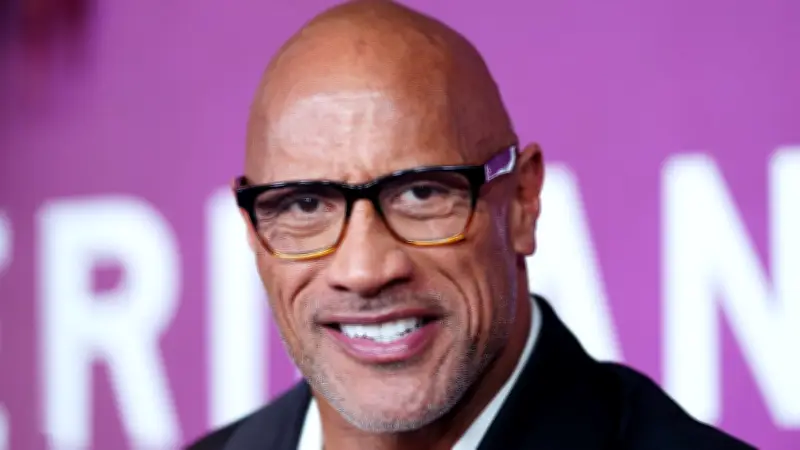
Dwayne “The Rock” Johnson faced widespread criticism on Tuesday after confirming he will no longer publicly discuss politics. The backlash came from “Star Trek” icon George Takei and “Stand By Me” star Wil Wheaton, who called him a “coward.”
Johnson's Decision to Stay Silent
Johnson, the highest-paid actor in Hollywood for several years, has cultivated a nonconfrontational persona regarding politics. This stance persists even as President Donald Trump launched mass deportations, lethal immigration raids, de facto coups, and a war on Iran. In an interview with Esquire published earlier this month, Johnson stated, “I’ve learned I’m going to keep my politics to myself.” He added, “There are moments when, hey, there’s nothing we can’t talk about. If I’m wrong, I’ll tell you I’m wrong.”
The former wrestler continued, “Or if I feel like I got a leg up and this is the right way to go, I’ll share it with you. Politics is omnipresent and it’s forever. I don’t like it. [Laughs.] I hate it at times. I hate the slinging. I hate all the bullshit that comes with it.”

Takei and Wheaton Respond
George Takei, an outspoken critic of Trump, shared an article about Johnson’s comments on social media and wrote on Threads, “Silence is complicity.” Wil Wheaton commented, “So disappointing to find out he is such a coward.” Takei, born in Los Angeles to Japanese parents in 1937, was forcibly interned by the U.S. government during World War II under President Franklin D. Roosevelt after Japan’s attack on Pearl Harbor. He was 5 at the time.
Johnson's Political History
Johnson has amassed a fortune in Hollywood after transitioning from professional wrestling. While he has donated to causes and defended others' rights, he has remained silent on the Trump administration's policies. In 2024, he told Fox News he regretted endorsing former President Joe Biden in 2020, stating, “My goal is to bring this country together. I believe in that. There will be no endorsement. At this level of influence, I will keep my politics to myself.” He argued that his endorsement caused division among his fans.
During the Esquire interview, Johnson mentioned Bruce Springsteen, “who I love,” for routinely calling out Trump mid-concert. Johnson recalled thinking, “Oh, then why don’t they talk?” He argued that communication is “an important step,” though he isn’t sure “where that goes.”