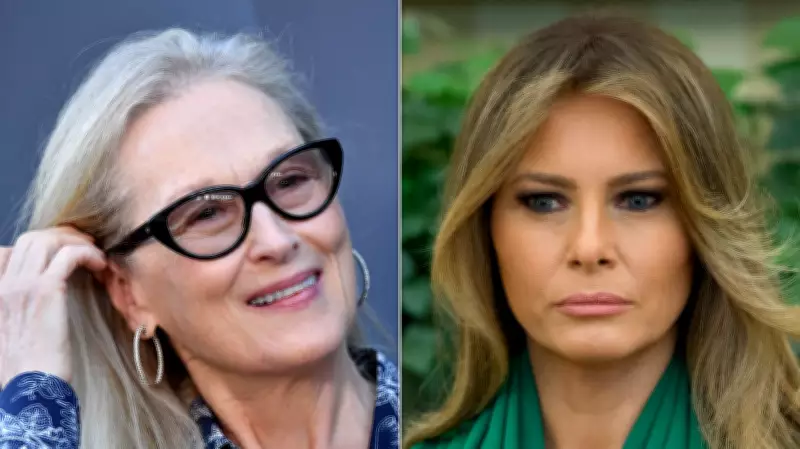
In a revealing Vogue interview published this Wednesday, former editor-in-chief Anna Wintour and Oscar-winning actress Meryl Streep engaged in a pointed discussion about fashion as a tool for political expression, with Streep notably criticizing former First Lady Melania Trump's infamous 2018 jacket.
The Fashion Power Conversation
Anna Wintour, promoting the upcoming film "The Devil Wears Prada 2," was asked how women should dress to communicate power. She suggested moving beyond the traditional "power suit" and instead emulating real-life women who wield actual influence through their personal style. Wintour cited examples including former First Lady Michelle Obama and Rama Duwaji, wife of New York City Mayor Zohran Mamdani, as women who effectively express their identities through fashion.
"To be fair, Melania Trump also always looks like herself when she dresses," Wintour remarked during the interview, acknowledging the former first lady's consistent fashion approach.

Streep's Sharp Response
Meryl Streep responded directly to Wintour's comment about Trump's fashion choices by recalling the controversial jacket Melania Trump wore during a 2018 visit to migrant children held in detention facilities. The olive green jacket featured the message "I Really Don't Care, Do U?" in white lettering across the back.
"I think the most...powerful message that our current first lady sent was in the coat that said 'I Really Don't Care, Do U?' when she was going to see migrant children who were incarcerated," Streep stated. "All dress is about expressing yourself, but we're also subject to larger historical and political sweeps of expectation."
Although Melania Trump later explained to ABC News that the jacket's message was directed at "the people and for the left-wing media who are criticizing me," the garment sparked widespread controversy at the time, with many interpreting it as indifference toward children affected by Trump administration immigration policies.
Broader Critique of Women's Fashion Expectations
Streep expanded her criticism beyond the specific incident to address broader societal expectations regarding how women in positions of power should present themselves through clothing.
"I'm stunned at how women in power have to have bare arms on television while men are covered in shirts and ties or a suit," Streep observed. "There's an apology built into women. They have to show their smallness. It's compensatory: The advancements of women in the second half of the 20th century and the beginning of this one have been destabilizing."
The actress elaborated further, suggesting that contemporary fashion expectations for powerful women often include elements that minimize their perceived threat: "It's as if women have to say, 'I'm little. I can't walk in these shoes. I can't run. I'm bare, not threatening.'"
Additional Perspectives on Conservative Women in Politics
The conversation touched on other political figures as well. Jennifer Siebel Newsom, who prefers the title "first partner of California" rather than "first lady," recently commented on conservative women who have aligned themselves with the MAGA movement while facing professional consequences.
Siebel Newsom specifically mentioned former Secretary of Homeland Security Kristi Noem and former Attorney General Pam Bondi, who were among the first prominent cabinet members dismissed during the president's second term despite embracing MAGA aesthetics.
"The conservative women that Trump handpicks who align themselves with an agenda that controls women, restricting our rights, limiting our autonomy and pushing us back into the straitjacket of femininity that is only in service of men, there's a familiar pattern here," Siebel Newsom argued. "Women are brought in, packaged Mar-a-Lago style, and lifted up as long as they commit to wholeheartedly serve the interests of the patriarch at the top."
This Vogue interview highlights how fashion continues to serve as both personal expression and political commentary, particularly for women in the public eye, with the discussion revealing deep divisions in how different political figures use clothing to communicate values and power dynamics.