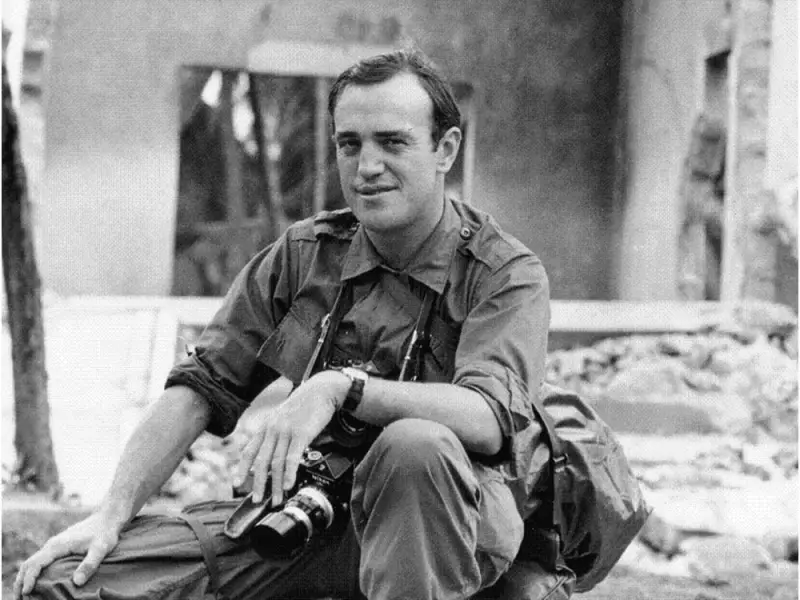
The world of journalism has lost one of its most iconic and courageous voices. Peter Arnett, the Pulitzer Prize-winning reporter renowned for his frontline coverage of conflicts across decades, died on Wednesday. He was 91 years old. US media reports confirm he had been suffering from prostate cancer.
A Career Forged in the Fires of Vietnam
Arnett's legacy is inextricably linked to the Vietnam War. He arrived in the country in 1962 as a correspondent for The Associated Press and remained until the fall of Saigon in 1975, often embedding with troops under fire. His ground-level reporting provided a stark, human counterpoint to official military briefings, earning him the 1966 Pulitzer Prize for International Reporting.
He was among the final journalists to evacuate Saigon as North Vietnamese forces captured the city. Arnett's tenure with the AP lasted until 1981, when he made a pivotal move to the then-fledgling Cable News Network (CNN). This transition would catapult him into living rooms worldwide.

From Baghdad to Bin Laden: Defining Moments in Broadcast News
Arnett achieved global broadcast fame during the first Gulf War in 1991. Reporting live from Baghdad, his dispatches—sometimes relayed via cell phone—brought the reality of the conflict to audiences in real time. He conducted a notable interview with Iraqi President Saddam Hussein and documented the impact of the bombing campaign on civilians.
In a chilling prelude to the 9/11 attacks, Arnett secured a rare interview with Osama bin Laden in 1997 at a hideout in Afghanistan. When questioned about his plans, the Al-Qaeda leader ominously told Arnett, "You’ll see them and hear about them in the media, God willing."
His career was not without controversy. He resigned from CNN in 1999 after the network retracted a report he narrated about the use of Sarin gas in Laos. Later, in 2003, he left NBC News after giving an interview to Iraqi state television that was critical of U.S. war strategy during the second Gulf War, which he covered for NBC and National Geographic.
The Personal Journey of a Reporting Legend
Born in Riverton, New Zealand, on November 13, 1934, Arnett began his career at the Southland Times before reporting from Thailand and Laos. He later became a naturalized American citizen. In 1995, he published his memoir, "Live From the Battlefield: From Vietnam to Baghdad, 35 Years in the World’s War Zones."
Colleagues remember him as a trailblazer. Edith Lederer, chief UN correspondent for the AP, called Arnett "one of the greatest war correspondents of his generation — intrepid, fearless, and a beautiful writer and storyteller." She added that his work "will remain a legacy for aspiring journalists and historians for generations to come."
Peter Arnett is survived by his wife, Nina Nguyen, and their two children, Elsa and Andrew. He had lived in Southern California since 2014. His passing marks the end of an era for conflict journalism, leaving behind a body of work that defined the craft of bearing witness from the world's most dangerous places.