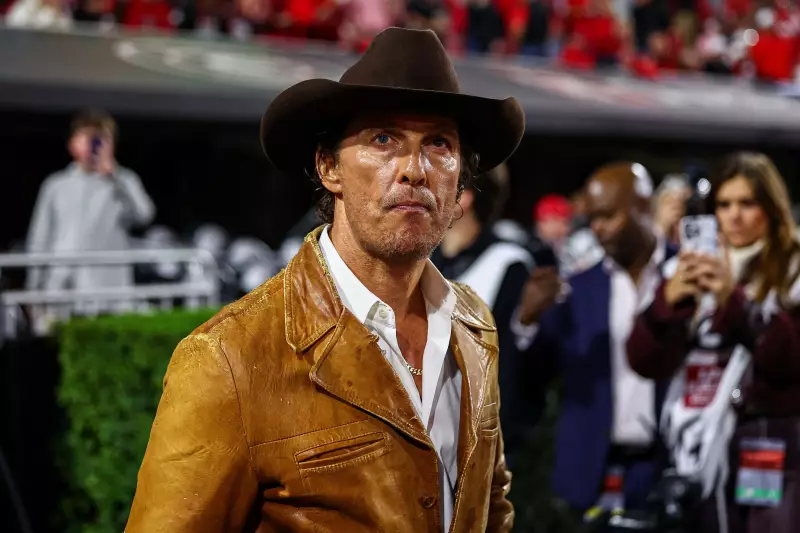
In a landmark move highlighting growing concerns over digital identity, Academy Award-winning actor Matthew McConaughey has initiated legal proceedings to secure a patent for his own image. The action, reported in early 2026, is a preemptive strike designed to shield his likeness from unauthorized exploitation by artificial intelligence technologies.
A Proactive Legal Shield Against AI
The filing, submitted by the actor's legal team, seeks to establish formal intellectual property rights over McConaughey's persona, voice, and visual likeness. This legal maneuver is a direct response to the rapidly advancing capabilities of AI, which can generate convincing deepfakes, synthetic media, and unauthorized digital performances. By pursuing a patent, McConaughey aims to create a robust legal barrier, ensuring any commercial or public use of his AI-generated image requires explicit permission and compensation.
The news broke on January 15, 2026, bringing to the forefront a critical issue at the intersection of technology, entertainment, and personal rights. While celebrities have long relied on trademarks and publicity rights, the patent approach is seen as a potentially more powerful tool in the evolving digital landscape, where AI can replicate a person's essence without their involvement.

The Broader Implications for Public Figures
McConaughey's action is not an isolated incident but part of a burgeoning trend among high-profile individuals. As AI tools become more accessible, the risk of identity misuse escalates, threatening not just privacy but also economic interests. A patent could grant the actor control over how his "digital twin" is used in advertising, film, video games, and other emerging media formats.
This step signals a significant shift in how celebrities may manage their brands in the future. It moves beyond traditional contract law into the realm of invention and design, arguing that a curated public persona is a unique, protectable asset. The outcome of this case could set a crucial precedent for other actors, musicians, and influencers seeking to navigate the uncharted waters of AI replication.
What Comes Next in the Fight for Digital Identity
The entertainment and legal communities are watching closely. If successful, McConaughey's patent could open the door for a new class of intellectual property, forcing platforms and developers to implement stricter safeguards and licensing agreements. It also raises complex questions about parody, historical documentation, and free speech, ensuring the debate will be both lengthy and consequential.
For now, Matthew McConaughey's proactive stance marks a bold attempt to draw a line in the sand. In an era where technology often outpaces regulation, his move to patent his image is a clear message: in the digital future, one's identity must remain one's own to control.