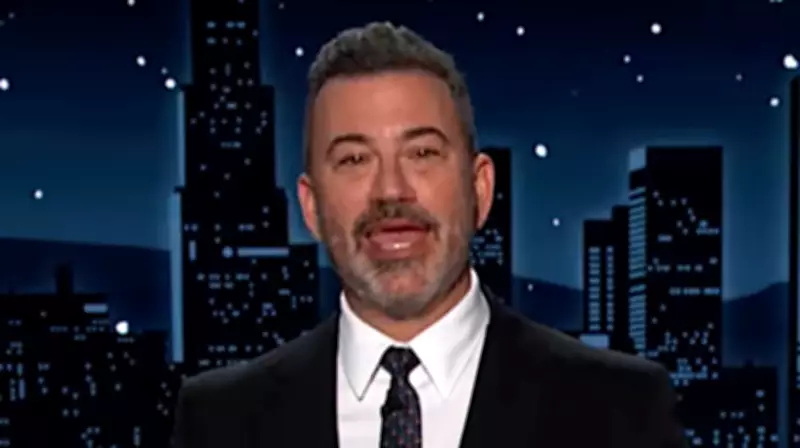
Late-night television host Jimmy Kimmel has added his voice to the growing chorus of critics lambasting former President Donald Trump for an AI-generated artwork that appeared to portray him as Jesus Christ over the weekend. However, Kimmel's comedic critique focused intensely on what he described as several bizarre and unsettling details within the digital creation.
Unrealistic Hands and Strange Imagery
During his Monday night monologue, Kimmel immediately pointed out that Trump's hands in the image were depicted as normal-sized, quipping, "that's not realistic" in a clear jab at frequent public commentary about Trump's hand size. The host further noted that the AI artwork surrounded Trump with fighter jets and a creature that bore a striking resemblance to the Demogorgon monster from the popular Netflix series "Stranger Things," adding a layer of surrealism to the political imagery.
The "Weirdest Detail": An Epstein Lookalike
Kimmel then shifted to what he declared was "maybe the weirdest detail" of all. He highlighted that the man being healed by "Donald Jesus Trump" in the image looked remarkably similar to the late convicted sex offender Jeffrey Epstein. A split-screen comparison was shown to the audience, juxtaposing the patient from the Truth Social post shared by Trump with a photograph of Epstein, eliciting audible gasps and "whoas" from the studio audience.

"Even AI can't keep him from his BF Jeff," Kimmel joked sarcastically, referencing the long-standing and controversial association between Trump and Epstein. This observation placed the AI artwork into a broader context of ongoing public fascination and conspiracy theories surrounding Epstein's connections to powerful figures.
Media Echoes and Political Context
Kimmel was not alone in focusing on the patient's resemblance. "Daily Show" host Jon Stewart also commented on the likeness during his program, suggesting it looked like him, indicating a shared comedic perspective among late-night peers. This collective spotlight underscores how AI-generated political content is becoming a new frontier for satire and media scrutiny.
The critique arrives amidst a complex political backdrop. While the Epstein saga has recently been overshadowed by escalating tensions and Trump's vocal stance on conflict in Iran, it resurfaced unexpectedly when Melania Trump recently declared she had no relationship with Epstein. This unsolicited statement puzzled many observers, with some speculating it was a preemptive move to counter potential forthcoming stories. Kimmel's segment, therefore, taps into lingering public curiosity and the strange, often unexplained narratives that continue to orbit Trump's public life.
The AI image, shared on Trump's Truth Social platform, represents a growing trend of using artificial intelligence to create political propaganda and memes, blending technology with messaging in unprecedented ways. Kimmel's detailed comedic breakdown not only entertains but also critiques the authenticity and implications of such digital creations, questioning what truths or falsehoods they might perpetuate in the visual age.
As political satire evolves with technology, Kimmel's segment highlights how late-night comedy continues to serve as a cultural barometer, dissecting the absurdities of political imagery and the enduring mysteries of associated scandals. The audience's reaction—a mix of shock and laughter—reflects the ongoing public engagement with these intertwined narratives of power, technology, and controversy.