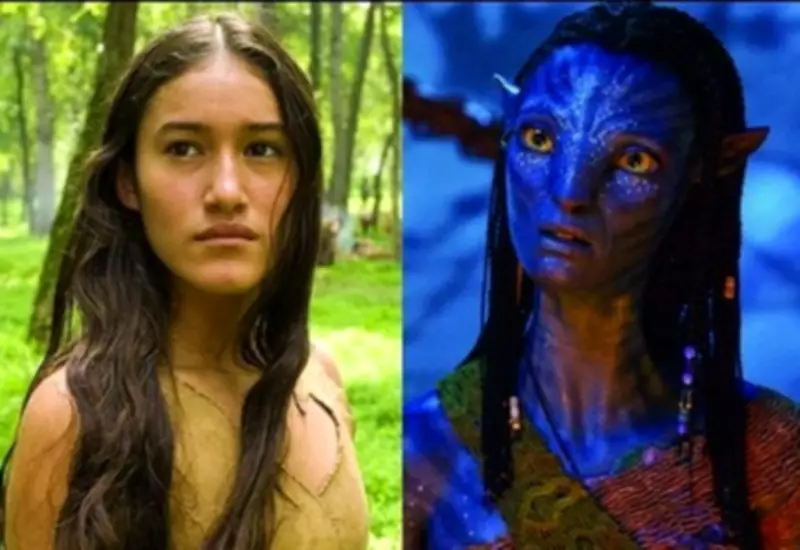
James Cameron and Disney are facing a lawsuit from actress Q'orianka Kilcher, who alleges that the filmmaker used her likeness without permission as the foundation for the Na'vi character Neytiri, portrayed by Zoe Saldana in the blockbuster Avatar franchise.
Lawsuit Claims Unauthorized Use of Likeness
The complaint, filed in the U.S. District Court for the Central District of California and obtained by Variety, asserts that Cameron first became interested in Kilcher's appearance when she was 14 years old and starring as Pocahontas in Terrence Malick's The New World. According to the filing, Cameron saw a promotional photo of Kilcher published in the Los Angeles Times and instructed his design team to use her facial features as the basis for Neytiri.
Kilcher alleges she never gave consent for her likeness to be used in Avatar or any related products or promotions. The lawsuit includes excerpts from interviews with Cameron and production team members that mention Kilcher by name and discuss how her face inspired Neytiri's look.

Process Described as More Than Artistic Inspiration
The complaint details how Kilcher's facial features were allegedly digitally extracted, sculpted into maquettes, laser-scanned into digital models, and distributed to visual effects companies to create Neytiri's final appearance. The suit argues that her image appeared across the franchise, including films, promotional posters, and merchandise, without her knowledge.
“This case exposes how one of Hollywood’s most powerful filmmakers exploited a young Indigenous girl’s biometric identity and cultural heritage to create a record-breaking film franchise – without credit or compensation to her – through a series of deliberate, non-expressive commercial acts,” the suit alleges.
Indigenous Activist Calls Out Hypocrisy
Kilcher, a Native Peruvian actor and activist, says the situation feels hypocritical given the Avatar films' pro-Indigenous and anti-colonial themes. “The result was a hugely lucrative film franchise that presented itself as sympathetic to Indigenous struggles, all while silently exploiting a real Indigenous youth behind the scenes,” the complaint states.
Kilcher's lawyer, Arnold P. Peter of Peter Law Group, stated: “What Cameron did was not inspiration, it was extraction. He took the unique biometric facial features of a 14-year-old Indigenous girl, ran them through an industrial production process, and generated billions of dollars in profit without ever once asking her permission. That is not filmmaking. That is theft.”
Kilcher as the 'Facial Anchor'
The lawsuit says Cameron struggled in 2005 to find the right design for the Na'vi characters, as they looked “too alien” to connect emotionally with audiences. Kilcher's face allegedly became the “facial anchor” that solved the problem. The suit specifically points to Neytiri's lips, jawline, chin, and mouth shape, claiming they were directly preserved from Kilcher's face, describing the results as “a literal transplant of a real teenager’s facial structure into a blockbuster movie character.”
Kilcher says she had no idea her likeness had been used until after Avatar was released in 2009. She later met Cameron at a charity event, where he invited her to visit his office. When she arrived, a staff member handed her a framed sketch of Neytiri with a note from Cameron reading: “Your beauty was my early inspiration for Neytiri. Too bad you were shooting another movie. Next time.” Despite this, Cameron never attempted to cast Kilcher in Avatar, even though her agent had tried to arrange an audition.
Legal Territory and Franchise Success
The lawsuit argues that the alleged use may violate California's deepfake pornography laws, as the Avatar films later featured Neytiri in intimate scenes, despite the original facial reference coming from a minor. “It is deeply disturbing to learn that my face, as a 14-year-old girl, was taken and used without my knowledge or consent to help create a commercial asset that has generated enormous value for Disney and Cameron,” Kilcher said.

The Avatar franchise is among the most successful in movie history. The original film earned over $2.92 billion worldwide, while Avatar: The Way of Water brought in another $2.3 billion. The latest installment, Avatar: Fire and Ash, has crossed the $1 billion mark internationally. The franchise has also helped cement Saldana as the highest-grossing actor of all time, with her films collectively earning close to $17 billion globally.