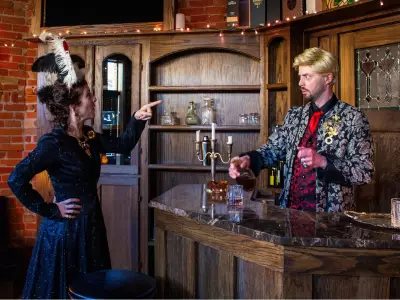
The HBO drama Euphoria has returned after a long hiatus, and five episodes in, viewers have witnessed a pig in a strip club, an exotic dancer in a bejeweled neck brace, and a twice-severed toe. Yet what truly captivates audiences is the tumultuous relationship between Nate and Cassie. Google searches for 'does Nate love Cassie?' have surged 5000% in the past month, reflecting the intense fascination.
The 'Upgrade Trap' Explained
Relationship expert Robyn Alesich, a matchmaker from Sister Wives, identifies this dynamic as the 'upgrade trap.' She explains that couples often escalate milestones—moving in together, getting engaged, having a baby—as a substitute for evaluating whether their relationship is actually healthy. 'The ring, house, and wedding date are signals of avoidance, rather than love or success,' Alesich says.
In Euphoria, Cassie chases validation by molding herself into the perfect submissive partner for controlling Nate. This season, she promotes him to husband, but their bond remains unstable. Marrying Nate makes Cassie feel like she has won, feeding her fantasy of a loving relationship instead of a controlling one. For Nate, marrying ultra-feminine Cassie allows him to project heteronormativity and avoid confronting his complicated sexuality.

Recognizing the Pattern
This pattern is not unique to fiction. Ramiro Castano, LMFT and author of What Makes Relationships Last, notes that every relationship has friction. The key is whether couples move toward it or away from it. If you consistently avoid difficult conversations while pursuing new milestones, you may be caught in the upgrade trap. 'The commitment escalates precisely because addressing what's underneath feels too threatening,' Castano says.
Cheryl Groskopf, a couples therapist, adds that emotions around milestones are telling. In a healthy relationship, both partners feel open, curious, and excited about the future. In the upgrade trap, commitment is driven by fear and anxiety—a desire to lock down the relationship before it is too late. 'They may feel like they're managing something, holding something together, waiting for the version of the relationship they were promised to finally show up,' Groskopf explains.
Leaving Is Harder Than It Seems
Extricating oneself from such a relationship is challenging, especially when self-worth and social identity are intertwined with the partnership. 'At that point, it's not just 'do I leave this person,' but also 'do I dismantle the version of myself I've been living as,'' says Groskopf. Financial dependence adds another layer of difficulty, requiring a plan and resources to start over.
If you spend more time managing the relationship than enjoying it, or frequently defend your partner's behavior to others, Groskopf advises getting honest about what need the relationship is meeting. The upgrade trap often serves a psychological purpose—shielding you from grief, loneliness, fear of being alone, or a belief that you do not deserve better.
On Euphoria, Cassie and Nate's relationship spirals into a disastrous wedding day, but yours does not have to. Groskopf recommends working with a therapist to heal old attachment wounds and reconnect with your sense of self outside the relationship. Healthy relationships require care, not performance or self-diminishment.