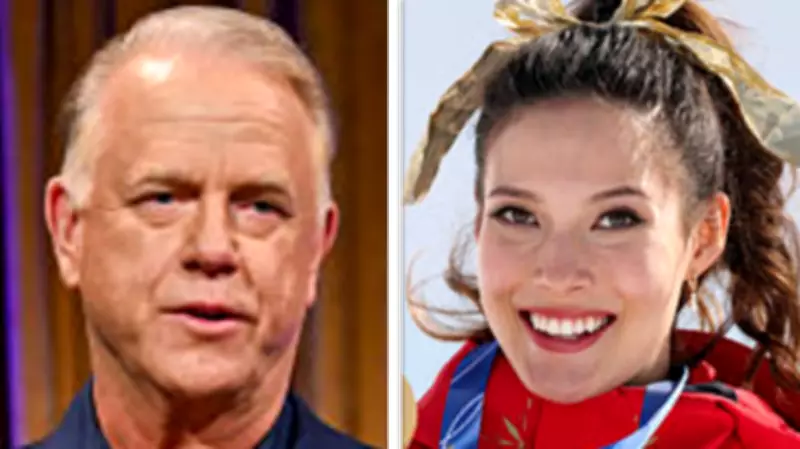
Former NFL Star Boomer Esiason Labels Olympic Skier Eileen Gu as 'Insufferable' in Radio Rant
Former NFL quarterback Boomer Esiason has stirred up a significant controversy by publicly criticizing freestyle skiing superstar Eileen Gu, calling her "insufferable" during a recent broadcast of his WFAN radio show. The ex-New York Jets player, who led the Cincinnati Bengals to a Super Bowl appearance in the 1988 season and earned league MVP honors, did not hold back in his assessment of the Olympic champion's post-competition interviews.
Esiason's Blunt Critique of Gu's Interview Style
"She's a very, very attractive woman and she's extremely bright—she went to Stanford—but if you listen to her post-participation interviews, she's insufferable," Esiason declared as his co-host Gregg Giannotti laughed in the background. "She is. It's hard to listen to. But then again, it's an individual sport by an individual person talking about herself as opposed to talking about her teammates or the support that she received."
The Winter Olympics concluded on Sunday with Gu making a profound impression on the former football star, albeit not a positive one. Gu secured a gold medal in the halfpipe event on the final day of competition, further cementing her status as the most decorated freestyle skier in Olympic history. She now boasts an impressive tally of three gold medals and three silver medals across two consecutive Olympic Games.

Political and Cultural Controversy Surrounding Gu's Allegiance
This remarkable achievement has become a point of contention for conservative critics, as Gu chose to compete for China, where her mother was born, rather than for her native United States. Giannotti pointed out that Gu's relationship with China has reportedly boosted her income by millions of dollars through endorsements and sponsorships. However, many supporters argue that much of the resentment directed toward Gu is deeply rooted in racism and xenophobia.
It is worth noting that several other U.S.-born athletes competed for different countries at the Milan Cortina Games without attracting nearly as much controversy or scrutiny. This disparity has fueled discussions about double standards and the unique pressures faced by high-profile athletes like Gu.
Esiason's Previous Comments and Gu's Analytical Response
Esiason previously made headlines earlier in the Games by advising U.S. athletes to "pipe down" regarding their anti-Trump political views. He implied a similar sentiment about Gu, though his criticism focused on her interview demeanor rather than her political stance.
Giannotti brought up Gu's recent exchange with The Athletic's Charlotte Harpur, who asked, "This isn't supposed to be a rude question, but do you think before you speak? Because you answer questions so quickly and so comprehensively, whether it's about geopolitics or your sport or aerodynamics. Can you take us into your brain?"
Gu responded with a thoughtful and introspective answer: "I'm an introspective young woman. I spend a lot of time in my head, and it's not a bad place to be. I journal a lot. I break down all of my thought processes. I think I apply a very analytical lens to my own thinking, and I modify it. Because it's so interesting, you can control what you think. You can control how you think, and therefore, you can control who you are. And especially as a young person, I'm 22, so with neuroplasticity on my side, I can literally become exactly who I want to be. How cool is that? How empowering is that?"
Esiason's Reaction and Gu's Defense of Her Choices
Esiason expressed annoyance at this response, stating, "I will say she's exceptionally bright and clearly knows exactly how she's going to answer things. But no one has really pressed her with a tough question, and that last answer she gave just came off as insufferable."
Following her victory on Sunday, Gu defended her decision to compete for China by emphasizing her goal to grow the sport and inspire young people in the country. "There are girls in China whose lives are going to be touched by the beautiful and wonderful power of sport," Gu said. "That, in and of itself, is absolutely measured impact that I think I had always wanted."
This ongoing debate highlights the complex intersections of sports, nationality, and public perception in the modern Olympic landscape.