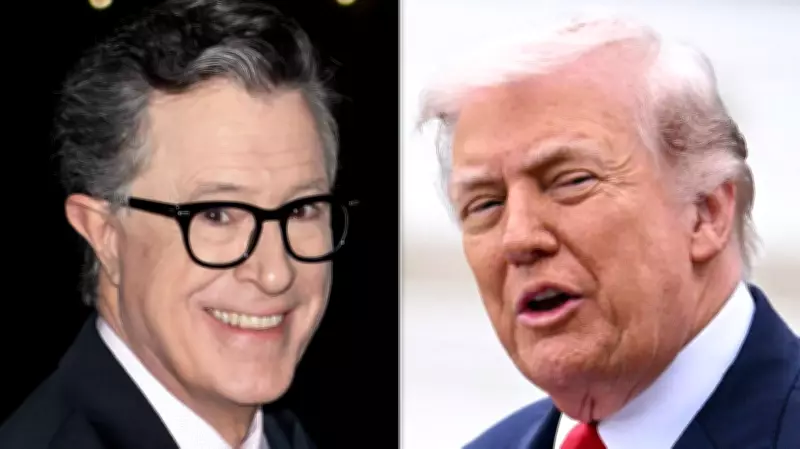
Stephen Colbert has a sharp theory about why he and his fellow comedians might get under President Donald Trump's skin so much. In an interview with The New York Times ahead of his final curtain call next month, the late night host reflected on his time hosting CBS's 'The Late Show' and offered insights into the dynamic between comedians and authoritarians.
Comedians as Anti-Authoritarian Figures
'Authoritarians don't like anybody who doesn't give them undue dignity,' Colbert said. 'Comedians are anti-authoritarian by nature. And authoritarians are never going to like anybody to laugh at them.' He recalled how many newspeople have expressed envy at his ability to speak freely on air. 'The number of newspeople who have said to me or Jon Stewart or any of the guys who do this, 'God, I wish I could say what you say on air,' and we can. I think that upsets them. I think it might be upsetting that we really do not live in their world of principalities and powers.'
Colbert's Critique of Trump
When asked if the political targeting of late night hosts made him regret mocking the president and his allies, Colbert clarified his stance. 'I don't have any problem with Trump being a Republican. I have a problem with Trump being a complete narcissist who is only working for his own interest and does not appear to care if the entire world burns.' He emphasized that this is not a partisan position. 'I have eyeballs and ears, and I think calling late night partisan is just roughing the ref. And we don't even want to be refs, but they perceive us as refs.'

Colbert rejected the partisan label outright. 'Partisan means you're never, ever going to make a joke about a Democrat, and that's just not true. There's just no comparison of how fertile the fields are,' he said, implying that Trump and his allies provide far more material for comedy.
On CBS and Show Cancellation
Colbert also addressed speculation that CBS's decision to cancel his show was linked to his criticism of Trump or comments about the network's $16 million lawsuit settlement with the president, which coincided with CBS seeking FCC approval for a merger. He stated he had no reason to doubt the network's financial explanation but understood why the timing seemed 'fishy.' 'It's possible that two things can be true,' he noted, adding that he has 'zero desire to have a contentious relationship with my network.'