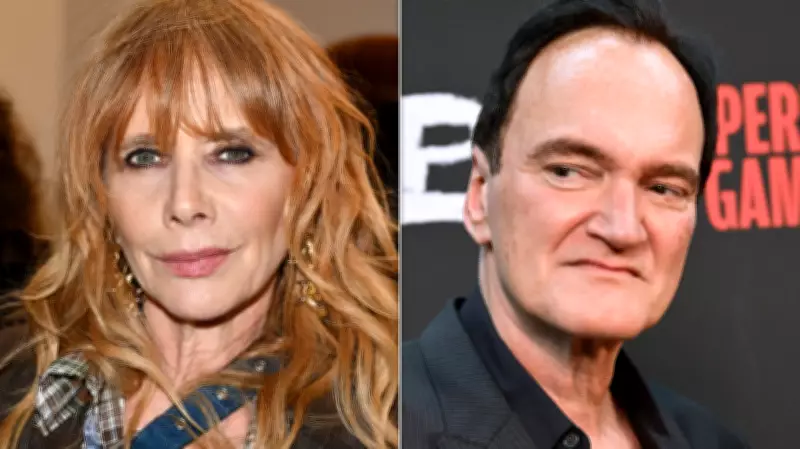
Rosanna Arquette Denounces Quentin Tarantino's Use of Racial Slurs in Films
Actress Rosanna Arquette, known for her role as the girlfriend of drug dealer Lance, played by Eric Stoltz, in the iconic film "Pulp Fiction," has publicly criticized director Quentin Tarantino for his frequent use of the N-word across his cinematic works. In a recent interview with The Sunday Times (UK), Arquette expressed her strong disapproval, stating that Tarantino has been unjustly granted a "hall pass" to employ the racial slur in movies such as "Django Unchained," "The Hateful Eight," "Jackie Brown," and "Pulp Fiction."
Arquette's Strong Stance Against the N-Word
"Personally I am over the use of the N-word — I hate it. I cannot stand that he has been given a hall pass," Arquette told the publication. She emphasized that this usage does not constitute art but is instead "just racist and creepy." While acknowledging that "Pulp Fiction" is "iconic" on multiple levels, she stressed that Tarantino had no legitimate reason to incorporate the derogatory term into his scripts.
Arquette is not alone in her criticism. In 2012, acclaimed director Spike Lee lambasted Tarantino for using the N-word in "Django Unchained," describing it as "disrespectful to my ancestors" in an interview with Vibe magazine. This film, set in the 1850s, follows a slave named Django, portrayed by Jamie Foxx, who teams up with an unconventional German bounty hunter, played by Christoph Waltz, to rescue his wife, Kerry Washington's character, from a brutal slave owner, Leonardo DiCaprio. The N-word was uttered more than 100 times by both Black and white actors throughout the movie.

Tarantino's Defiant Response and Awards Recognition
Despite the controversy, "Django Unchained" received significant acclaim, earning five nominations at the 2013 Academy Awards. Christoph Waltz won the Oscar for Best Supporting Actor, and Tarantino secured the award for Best Original Screenplay. At the 2013 Golden Globes, after winning the best screenplay award for the film, Tarantino defended his artistic choices backstage. "They're saying I should soften it, they're saying I should lie, they're saying I should white wash, they're saying I should massage," he stated. "And I never do that when it comes to my characters."
Nearly a decade later, during a 2022 appearance on "Who's Talking to Chris Wallace," Tarantino reaffirmed his stance, urging offended viewers to "see something else." He asserted, "If you have a problem with my movies, then they aren't the movies to go see. Apparently, I'm not making them for you."
Support from Collaborators and Contextual Debates
In contrast to the criticism, actor Samuel L. Jackson, who has starred in six Tarantino films that frequently feature the N-word, has defended the director's work. Jackson argued that it is a matter of contextual authenticity. "Every time someone wants an example of overuse of the N-word, they go to Quentin — it's unfair," he told The Sunday Times in 2022. "He's just telling the story, and the characters do talk like that." Jackson drew a comparison, noting that when director Steve McQueen uses similar language in films like "12 Years a Slave," it is often praised as art, whereas Tarantino is labeled merely a "popcorn filmmaker."
In a 2019 interview with Esquire magazine, Jackson called the backlash against Tarantino "some bullshit," recounting how he had warned Tarantino about a particular line involving "nigger storage" in a script. Despite attempts to soften it by altering a character's ethnicity, Jackson emphasized the importance of honesty in writing. "You cannot just tell a writer he can't talk, write the words, put the words in the mouths of the people from their ethnicities, the way that they use their words," he added. "You cannot do that, because then it becomes an untruth; it's not honest. It's just not honest."

Jamie Foxx also came to Tarantino's defense in a 2018 interview with Yahoo! Entertainment, explaining that the use of the N-word in "Django Unchained" was acceptable due to its historical accuracy. "I understood the text," Foxx said. "The N-word was said 100 times, but I understood the text — that's the way it was back in that time."
This ongoing debate highlights the complex intersection of artistic freedom, historical representation, and racial sensitivity in Hollywood, with figures like Arquette and Lee challenging Tarantino's methods, while collaborators like Jackson and Foxx advocate for contextual integrity in storytelling.