There is a specific kind of heavy silence that hangs in a room when you are signing away your rights to your child. But the silence is even heavier when that room is connected to a prison-track rehabilitation program, and the paperwork in front of you bears the name of the exact same adoption agency that handled your own placement 30-some years ago: the Gladney Center for Early Childhood. Life has a strange, sometimes cruel way of coming full circle.
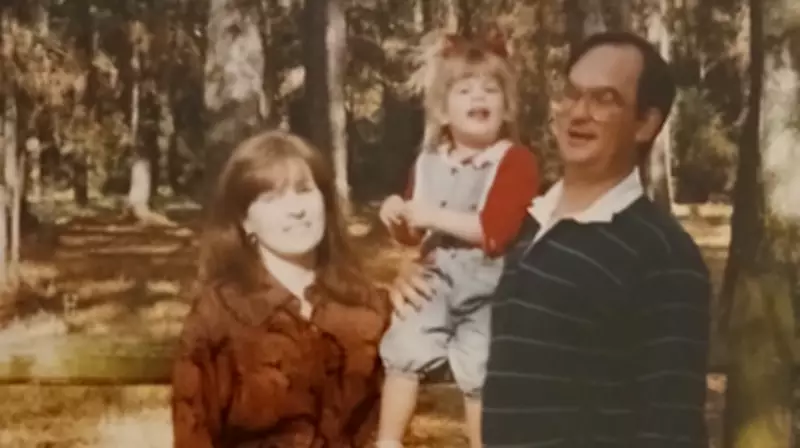
I was adopted when I was just 2 months old. Growing up, my parents were incredible. They never kept my adoption a secret; from the moment I was old enough to comprehend the word, I knew my story. They took me to Gladney festivals, fundraisers and get-togethers so I could grow up surrounded by other children who looked like me and shared a similar history. I was blessed with a beautiful, love-filled life. Yet, beneath the perfect surface of my childhood, a quiet ache persisted.
Because my birth mother had opted for a closed adoption, legal boundaries kept me from searching for her until I turned 18. Intellectually, as I grew into a young woman, I understood that she must have made her decision out of necessity. But emotionally? Emotionally, I felt rejected. Through the eyes of a child, a closed adoption didn't look like protection; it looked like an exit strategy. It looked like she simply didn't want me. When my 18th birthday came and went, I didn't look for her. I was terrified of hurting my adoptive mother's feelings, and even more terrified of facing that rejection a second time.

Motherhood and Descent into Addiction
A few years later, I became a mother myself. I welcomed two beautiful baby girls into the world. But motherhood didn't cure the old, hidden fractures inside me. Instead, severe postpartum depression swallowed me whole. Desperate to cope, I turned to drugs and alcohol. The spiral was fast and unforgiving. I surrounded myself with people I had no business being around, made selfish choices and eventually ran face-first into the legal system. I was sentenced to five years in prison.
The day before I signed the paperwork to begin my sentence, a routine medical check dropped a bomb into my already shattered reality: I was pregnant. Panic doesn't begin to describe what I felt. The horror of delivering a baby behind bars, the terrifying uncertainty of where my child would go, and the crushing guilt of my situation threatened to break me completely. By what I can only call God's grace, I was accepted into a specialized program. I would carry my baby to term, deliver her at the hospital under guard and then be transferred with her to Santa Maria, a rehabilitation facility.
Giving Birth in Custody
Delivering a baby in custody is no fairy tale. The prison ward of the hospital sat on the bottom floor like a concrete dungeon, but the labor and delivery room itself was mostly normal. I had a correctional officer with me the entire time, but I lucked out — she was a new mother herself, and she treated me with immense compassion. When it came time to push, the nurse asked if six visiting medical students could observe. With a doctor, two nurses and an armed guard already in the room, I figured, why not? The more the merrier. I gave birth to a beautiful baby girl. Two hours later, completely alone without family or friends to comfort me, I stayed awake through a tubal ligation procedure — a terrifying but necessary choice for my future. Twenty-four hours later, I was handcuffed, shackled and put into a small white transport van bound for Houston. Within a few hours of arriving at Santa Maria, my baby was placed back in my arms. We stayed there together for seven months.
But as I looked at my sweet, innocent newborn daughter, I knew the hardest choice was still ahead of me. I loved her too much to drag her through the wreckage of my five-year sentence. She deserved stability. She deserved the kind of safe, beautiful childhood my parents had given me. So, I called Gladney.

The Agonizing Decision of Closed Adoption
The adoption process was incredibly heavy, but the agency provided a unique comfort: They sent me a stack of “biography books” created by hopeful adoptive families. If you don't connect with the families, you send the books back and they send more. It eventually came down to two couples. I made my final choice because the very first page of one book made me laugh. The couple looked so genuinely happy and full of life. It just felt right. But because of my legal status and my desire to give my daughter a completely clean, unburdened start, I had to make the agonizing decision to choose a closed adoption. And that is when the lightning bolt hit me.
As my pen hovered over the final paperwork, answering deep background questions for an agency caseworker, the ghost of my childhood vanished. All the unanswered questions I had carried for decades, all the resentment, all the heavy feelings of being “unwanted” suddenly found their place. I looked at the paperwork, and I finally saw my birth mother. I understood, for the very first time, the unimaginable shattering of a mother's heart when she realizes she cannot give her baby the life they deserve. I understood that choosing a closed adoption wasn't an act of abandonment; it was the ultimate, most agonizing act of selfless love. She didn't give me away because she didn't want me. She gave me away because she loved me enough to endure a lifetime of wondering, just so I could have a chance.
Finding Closure and Biological Family
When I finally finished my sentence and came home, finding my biological mother wasn't a priority. Navigating my own grief and processing the adoption had taken everything out of me, though I carried a profound new perspective on the heavy choices mothers have to make. I thought I had found my closure. Then, a couple of Christmases later, my parents gave me an unexpected gift: an Ancestry.com DNA kit. I spit into the tube, expecting nothing more than a pie chart showing my percentage of German or English heritage. But late one night, I logged into my account and found a message from a woman who identified herself as an “adoptee angel” — someone who volunteers to reconnect biological families. She asked if I was born in Greenville in 1989. Within an hour, I was on the phone with my biological half-sister.
We exchanged pictures and stories, filling in the blanks of a lifetime apart. Through her, I learned about our mother. Tragically, she had passed away in 2017, while I was still serving my prison sentence, and my half-brother had passed away in a motorcycle accident two years later. It was an overwhelming wave of information, but it brought a peace I didn't know I was still missing. My sister told me that our mother used to say she “saw me everywhere, all the time,” constantly looking for my face in crowds. It broke my heart, but it also made me smile. As a little girl, I had done the exact same thing, looking at women with similar features and wondering, “Is that her?” Now, I finally had my answer.
Redemption and Forgiveness
Today, I am completely drug-free, all of my legal affairs are fully resolved, and I actively maintain my mental health. Prison was supposed to be my punishment, but in a strange way, it became the place where I was finally set free from a lifetime of emotional confinement. I lost my daughter to the same agency that found me, but in that devastating loss, I found total forgiveness for the woman who gave me life. And ultimately, for myself.