The Critical Language of Atrocity: Why 'Died' Isn't Enough for Anne Frank
Anne Frank remains the world's most recognizable Holocaust victim, immortalized through the diary she kept while hiding from Nazi persecution in Amsterdam's secret annex. Yet despite her story's global familiarity, one persistently inadequate word continues to describe her fate: "died." This linguistic softening represents a dangerous erosion of historical truth that extends far beyond World War II terminology.
Murder, Not Death: The Reality of Concentration Camps
The official Anne Frank website states she "dies from exhaustion" in 1945, while Wikipedia reports she and her sister Margot "died (presumably of typhus)" at Bergen-Belsen. These passive descriptions fundamentally misrepresent what occurred. Nobody simply "died" in Nazi camps—they were systematically murdered. Whether through gassing, starvation, disease-spreading conditions, or exposure, these were not passive events but calculated acts of premeditated murder.
"Keeping people underfed until they starve is murder," the author emphasizes. "Maintaining conditions that guarantee disease transmission leading to death is murder. Even those who escaped but perished from resulting conditions were murdered. These were not accidents without perpetrators."

Personal Testimony: The Weight of Accurate Language
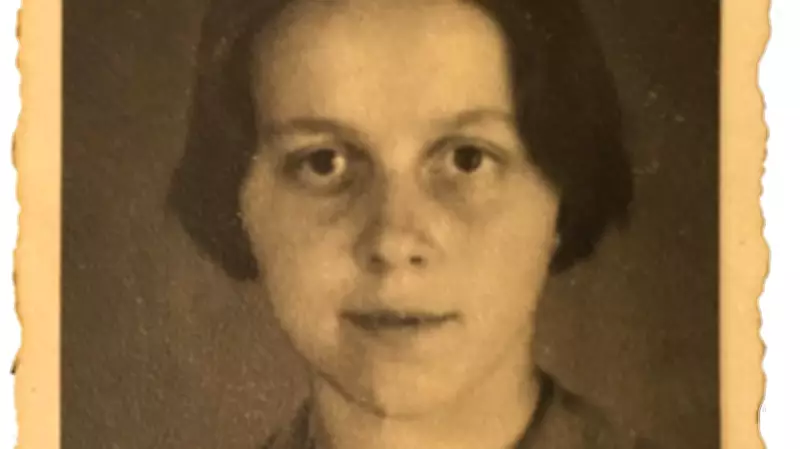
The author shares her own struggle with this linguistic precision. "It's personally demanding not to say, 'My Aunt Helga died in Ravensbrück.' But that isn't truth—she was murdered by the Nazis." Her aunt, Helga Beyer (1920-1942), participated in German resistance before her murder at the women's concentration camp.
This linguistic commitment creates difficult moments, like when medical professionals ask about family health history. "I can't answer questions about heart disease or cancer," she explains. "Most of my family died of unnatural causes. When pressed, I must state brutally: 'Most of my family was murdered in the Holocaust.'"
Modern Parallels: The Danger of Euphemistic Language
This linguistic manipulation isn't confined to historical events. Contemporary news reports about "detention" camps reveal how vocabulary shapes perception and conceals reality. "The so-called 'detention' camps make especially clear how language is used to hide what happens behind walls," the author observes.
She lists concerning modern terminology: "'Illegals' deported without cause, 'migrant' children separated permanently from parents, 'aliens' removed to 'processing' centers, 'temporary holding cells' used for months, 'segregation' meaning solitary confinement." These benign-sounding words obscure conditions including overcrowding, sanitation failures, contaminated resources, medical neglect, disease outbreaks, environmental extremes, guard abuse, and denied legal access.
Historical Echoes and Personal Responsibility
The author describes physical reactions when hearing contemporary descriptions that echo her father's accounts of Buchenwald's savagery. "My nausea turns to panic remembering Hitler's propaganda tactic of repeating lies until they're accepted as truth," she writes. "This applies to language currently used to shield us from callous treatment of human life."
She confronts the question of responsibility: "It's easy to blame ICE—but does that absolve me? This is my country. I'm also responsible. I'm not stopping them/us." The solution requires uncomfortable honesty: "Facing truth isn't easy, but we've seen what avoidance brings: murder, genocide, extermination."
The Imperative of Truthful Language
"We must call things what they are," the author insists. "We must tell the truth. We must not forget or lie about the past, or we will relive it. I fear we're already headed there." The essay concludes with a powerful warning about the consequences of linguistic evasion and the moral necessity of precise, truthful language when describing atrocities both historical and contemporary.
Madelaine Zadik is a Massachusetts-based artist, writer, and plant enthusiast whose work has appeared in numerous publications and been nominated for a Pushcart Prize. She's currently writing a memoir about her relationship with Aunt Helga, known only through letters Helga wrote from Nazi imprisonment.