The Puzzling Power of Punctuation
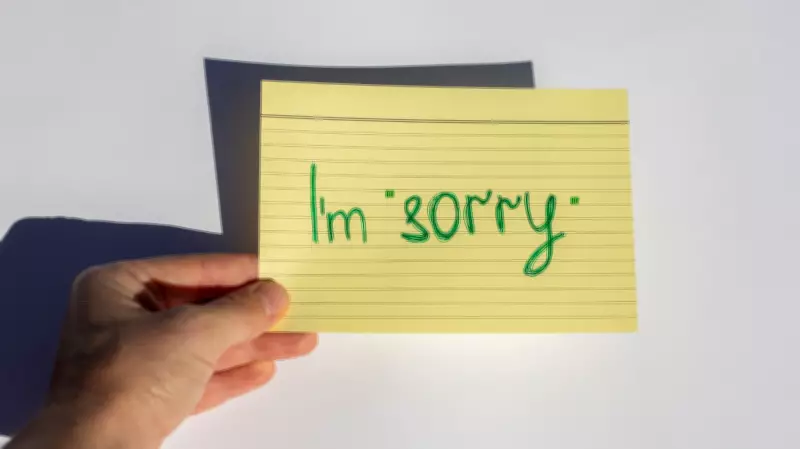
An errant set of quotation marks possesses the remarkable ability to completely transform a sentence's intended meaning. Consider a simple Post-It note left by a roommate that reads: "I'm 'sorry' for eating your leftovers!" Those seemingly innocent quote marks around "sorry" instantly suggest the roommate isn't genuinely apologetic and would happily devour your pad kee mao again given the opportunity.
The Widespread Misuse of Emphasis Marks
Despite the confusion they introduce, many people persistently use quotation marks for emphasis. This phenomenon appears regularly on handwritten signs, in text messages, and across social media platforms. Interestingly, this practice often correlates with certain age demographics. President Donald Trump, age 79, frequently employs random quote marks in his online communications. On Thursday, he wrote on Truth Social: "The Iranian negotiators are very different and 'strange.' They are 'begging' us to make a deal, which they should be doing since they have been militarily obliterated."
Understanding Different Types of Quotation Marks
Before examining these peculiar punctuation choices, it's essential to review standard quotation usage. Most commonly, quotation marks offset dialogue to indicate someone is speaking directly. Then there are "scare quotes," which writers deploy to draw attention to specific words or phrases, signaling irony, sarcasm, uneasiness, or disapproval. For instance, a food critic might write: "The 'piping hot' pizza was served cold," layering on heavy irony.

Finally, we encounter those errant quotation marks favored by Trump and amateur sign-makers. These are used to emphasize words or short phrases in the same manner one might use bold, italic, or underline formatting. Lexicographer Grant Barrett has coined the term "shout quotes" for this practice. In a 2008 blog post, Barrett highlighted White Castle's slogan "Buy 'em by the 'sack'" as a classic example. Here, the quotation marks don't question whether it's truly a sack but rather add emphasis, possibly acknowledging "sack" as a regional term compared to "bag," or highlighting the quantity offered.
The Historical Roots of Shout Quotes
Barrett summarizes that shout quotes "are appropriate when you have no other easy way to indicate emphasis. They're appropriate when used, for example, in casual sign-making. They're appropriate when bolding or underlining is not possible. They're appropriate when used by people who don't do typesetting for a living."
There has been online speculation that people adopted quote marks for emphasis because typewriters lacked other formatting options. However, grammar expert Pat O'Conner, who runs The Grammarphobia Blog, disputes this theory. "Using quote marks in such a way is an old practice that's still with us. It preceded the invention of typewriters and was not derived from typewriting," O'Conner explained.
The practice might stem from early 20th-century advertising conventions. In a 1920 advertising writing guide, author Frederick Houk Law advised: "Place in quotation marks any highly unusual word or expression to which you wish to call emphasis," providing the example "Our 'London-Best Coats' are guaranteed to be rainproof." Historical advertisements, like an 1897 promotion for a "new" Edison brand automatic fountain pen, demonstrate this early usage.
Demographics and Digital Literacy
Is the use of shout quotes primarily a generational phenomenon? Veteran copy editor Amy J. Schneider isn't entirely convinced. "On one hand, yes, people who grew up with software like Microsoft Word may be more familiar with the availability of underlining, italic or bold for emphasis than those who did not ― old habits die hard!" she noted. However, Schneider emphasizes that language and computer literacy levels vary across all age groups.
Schneider believes grammar purists and professional writers should remember that not everyone engages with words and punctuation identically. "Many people see quotation marks as a way to set something off, just as they do for speech ― especially for something like a sign reading, 'Thank You' for not smoking," she said. "Of course it's not appropriate for formal writing, but in casual use such as a handmade sign or a social media post, it serves its purpose."

The Risk of Misinterpretation
Despite their casual utility, shout quotes create significant room for misunderstanding. Social media platforms like Reddit feature numerous posts highlighting humorous examples from quote-mark-happy coworkers. In today's context, quotation marks often trigger associations with sarcasm. Editor and author Linda Taylor, who wrote "Pathway to Publication: Move Your Writing from Manuscript to Book," shared an illustrative anecdote: "I had a friend who had a book published and the sign someone made for her called her a 'writer,' which of course made it sound like she thought she was a writer but she really wasn't. It made her sound like she was a 'writer' with a wink."
Ultimately, whether one finds shout quotes annoyingly imprecise or somewhat endearing in their old-fashioned ambiguity remains a matter of personal preference. As Taylor suggests, there's at least one positive aspect: using them certainly beats the alternative of CAPITALIZING EVERYTHING for emphasis.