Rare Collection of 150 Vintage Photos Documents Vancouver's West End Apartment Evolution
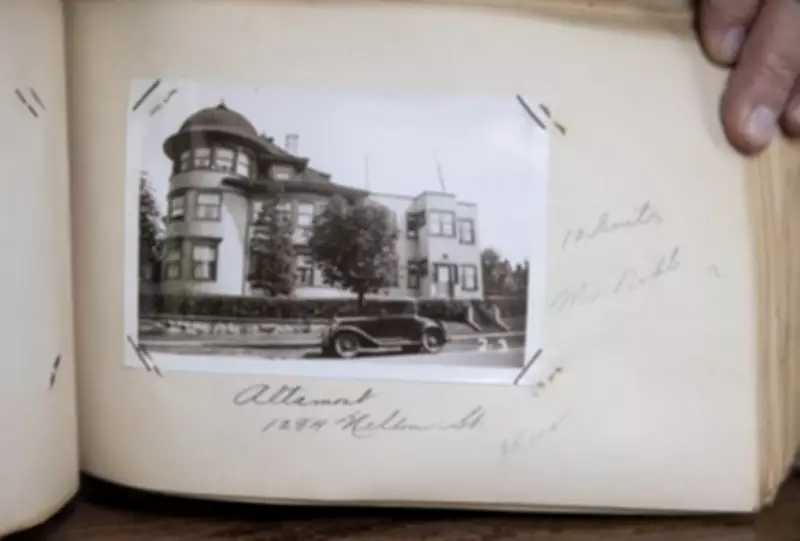
A remarkable collection of 150 vintage photographs from the 1930s and 1940s has surfaced, providing an unprecedented visual record of Vancouver's West End and Fairview neighborhoods during a pivotal period of urban development. The photographs were compiled in a unique ledger-style booklet by prominent early Vancouver developer William Akitt Lightheart, whose family played a significant role in shaping the city's residential landscape.
The Lightheart Legacy in Vancouver's Building History
William Lightheart and his five brothers were instrumental figures in Vancouver's early 20th-century construction boom. According to digitized building permit records spanning from 1901 to 1930, the Lightheart family owned an impressive 62 buildings throughout the city, with the majority being apartment blocks that defined the character of emerging neighborhoods.
The recently discovered booklet, now in the possession of Lightheart's granddaughter Leslie, features a hard cover with distinctive prongs attached to a metal mechanism—a design characteristic of early 1900s hardware catalogues that allowed for page additions and updates. Lightheart, who passed away in 1966 at age 91, meticulously annotated each photograph with handwritten notes detailing building names, addresses, and unit counts.

Financial Insights and Architectural Details Preserved
Beyond visual documentation, the collection provides fascinating financial glimpses into Vancouver's real estate history. For instance, Lightheart recorded that Queen Charlotte Court at 1101 Nicola Street was purchased on March 20, 1941, for $28,000 cash, with the balance payable at "$408.21 per month @ five percent." Such details offer valuable context about property values and financing practices during this transformative era.
Heritage expert John Atkin expressed profound admiration for the collection, describing how his "jaw dropped" as he examined the snapshots. "This is English Bay Mansions at 1306 Bidwell," Atkin noted about one photograph, highlighting its position overlooking the water across from Alexandra Park. "We've got all the original detailing, including the urns and things up on the roof, and then we've got the neighbouring houses."
Documenting Architectural Transformation and Zoning Changes
The photographs capture a critical moment when Vancouver's zoning regulations dramatically altered the West End's architectural character. Atkin pointed to a photograph of a magnificent mansion with a prominent turret at 1284 Nelson Street, which had been converted into ten apartments. "This is a Parr and Fee house, because of the turret," Atkin explained, referencing one of Vancouver's elite turn-of-the-century architectural firms.
"That's the perfect example of the zoning change in 1927-29," Atkin continued. "The single-family house was not permitted to be built in the West End after that period. What you saw was the conversion of large houses like this into apartment houses, because that was the zoning." The original Parr and Fee house has since been replaced by a concrete high-rise, illustrating the neighborhood's ongoing evolution.
Surviving Landmarks and Lost Architectural Features
While some buildings documented in Lightheart's collection have been demolished or significantly altered, others remain standing as testament to Vancouver's architectural heritage. The Banff apartment building at 1201 West Georgia Street, a neighborhood landmark since 1909, appears in the collection with features that have since disappeared. "Look at those balconies—they don't have those balconies anymore," Atkin observed. "It's still a glorious building, but it's lost a lot of its original features."
Similarly, English Bay Mansions (now called English Bay Manor) still stands, though the surrounding houses captured in Lightheart's photograph have been replaced by the Beach Towers high-rise complex. These visual comparisons between past and present offer invaluable insights for historians, architects, and urban planners studying Vancouver's development patterns.

Preserving Visual History for Future Generations
The Lightheart collection represents more than just architectural documentation—it captures the social and economic forces that shaped one of Vancouver's most distinctive neighborhoods. Each photograph tells a story about housing needs, design preferences, construction techniques, and community planning during a period of rapid urban growth.
As heritage experts continue to study these images, they provide crucial context for contemporary discussions about preservation, development, and urban identity. The collection serves as a visual bridge between Vancouver's past and present, reminding residents and historians alike of the layers of history embedded in the city's built environment.