Vancouver's Iconic Angel of Victory Memorial Faces Uncertain Future Amid Development Plans
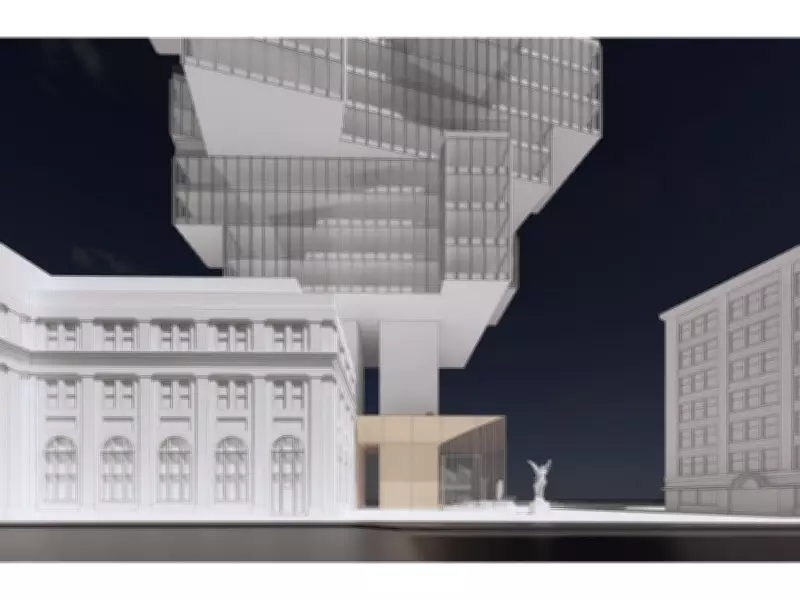
A proposed 22-storey office building, designed with a distinctive Lego tree-like shape, has sparked significant controversy in Vancouver as it threatens to displace a cherished historical landmark. The development, planned for a parking lot adjacent to the heritage Waterfront Station, could force the relocation of The Angel of Victory, a poignant bronze statue that has stood as a solemn tribute for over a century.
A Site-Specific Memorial with Deep Historical Roots
The Angel of Victory is a seven-foot bronze sculpture depicting an angel cradling a fallen soldier, commissioned by the Canadian Pacific Railway to honor the more than 1,100 CPR employees who lost their lives during the First World War. Created by renowned sculptor Coeur de Lion MacCarthy, the statue was installed in 1922 near what was then the CPR Station, now known as Waterfront Station.
Local resident Terri Clark expressed profound concern about the potential relocation, emphasizing that the statue was "site-specific and should remain near pedestrian traffic for all to see." Clark recounted her emotional connection to the artwork, describing how she was "brought to tears" upon first encountering it decades ago and continues to visit each November to pay silent homage to those lost in what was once called "the war to end all wars."

Architectural Ambition Versus Historical Preservation
The proposed development by James KM Cheng Architects represents modern architectural ambition with its tree-shaped design, but preservation advocates argue that such projects should not come at the expense of historical artifacts. Clark contends that "The Angel of Victory is history enveloped in emotion and should be truly on full display rather than becoming a footnote to development."
The statue's current location near Waterfront Station ensures it remains visible to thousands of daily commuters and visitors, serving as a constant reminder of sacrifice and loss. Moving it to accommodate the new building, regardless of design constraints, would fundamentally alter its impact and accessibility.
Broader Implications for Heritage Conservation
This controversy highlights the ongoing tension between urban development and heritage preservation in rapidly growing cities like Vancouver. While new architectural projects can bring economic benefits and modern aesthetics, they often threaten historical landmarks that hold deep cultural and emotional significance for communities.
The Angel of Victory represents more than just public art; it serves as a tangible connection to Vancouver's past and the sacrifices made during one of history's most devastating conflicts. As development proposals continue to reshape the city's skyline, questions about how to balance progress with preservation become increasingly urgent.
Preservationists argue that historical artifacts like The Angel of Victory deserve protection in their original contexts, where they can continue to educate and inspire future generations. The statue's potential relocation raises important questions about how cities value their history amidst constant change and development pressure.