Claims of Rediscovered Michelangelo Sculptures Stir Renaissance Art World
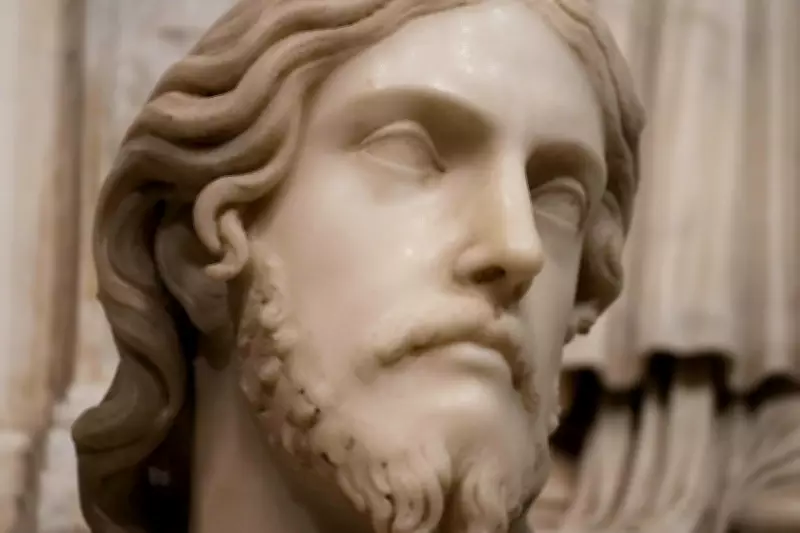
In a development that has sent ripples through the art historical community, new research is challenging long-held attributions of Renaissance sculptures, with claims that works previously thought to be by lesser-known artists may actually be creations of the master Michelangelo Buonarroti. These assertions, centered on a sculpted bust located in the Basilica of Saint Agnes Outside the Walls in Rome, have sparked intense debate among experts, raising questions about authenticity, methodology, and the enduring mysteries of one of history's greatest artists.
New Studies Prompt Reassessment of Artistic Legacy
Italian researcher Valentina Salerno has spearheaded recent studies that propose a reattribution of the bust to Michelangelo, based on stylistic analysis, historical documentation, and technical examinations. Salerno's findings suggest that the sculpture exhibits characteristics consistent with Michelangelo's known works, such as intricate detailing, dynamic composition, and a profound emotional depth that defined his oeuvre. This potential rediscovery could significantly alter the understanding of Michelangelo's later career and his involvement in projects beyond his most famous pieces like the David and the Sistine Chapel ceiling.
The bust, which has been part of the basilica's collection for centuries, was previously attributed to a follower or workshop assistant of Michelangelo. However, Salerno's research points to evidence that may link it directly to the master himself, including comparisons with authenticated sculptures and records of Michelangelo's commissions in Rome during the relevant period. This has led to calls for further investigation, including possible scientific tests like carbon dating or material analysis, to corroborate the claims.

Expert Reactions and Scholarly Debate
Renaissance art historians and curators have expressed a mix of excitement and skepticism in response to these claims. Some experts welcome the potential for new insights into Michelangelo's prolific output, noting that his workshop often collaborated on pieces, making attributions complex. Others urge caution, emphasizing the need for rigorous peer review and collaborative verification before any definitive reattribution is accepted. The debate highlights the challenges in art historical scholarship, where subjective interpretations can intersect with objective evidence.
Critics argue that without irrefutable proof, such as a signature or contemporary documentation explicitly naming Michelangelo as the sculptor, claims of rediscovery risk fueling sensationalism rather than advancing scholarly understanding. They point to past instances where similar assertions have been debunked after closer scrutiny. Nonetheless, proponents of Salerno's research contend that the stylistic parallels are too compelling to ignore and that this could be a rare opportunity to expand the Michelangelo canon.
Implications for Art History and Cultural Heritage
If validated, the reattribution of the bust to Michelangelo would have profound implications for art history and cultural heritage. It could increase the sculpture's value, both monetarily and academically, and prompt museums and institutions to re-evaluate other works with uncertain origins. Additionally, it might inspire renewed interest in Michelangelo's lesser-known projects and his influence on subsequent generations of artists.
The Basilica of Saint Agnes Outside the Walls, already a site of historical significance, could see enhanced visitor interest and conservation efforts to preserve the bust. This case also underscores the ongoing role of researchers like Salerno in uncovering hidden narratives within art, using modern techniques to shed light on centuries-old mysteries. As the debate continues, the art world watches closely, awaiting further developments that could reshape our appreciation of Renaissance masterpieces.
Ultimately, whether these claims hold up to scrutiny or not, they serve as a reminder of the dynamic and evolving nature of art historical inquiry, where new discoveries can challenge established truths and enrich our cultural legacy.