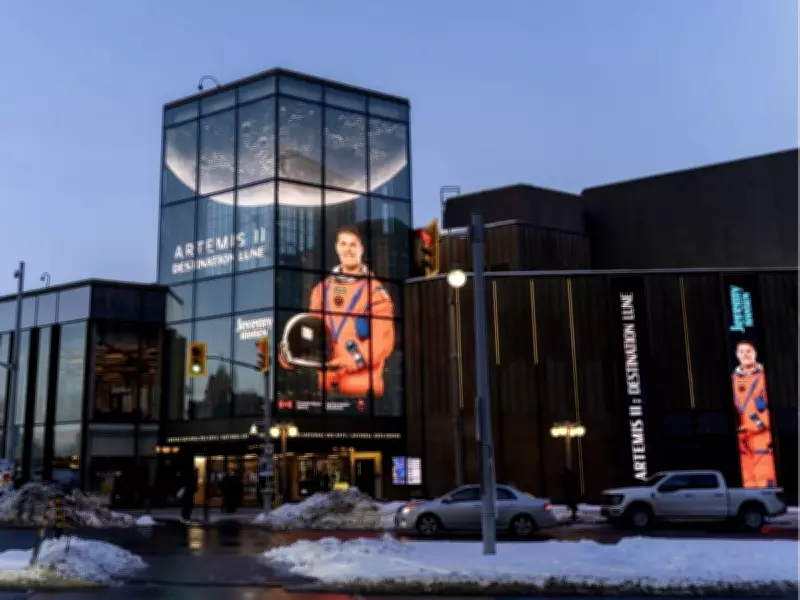
National Arts Centre to Broadcast Artemis II Moon Mission on Iconic Glass Tower
In a groundbreaking fusion of art and space exploration, the National Arts Centre (NAC) in downtown Ottawa will make history by broadcasting the launch of the Artemis II lunar flyby mission on its signature glass tower. This marks the first time the NAC's Kipnes Lantern—a five-story transparent LED screen facade—will be used for a live-streamed public event of this magnitude.
Historic Mission Features Canadian Astronaut
The Artemis II mission represents humanity's first crewed journey to the moon since 1972, and it carries special significance for Canada. Aboard the spacecraft will be Canadian fighter pilot Jeremy Hansen, who will become the first Canadian—and first non-American—to participate in a lunar mission. Hansen's presence aboard Artemis II underscores Canada's growing role in international space exploration efforts.
The live broadcast will transform the NAC's brutalist architecture into a massive viewing platform at the intersection of Elgin and Queen streets. The Kipnes Lantern was originally constructed as the centerpiece of an architectural revitalization project for Canada's 150th anniversary celebrations, and this event represents a novel use of the structure's technological capabilities.

Public Viewing Details and Launch Considerations
The public is invited to attend this free event on Wednesday, April 1, with the first two-hour launch window opening at 6:24 p.m. However, mission officials caution that the launch is not guaranteed to proceed on schedule due to various factors that could cause delays.
Launch windows are carefully calculated time periods when Earth and moon align properly for space missions, but technical issues and weather conditions frequently disrupt planned timelines. As the first crewed test flight of the broader Artemis campaign, the Canadian Space Agency has indicated it's "probable" that the Artemis II mission will encounter issues that may postpone the launch.
Should the initial launch window prove unfavorable, a full schedule of alternative launch opportunities has been prepared to accommodate potential delays while maintaining mission safety protocols.
Technological and Cultural Significance
This innovative broadcasting approach demonstrates how cultural institutions can adapt their infrastructure to serve new purposes in the digital age. By utilizing the Kipnes Lantern's transparent LED screens—which typically display artistic and informational content—the NAC creates a unique public gathering space for witnessing historic events.
The event symbolizes the intersection of multiple disciplines: space science, public engagement, architectural innovation, and cultural programming. It provides Ottawa residents and visitors with an unprecedented opportunity to collectively experience a milestone in space exploration while showcasing Canadian technological and architectural achievements.
As anticipation builds for this historic mission, the NAC's glass tower broadcast promises to create a memorable public experience that bridges the gap between terrestrial arts programming and extraterrestrial exploration ambitions.