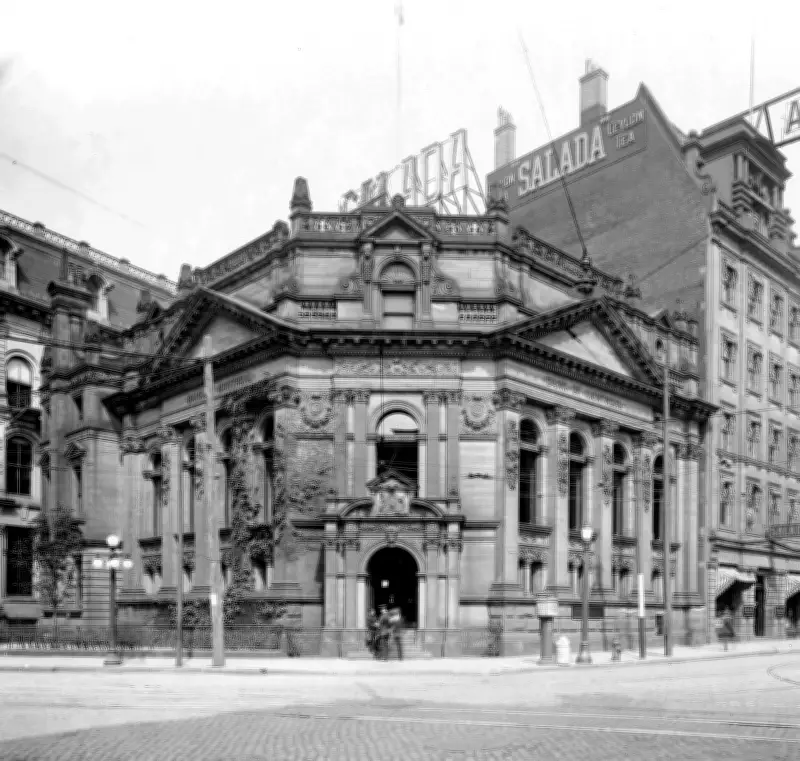
Rediscovering Frank Darling: The Overlooked Architect Who Shaped Toronto's Skyline
In the annals of Toronto's architectural history, one name has been conspicuously absent from public recognition despite a monumental legacy. Frank Darling (1850-1923), often dubbed "the Skyscraper King," was the foremost architect of Toronto's Edwardian Age, yet his contributions have been largely forgotten by modern audiences. A new publication, Toronto Edwardian: Frank Darling, Architect of Toronto's Imperial Age, seeks to rectify this historical oversight by comprehensively documenting his profound impact on the city's built environment.
The Prolific Legacy of Darling & Pearson
From the early 1900s through the late 1930s, Darling's prestigious firm, Darling & Pearson, was responsible for designing numerous prewar landmarks that define Toronto's architectural character. Their portfolio includes some of the city's most recognizable structures:
- The historic Bank of Montreal building on Front Street, which now houses the Hockey Hall of Fame
- The Summerhill LCBO, originally constructed as a train station
- CB2's flagship store on Queen West, an elegant office building
- Multiple buildings at the University of Toronto, including Trinity College
The firm specialized in bank architecture, designing hundreds of branch buildings across Canada. If your local bank occupies an older structure, there's a strong possibility it originated from Darling & Pearson's drawing boards. Beyond Toronto, their influence extended to skyscrapers and significant buildings in Victoria, Winnipeg, Montreal, and other major Canadian cities.

The Edwardian Context and Architectural Innovation
Darling's career flourished during what historians term the Edwardian Age, spanning from the late Victorian period through the onset of the Great Depression. This era was characterized by Gilded Age plutocracy, British Imperial expansion, and conspicuous consumption—all reflected in the substantial public and private buildings of the time.
As building technology advanced in the late 1910s, Darling & Pearson became pioneers in skyscraper design, earning Darling his royal nickname. The firm seamlessly blended traditional architectural elements with emerging technologies, creating structures that were both aesthetically pleasing and structurally innovative.
Postwar Neglect and Historical Recovery
Tragically, the postwar period witnessed a widespread devaluation of prewar architecture across North America. Movements like the International Style dismissed earlier buildings as "stuffy and dated," leading to the demolition of numerous Darling & Pearson creations between 1945 and 1975. Many structures that would be cherished today were lost during this period of architectural reinvention.
"For such a major firm and its leading architect to have been virtually lost to history is puzzling, and not a little tragic," notes architectural historian David Winterton, author of the new book. The survival of so many Darling buildings today stands as testament to their exceptional quality and enduring significance.
Toronto Edwardian: Restoring a Legacy
Winterton's comprehensive work, published by McGill-Queens University Press, serves as both an academic monograph and an accessible exploration of Darling's world. The book is structured in two parts:
- Cultural Context: Examines Darling's training, influences, and the societal forces that shaped his approach to architecture
- Architectural Analysis: Places these influences within the specific buildings Darling created throughout his career
Enhanced by a forward from fellow ERA architect Michael McClelland, the volume features rich historical photography, including rare interior shots seldom seen in architectural publications. The book delves beyond mere building descriptions to explore the social and industrial history behind Toronto's early skyscrapers and the people who commissioned them.

A Rich Tapestry of Toronto's Built Heritage
Beyond commercial structures, Darling designed fashionable residences in Toronto's most exclusive neighborhoods, including Rosedale, Forest Hill, and the Annex. His work represents a crucial chapter in the city's development, capturing the optimism and ambition of Canada's imperial age.
For enthusiasts of historical architecture, urban history, and Toronto's evolution, Toronto Edwardian offers a fascinating journey into a nearly forgotten dimension of the city's past. The book not only documents Darling's extraordinary output but also advocates for proper recognition of an architect whose vision helped shape the Toronto we know today.
As Winterton's research demonstrates, Frank Darling's architectural legacy deserves restoration to its proper place in Toronto's historical consciousness—returning the "Skyscraper King" to his rightful throne in the pantheon of Canadian architectural greats.