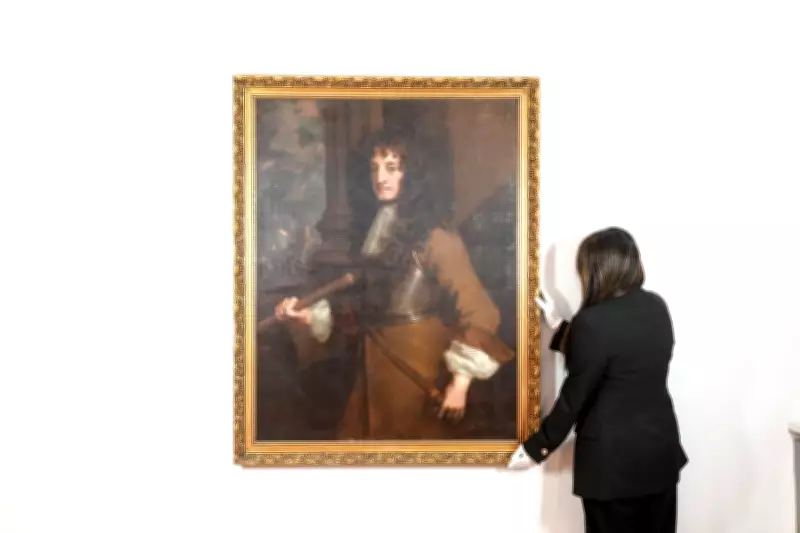
Canadian Auction House Solves Decades-Old Art Mystery
A prominent Canadian auction house has achieved a remarkable breakthrough in art historical research, successfully unraveling a long-standing mystery surrounding a significant piece from the Hudson's Bay Company's heritage collection. The discovery centers on an authentic oil painting of Prince Rupert, the company's first governor, created by the renowned 17th-century portraitist Sir Peter Lely.
The Discovery at Heffel Gallery
The painting was recently identified and authenticated while on display at Heffel Gallery in Toronto. Art experts conducted extensive provenance research and technical analysis, confirming the work's authenticity and its direct connection to the Hudson's Bay Company's early historical records. This represents a major development in understanding the visual legacy of one of Canada's oldest commercial institutions.
The investigation revealed fascinating details about the painting's journey through history, including periods where its whereabouts were completely unknown to art historians. Researchers pieced together documentation spanning centuries to establish an unbroken chain of ownership leading back to the Hudson's Bay Company's original collection.

Significance for Canadian Heritage
This discovery holds particular importance for Canadian cultural heritage for several reasons:
- Prince Rupert played a crucial role in the establishment of the Hudson's Bay Company in 1670
- Sir Peter Lely was among the most celebrated portrait painters of the Restoration period
- The painting represents a tangible connection to Canada's early commercial and colonial history
- It fills a significant gap in the documented visual record of the Hudson's Bay Company's leadership
Art historians emphasize that works of this quality and historical significance rarely emerge from obscurity with such clear documentation. The authentication process involved multiple layers of verification, including stylistic analysis, materials testing, and archival research across international collections.
Broader Implications for Art Research
The successful resolution of this mystery demonstrates how auction houses have evolved beyond mere commercial entities to become important centers for art historical research and discovery. This case highlights several important trends in the art world:
- Increasing collaboration between auction specialists and academic researchers
- The growing importance of technological analysis in authentication processes
- Renewed interest in documenting Canada's visual heritage
- The value of persistent provenance research in solving art historical puzzles
The painting's authentication represents not just a commercial success but a genuine contribution to Canadian cultural scholarship. As more institutions recognize the importance of thoroughly researching their holdings, similar discoveries may continue to emerge, enriching our understanding of Canada's artistic and historical legacy.