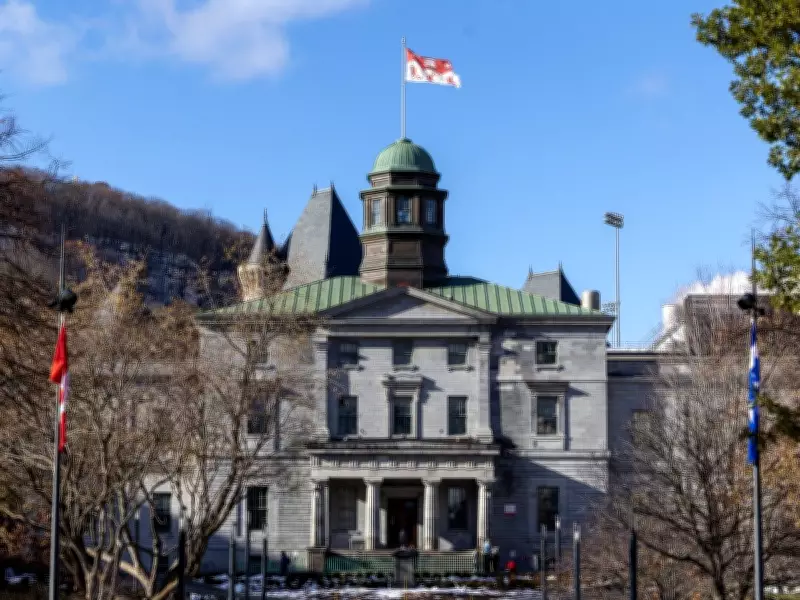
McGill University Faces Turmoil as Law Students' Israel Boycott Referendum Sparks Donor Resignation and Legal Action
McGill University is embroiled in a significant controversy following a law student referendum that urges a boycott of Israeli academic institutions, prompting a major donor to withdraw support and triggering a legal challenge. University President Deep Saini has declared the referendum "discriminatory" and invalid, setting the stage for a potential institutional clash.
Referendum Details and University Response
The Law Students' Association (LSA), the official student body for McGill's law faculty, organized a referendum titled 'Regarding the Academic and Cultural Boycott of Israel to Preserve Academic Freedom.' This measure came in response to Israel's military operations in Gaza, which the referendum describes as genocide. It calls on the LSA to formally adopt a boycott of Israeli academic institutions, arguing that universities like Tel Aviv University are tied to the state and military.
The referendum passed with approximately 57% support, according to results shared with students on March 21. The vote saw a turnout of 67%, with 437 of 649 eligible students casting ballots. If implemented, the LSA would be required to publicly endorse the boycott and avoid institutional partnerships with Israeli universities, including exchanges and collaborations, though the proposal specifies that the boycott would target institutions and agreements, not individual academics.

In a decisive email to law students, President Deep Saini stated that the motion falls outside the LSA's authority and has no effect on the faculty's academic or operational decisions. "While this referendum was supported by a majority of those who voted, I make no assumptions about their intent. But in matters of discrimination, impact — not intent — governs," he wrote. Saini added that the effects are antisemitic and must guide McGill's response.
Consequences and Legal Challenge
Saini warned that if the LSA formally adopts the measure, the university would place it in default of its memorandum of agreement. This could result in the LSA losing the right to use the McGill name, access campus space, and distribute publications. The situation has escalated with a Jewish student filing a legal application on March 22 seeking to block the referendum result from taking effect. The student argues they would be affected by any severance of academic exchange agreements and has sought provisional, interlocutory, and permanent injunctive relief against the LSA and Law Students for Palestine at McGill, which led the motion. A hearing is scheduled, and Saini confirmed the university supports this legal challenge.
Donor Resignation and Broader Context
The referendum has also led to the resignation of Jonathan Amiel, chair of the Law Faculty Advisory Board and a significant donor. In a letter shared on LinkedIn, Amiel cited the referendum and described an "escalating pattern of hostility toward Jewish students, faculty and alumni, met with persistent inaction." He expressed that conduct contravening university policies has proceeded without meaningful consequence, including the normalization of events marking mass violence and obstruction of access to facilities.
Amiel, who was previously featured in a McGill article as a donor praising his "tremendous education from McGill Law," stated that while he does not question the personal integrity of McGill's leadership, the university has failed to act decisively. "In that absence, direction has effectively been ceded to actors whose objectives are fundamentally misaligned with the university's core academic mission," he wrote.
This referendum follows years of activism on Montreal campuses, including encampments and protests related to the Israel-Hamas war. Last October, the McGill Association of University Teachers also voted in favor of calling on the university to end partnerships with Israeli universities. The LSA did not respond to requests for comment before publication, leaving the future of the boycott measure uncertain as legal and institutional pressures mount.