Edmonton Educator in Kuwait Demonstrates Remarkable Composure During Regional Conflict
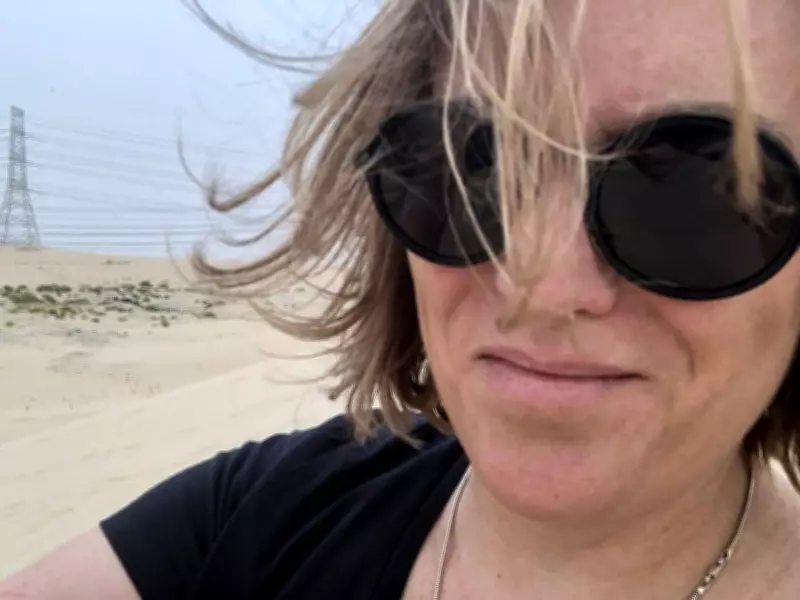
The measured, almost unsettling calm in Lorelei Loveridge's voice contrasts sharply with the reality she describes. Speaking from her apartment in Hawally, Kuwait, the Edmonton native recounts air raid sirens piercing the sky with robotic detachment, a testament to her decades of experience in volatile regions.
'You Have to Normalize Things'
"The initial thing is just such a shock to the system," Loveridge explains, her tone steady despite describing munitions passing through nearby airspace. "Even with warning, it remains a profound shock. But you have to remain in this environment without ramping up anxiety levels. You kind of have to normalize things, right?"
Since the United States and Israel launched joint strikes against Iran on February 28, 2026, air raid warnings have become a regular occurrence in compact Kuwait, sounding approximately every four hours. Loveridge describes the alerts as clusters lasting one to two and a half minutes, often accompanied by Arabic announcements she cannot fully comprehend.

Two Decades of Middle East Experience
Some Edmontonians might recognize Loveridge from her involvement in the city's 1990s music scene, where she still performs during visits home. However, for twenty-four years, she has lived throughout the Middle East, including Beirut during the 2006 hostilities and Saudi Arabia near areas scoured for terrorist cells.
For the past two and a half years, she has worked as a teacher in Kuwait, a position that continues despite the escalating regional tensions. While other expatriates panic and contact embassies for evacuation plans, Loveridge maintains her characteristic composure.
"I'm annoyed, I'm concerned, I'm uncomfortable," she admits. "Those were the dominant feelings for two days. Now I can feel uncomfortable while recognizing this is our current reality."
Educational Disruption and Community Response
The conflict has significantly disrupted education in Kuwait. After just one day of attempting asynchronous learning, Loveridge observed students completely disengaging from homework assignments. "Nobody's getting anything done," she reports. "Everybody here is concerned about the war, the munitions coming in. It's erratic but constant—every few hours, moving around the city and country."
Loveridge maintains connections with expatriate friends throughout the Middle East and notes that many fellow teachers in Kuwait are American. She acknowledges varying anxiety levels within the community while placing herself firmly on the "don't panic" spectrum due to her extensive regional experience.
Sensory Details of Conflict
The educator describes the warning sirens as resembling construction vehicle backup beeps, followed by what she calls a "wavy signal" when the all-clear is given. Because Kuwait is geographically compact, she often hears sirens from neighboring areas simultaneously, creating an overlapping auditory landscape of alert.
Despite the proximity to conflict zones and regular disruptions, Loveridge continues her work while monitoring developments. Her calm demeanor represents a survival strategy honed through nearly a quarter-century in regions where geopolitical tensions frequently escalate into audible, tangible realities affecting daily life.