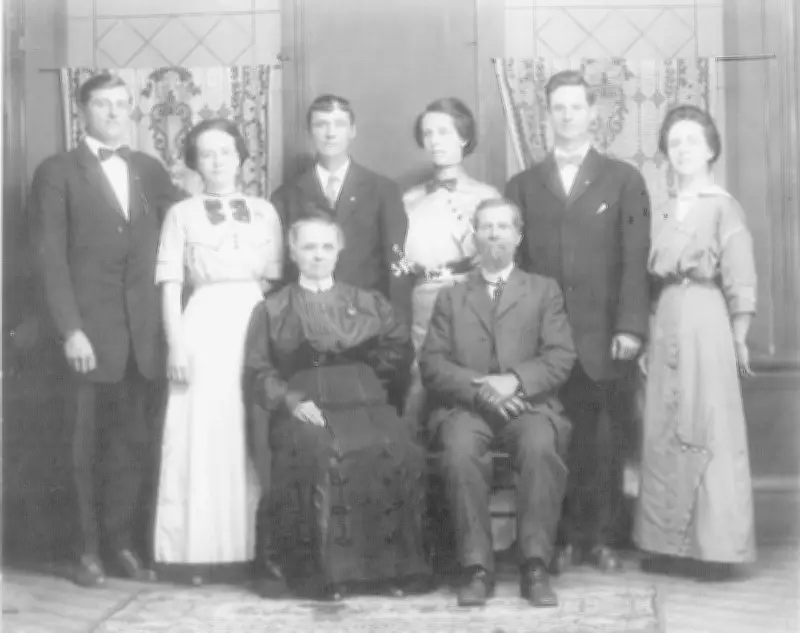
Americans are increasingly looking back centuries to find Canadian ancestors and claim citizenship, a trend highlighted by Jeffrey Lensman of Salt Lake City, Utah. Lensman is seeking Canadian citizenship based on his great-great-grandfather Odilon Marceau, who was born in Quebec in 1838. Marceau and his wife Mathilde Goyette are pictured with their adult children in a 1910 handout photo.
Historical Connections
The practice involves tracing lineage to Canadian-born ancestors, often from the 19th century or earlier. Canada's citizenship laws allow individuals born abroad to claim citizenship if they have a parent who is a Canadian citizen, but this can extend to grandparents in some cases. However, for those with ancestors further back, the process can be more complex and may require legal avenues or special provisions.
Case Study: Jeffrey Lensman
Lensman's great-great-grandfather Marceau was born in Quebec in 1838, making him a Canadian citizen at birth. Lensman is now pursuing citizenship through this ancestral link. The Canadian Press provided the image of Marceau and Goyette with their children, underscoring the deep roots that some Americans are exploring.

Broader Implications
This trend reflects a growing interest in dual citizenship and heritage. For many Americans, Canadian citizenship offers benefits such as access to healthcare, education, and the ability to live and work in Canada. The process can be lengthy and requires documentation proving the ancestral link.
As more Americans explore their genealogical past, experts suggest that this could lead to an increase in citizenship applications. The Canadian government has not commented specifically on this trend, but it aligns with broader patterns of global mobility and heritage tourism.