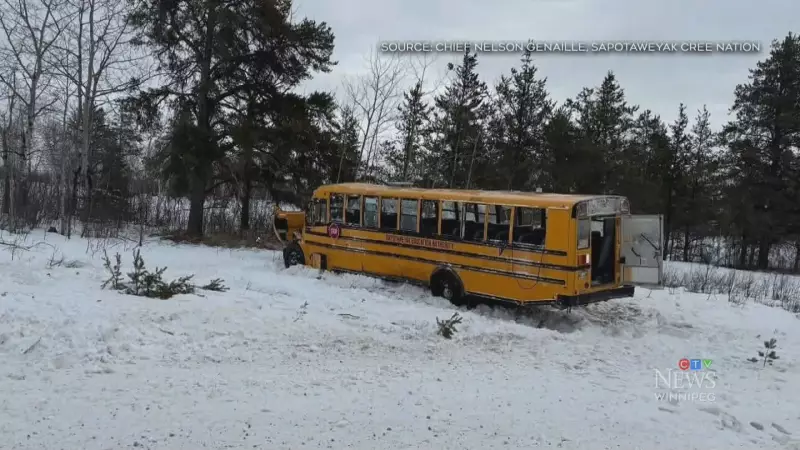
A recent school bus accident in Western Manitoba has forcefully brought the long-standing debate over passenger safety back into the public spotlight. The rollover incident, which occurred on January 15, 2026, has prompted urgent calls from safety advocates and concerned citizens to mandate seatbelts on all school buses across the province.
A Wake-Up Call on Wheels
The unsettling event served as a stark reminder of the potential risks in student transportation. While specific details of the crash location and the number of children involved were not immediately disclosed in the initial report, the outcome was clear: it was a serious incident that could have ended in tragedy. The sentiment was captured in a chilling observation from officials at the scene: "We're lucky there's no deaths." This statement underscores the precarious nature of the situation and has become a rallying cry for those demanding immediate action on bus safety upgrades.
The Persistent Debate Over Bus Safety Standards
For decades, the installation of seatbelts on large school buses has been a contentious issue in Canada and beyond. Proponents argue that seatbelts, particularly three-point lap-and-shoulder belts, are a fundamental safety feature that could prevent ejections and minimize injuries during collisions or rollovers. They point to the standard practice in smaller vehicles and ask why the same level of protection isn't afforded to children during their daily commute.

Opponents or those advocating for caution often cite high retrofit costs, concerns about proper usage and enforcement by young children, and studies suggesting the compartmentalized, high-backed seating in modern buses is designed to protect through a concept called "compartmentalization." However, critics of this design argue it is less effective in side-impact collisions or rollovers—precisely the type of accident that occurred in Western Manitoba.
Looking Forward: Policy and Prevention
This incident is likely to add significant weight to the arguments of safety campaigners and may pressure provincial transportation authorities to re-evaluate current regulations. The call for seatbelts is not just about adding physical restraints; it's part of a broader conversation about modernizing safety protocols, improving driver training for emergency situations, and ensuring vehicle design keeps pace with the latest safety research.
The Manitoba rollover, while fortunately not fatal, acts as a critical case study. It provides a real-world example that will be scrutinized by policymakers, school boards, and parents alike. The fundamental question remains: in an era where vehicle safety technology continually advances, should the iconic yellow school bus, a symbol of childhood for millions, be updated to include what many consider a basic lifesaving device? The accident near Winnipeg suggests that for a growing number of Canadians, the answer is a resounding yes.