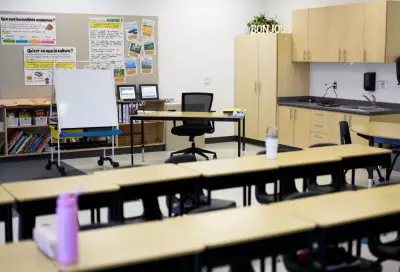
A recent policy prohibiting cellphone use during school hours at a secondary institution in Quebec is receiving positive feedback from the very individuals it affects most: the students. Administrators at the school also report observing tangible benefits since the ban's implementation.
Shifting Focus from Screens to Social Interaction
At Mgr-Parent school in Longueuil, just outside Montreal, the change in atmosphere is noticeable. Instead of heads bent over devices during breaks, students are engaging in face-to-face activities. On Thursday, December 18, 2025, students like Raphael Lortie, Hugo Blanvillain, Marianne Laflamme, and Rachelle Paquette were seen playing cards together, a scene that has become more common.
School officials state that the primary goal of the ban was to minimize digital distractions in the classroom, aiming to improve academic concentration. Early observations suggest this objective is being met, with teachers reporting fewer interruptions and a more engaged student body during lessons.

Student and Administrative Perspectives Align
Interestingly, the policy, which could have been met with resistance, has found support among the student population. Many have expressed that they feel less pressure to constantly check their phones and are finding it easier to focus on their work. The unintended but welcome consequence has been a resurgence of spontaneous social interaction during free periods.
Administrators highlight that the ban is not about punishing technology use but about creating designated spaces and times where interpersonal skills and undivided attention can flourish. They emphasize that the policy is part of a broader discussion about healthy digital habits and their place within an educational environment.
A Growing Trend in Educational Policy
The move by this Quebec high school reflects a larger, ongoing conversation across Canada and in many other countries about the impact of smartphones on youth mental health, social development, and academic performance. While approaches vary by province and school district, the experiment at Mgr-Parent provides a real-time case study.
The positive initial feedback from Longueuil may encourage other educational institutions to evaluate their own policies regarding personal devices. The key takeaway so far is that a structured approach, developed with clear educational goals in mind, can lead to improvements in both the learning environment and the social dynamics of a school.