A Philadelphia Childhood and the Missing Pieces of History
Growing up in Philadelphia, field trips to Independence Mall were a common educational experience. I vividly recall my second-grade tour: meeting an actor portraying Benjamin Franklin, gazing up at the Liberty Bell, and absorbing the patriotic atmosphere. Yet, even as a young child, I noticed a glaring absence. There was no mention of African Americans' profound contributions to the founding of the United States or how their forced labor built the nation's early economic might.
Imagine being a Black child in a city that is roughly 40% Black, repeatedly told your hometown is the birthplace of democracy, yet seeing no reflection of your people's legacy. It feels like being cropped out of a family reunion photo. You were there; you even brought a dish. But the shared image shows no trace of your presence.
The Home Education That Filled the Gaps
Fortunately, I had a mother who was both an intellectual and an activist. She worked for over 36 years as a librarian assistant in the Philadelphia public school system. At home, she provided the education the public tours lacked. She purchased books on Black history, took us to lectures by renowned scholars, and showed us documentaries.

This home curriculum offered me the uncropped version of American history. It taught me about my people's valuable contributions, which built my self-esteem and instilled a belief that I, too, had something to offer my country. However, no child should need such a uniquely equipped parent to learn this essential history. This knowledge belongs in our public spaces.
The President's House Exhibit: A Brief Glimpse of Truth
For a time, one such space existed. In 2010, after concerted effort by historians and advocates, an exhibit titled "The President's House: Freedom and Slavery in the Making of a New Nation" opened in Philadelphia. Located just steps from Independence Mall, it honored the nine enslaved Africans who labored for President George Washington.
The exhibit powerfully revealed the central contradiction of the early nation: championing freedom while practicing slavery. For 16 years, millions of visitors received a more complete, uncropped view of history, learning about the complexities of Founding Fathers who advocated for democracy while enslaving people.
The Deliberate Erasure Under the "Restoring Truth" Order
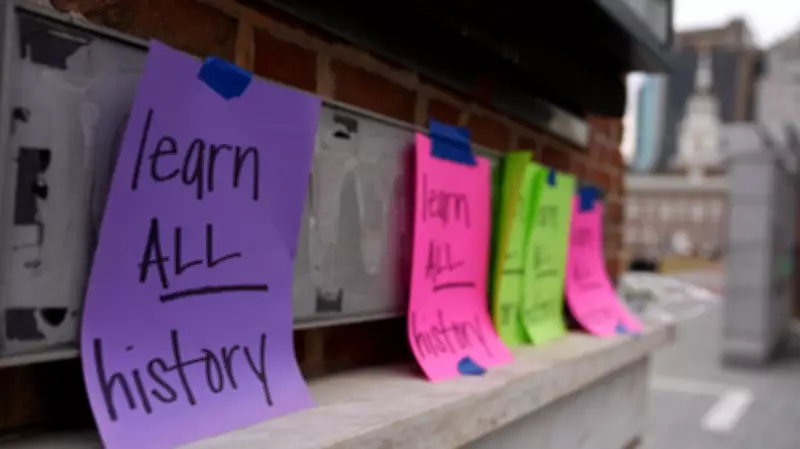
This educational opportunity was dismantled on January 22nd. The Trump administration ordered the National Park Service to remove the exhibit, acting under President Donald Trump's March 2025 executive order, "Restoring Truth and Sanity to American History." This order claims that honest accounts of the past "deepen societal divides" and bars federal sites from discussing slavery or accurate narratives of marginalized communities.
Watching crews remove plaques with crowbars sent me back to that second-grade field trip. My people were being cropped out again. This erasure sanitizes history, portraying the Founding Fathers as infallible saints rather than complex figures. Without an accurate, complex understanding of our past, we risk deepening the dehumanization of Black people and other communities of color.
A Broader Pattern of Historical Censorship
The removal of the President's House exhibit is not an isolated incident. It is part of a broader pattern by the administration to erase Black struggles and accomplishments from the national story. We have witnessed Diversity, Equity, and Inclusion (DEI) programs slashed nationwide. Books featuring Black characters and stories have been banned in libraries and schools. The President himself has shared racist memes on social media.
Our contributions and experiences are being systematically removed from the American narrative, even as we are targeted by leaders sworn to protect us.
Legal Challenge and Hope for Restoration
There is, however, a fightback. The city of Philadelphia has filed a federal lawsuit against the Trump administration, seeking to restore the exhibit and the stories of the nine enslaved individuals. A judge has already barred further changes pending the case's outcome.

If Philadelphia prevails, I look forward to a new tour of Independence Mall. I imagine walking through an exhibit that presents the Founding Fathers in full complexity—their ideals and their despicable actions. I imagine learning how my ancestors' blood, sweat, and tears contributed to this fledgling country's success.
The Unfinished Work of the Nation
Some argue museums should foster national pride. I contend the best exhibits inspire viewers to see our country as unfinished. They remind us that much work remains to create a more just and equal society, as envisioned in the Declaration of Independence's promise that "all men [and women] are created equal."
This is the grand possibility I hold for myself, my people, and future generations. But it can only happen if we commit to presenting our history fully and accurately. We all deserve to see the uncropped picture of our nation's past. Only then can we avoid repeating its gravest mistakes and work collectively to build something better for everyone.