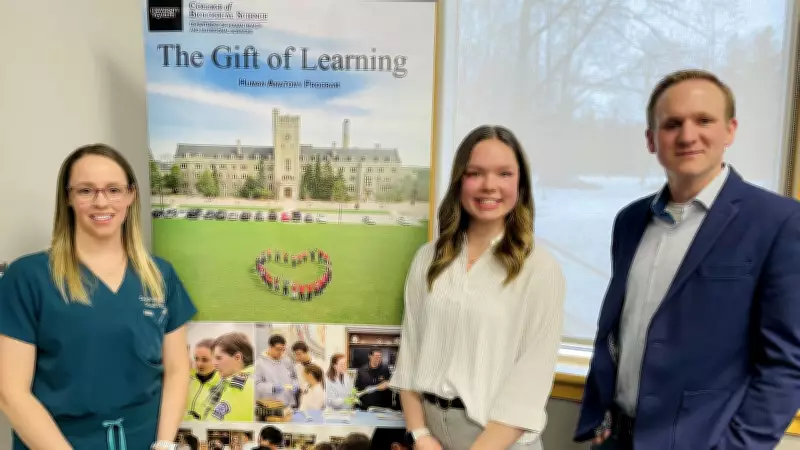
University of Guelph Stands Firm on Anatomy Education Amid National Cuts
In a significant shift across Canadian medical education, numerous institutions are scaling back their foundational anatomy training programs. However, the University of Guelph is charting a different course, steadfastly maintaining its comprehensive, hands-on approach to this critical discipline.
A Contrast in Educational Philosophies
While the trend leans toward reduced classroom hours for traditional anatomy studies, Guelph continues to prioritize direct, practical experience. This commitment ensures that students gain essential skills through rigorous, tactile learning methods that are increasingly rare elsewhere.
The university's strategy emphasizes real-world application, blending theoretical knowledge with physical practice. This method is designed to produce graduates who are not only knowledgeable but also proficient in the practical aspects of medical care.

The Importance of Hands-On Learning
Anatomy serves as the cornerstone of medical science, providing the fundamental understanding of human structure necessary for diagnosis, surgery, and treatment. By preserving extensive hands-on training, Guelph aims to foster a deeper, more intuitive grasp of the human body among its students.
This approach is particularly vital in an era where technological advancements sometimes overshadow basic clinical skills. The university's curriculum ensures that future doctors remain adept at physical examinations and procedures that rely on anatomical precision.
Broader Implications for Healthcare
The decision by other schools to cut anatomy training has sparked debate within the medical community. Critics argue that such reductions could compromise patient safety and the overall quality of healthcare. In this context, Guelph's stance is seen as a reaffirmation of traditional medical values.
By investing in comprehensive anatomy education, the University of Guelph is positioning itself as a leader in producing well-rounded, competent medical professionals. This could influence other institutions to reevaluate their own curricula in the future.
Ultimately, the university's commitment underscores a belief that hands-on experience is irreplaceable in medical training, ensuring that graduates are thoroughly prepared for the complexities of modern healthcare.