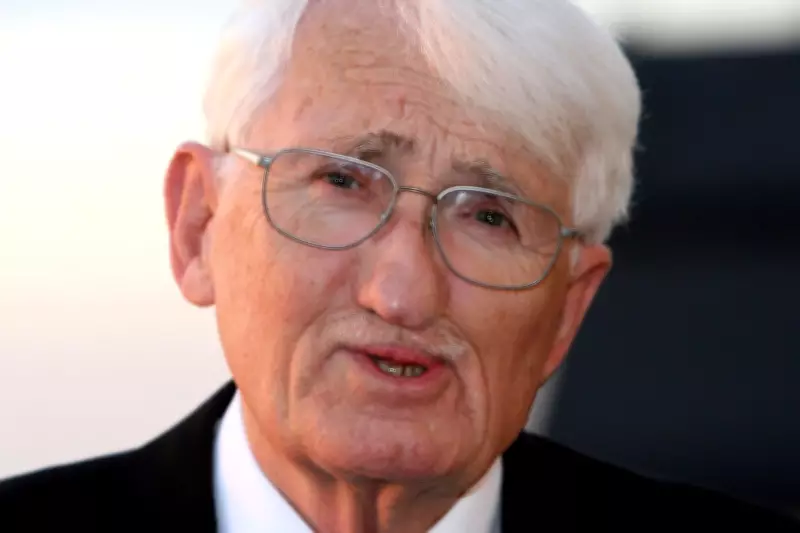
German Philosopher Jürgen Habermas Passes Away at 96
Jürgen Habermas, one of the most influential German philosophers of the modern era, has died at the age of 96. His groundbreaking work on communication, democracy, and social theory has left an indelible mark on academic and public discourse worldwide.
A Legacy of Intellectual Rigor
Habermas was renowned for developing the theory of communicative action, which emphasizes the role of rational discourse in shaping democratic societies. His ideas challenged traditional philosophical frameworks and offered new insights into how individuals and institutions interact.
Throughout his career, he authored numerous seminal works, including The Theory of Communicative Action and Between Facts and Norms, which have been translated into multiple languages and studied across disciplines. His contributions extended beyond philosophy into sociology, political science, and law.

Impact on Global Thought
As a public intellectual, Habermas actively engaged in debates on European integration, human rights, and the future of democracy. He was a vocal advocate for a more inclusive and rational public sphere, arguing that open dialogue is essential for societal progress.
His influence reached far beyond Germany, with scholars and policymakers around the world drawing on his theories to address contemporary challenges. Habermas's work continues to inspire discussions on ethics, justice, and the role of communication in a globalized world.
Remembering a Philosophical Giant
Born in 1929, Habermas witnessed and reflected on some of the most transformative events of the 20th and 21st centuries. His intellectual journey was shaped by post-war reconstruction, the Cold War, and the rise of digital media.
Colleagues and admirers have praised his unwavering commitment to critical thinking and his ability to bridge academic rigor with practical relevance. As news of his passing spreads, tributes are pouring in from academic institutions, media outlets, and public figures globally.
Habermas's death marks the end of an era for philosophy, but his ideas will undoubtedly continue to resonate for generations to come. His work remains a vital resource for anyone seeking to understand the complexities of modern society and the pursuit of a more just world.