More than five years after the previous Justin Trudeau regime first claimed to be “actively considering” a foreign lobbyists’ registry (officially the Foreign Influence Transparency Registry) in February 2021, Canada still does not have one.
On March 6, 2023, at the height of the controversy over foreign interference by China, India, Russia and other countries, Trudeau promised Canadians he would create one. In September 2023, the Trudeau government reluctantly launched a public inquiry into foreign interference, which recommended creating the registry. In June 2024, the Liberals finally passed the Foreign Influence Transparency and Accountability Act. In January 2026, the act’s proposed regulations were published in the Canada Gazette and the public consultation period ended in February. In March 2026, Minister of Public Safety Gary Anandasangaree named Anton Boegman as the government’s choice for the position of Foreign Influence Transparency Commissioner.
But the registry still is not being enforced, which the U.S. has had since 1938, Australia since 2019 and the U.K. since 2025. Canada’s yet-to-be enforced law requires lobbyists acting on behalf of foreign interests to register their activities within two weeks, with administrative penalties for violations ranging from $50 to $1 million and criminal penalties of up to $5 million and five years in prison. However, the registry is not a panacea for transnational repression, industrial espionage, intellectual property theft and attempts to influence politicians and bureaucrats at all levels of government using everything from bribery to threats. It is one “guard rail” Prime Minister Mark Carney assured Canadians would help to ensure their safety and security.

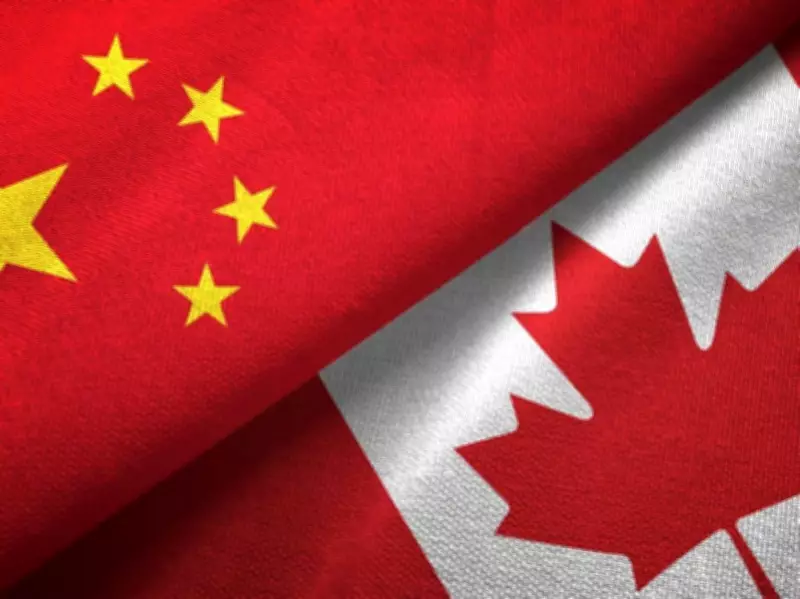
This comes as Canada transitions away from viewing China as its greatest security threat (Carney’s view during the federal election in May 2025) and “the most active perpetrator of foreign interference targeting Canada’s democratic institutions” (the final report of the foreign interference inquiry in January 2025). Carney says we are engaged in a “new strategic partnership” with China — his words when he announced his EV/canola deal in Beijing with Chinese President Xi Jinping in January. That raises the question of whether the Carney government is slow-walking the foreign lobbyists’ registry so as not to offend our “strategic partners” in Beijing.
There are similar concerns about the secret deal Canada has agreed to on the RCMP co-operating with Chinese police, given the highly controversial nature of these agreements in the past. All we know about it is the brief description the Prime Minister’s Office released in Beijing in January. According to the deal: “Canada and China will … pursue pragmatic and constructive engagement in public safety and security (and) increase co-operation to better combat narcotics trafficking, transnational and cybercrime, synthetic drugs and money laundering” to “create safer communities for people in both our countries.”
Sounds reasonable. The problem is similar agreements in the past with China have resulted in allegations from former Canadian diplomats, Chinese dissidents and immigration lawyers that Canada turned a blind eye to illegal methods used by Chinese police to gather evidence. These included the use of torture to force confessions and threatening relatives of targeted fugitives under campaigns initiated by Xi, initially at least, in co-operation with the RCMP, known as Operation Fox Hunt and Operation Sky Net. China said its goal was to convince Chinese criminals living in Canada to return to China to face prosecution, but the fear was that this was often a cover for punishing political dissidents.