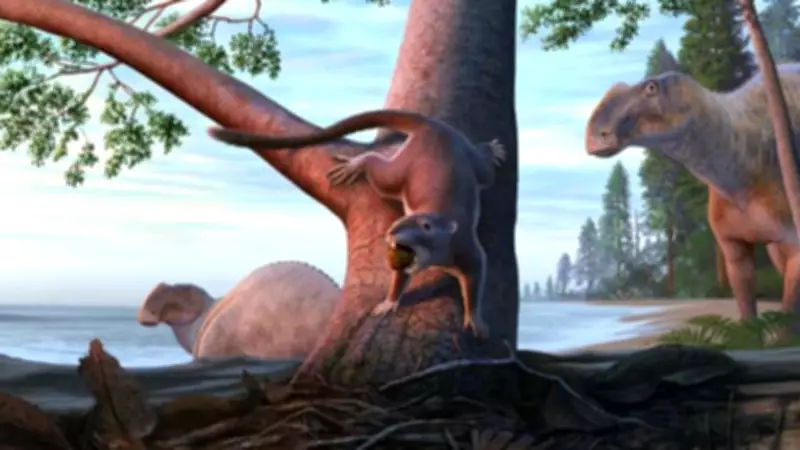
A newly discovered species of hamster-sized mammal, named Cimolodon desosai, outlasted most dinosaurs, researchers have revealed. The tiny creature lived during the Late Cretaceous period and survived the mass extinction event that wiped out about three-quarters of Earth's plant and animal species, including all non-avian dinosaurs, around 66 million years ago.
Discovery and Significance
The fossil remains of Cimolodon desosai were unearthed in North America, providing new insights into mammalian evolution during the age of dinosaurs. The species belongs to a group of early mammals that were small, shrew-like, and likely nocturnal. Its survival through the Cretaceous-Paleogene (K-Pg) extinction event highlights the resilience of certain mammal lineages.
“This discovery shows that some mammals were able to adapt and persist through one of the most catastrophic events in Earth’s history,” said lead researcher Dr. Emily Stone. “Cimolodon desosai is a testament to the tenacity of early mammals, which eventually diversified into the wide range of species we see today, including humans.”

Physical Characteristics
Based on fossilized teeth and jaw fragments, scientists estimate that Cimolodon desosai weighed only about 100 grams, similar to a modern hamster. It had sharp, insectivorous teeth adapted for eating insects, seeds, and possibly small fruits. An illustration shows the creature perched on a tree branch with a fruit in its mouth, depicting its likely arboreal habits.
Implications for Mammalian Evolution
The discovery challenges previous assumptions that mammals remained insignificant until after the dinosaurs’ demise. Instead, it suggests that some mammals had already carved out ecological niches and possessed traits that enabled them to survive the extinction event. These traits may have included small body size, generalist diets, and burrowing or nocturnal behaviors that offered protection from environmental upheaval.
“Cimolodon desosai and its relatives were the unsung heroes of the K-Pg extinction,” said co-author Dr. Mark Chen. “While dinosaurs vanished, these tiny mammals carried on, eventually giving rise to the incredible diversity of mammalian life we see today.”
Future Research
The research team plans to continue excavations in the same region to uncover more fossils that could shed light on how mammals evolved and survived during this critical period. They also aim to use advanced imaging techniques to study the internal structure of the fossils, providing clues about the creature’s sensory abilities and lifestyle.
The findings were published in the Journal of Vertebrate Paleontology and have been met with excitement from the paleontological community. The study underscores the importance of small, often overlooked fossils in understanding major evolutionary transitions.