Rescuers have recovered the last victims from a devastating train collision in Bekasi, Indonesia, that claimed 14 lives and left dozens injured. The incident occurred on Tuesday, April 28, 2026, when two passenger trains collided on a busy railway line in the West Java city, sparking a massive emergency response.
Details of the Collision
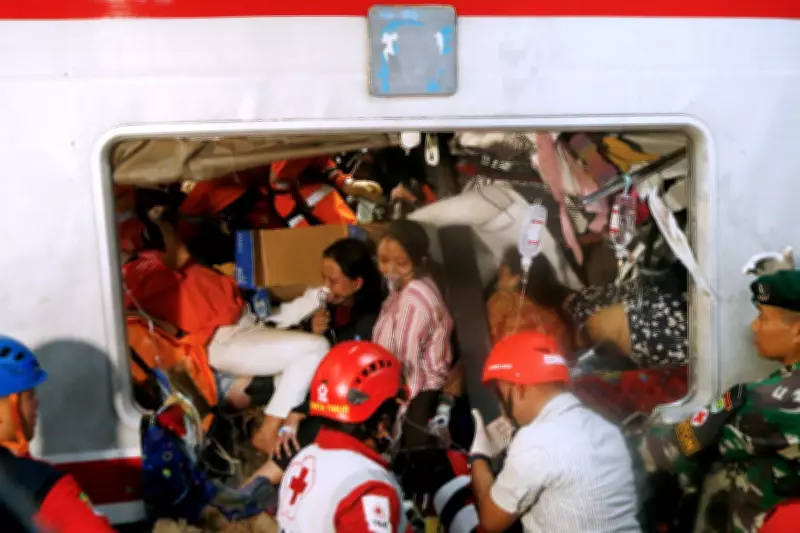
The crash involved a local commuter train and an intercity service, both operating at high speed. Preliminary investigations suggest a signaling failure may have contributed to the disaster. The impact caused several carriages to derail and pile up, trapping passengers inside the twisted metal. Emergency crews worked tirelessly through the night to extract survivors and recover the deceased.
Casualties and Injuries
Official reports confirm 14 fatalities, with many victims identified as daily commuters. Over 60 individuals sustained injuries ranging from minor cuts to severe fractures and internal trauma. Hospitals in Bekasi and Jakarta were placed on high alert to handle the influx of casualties. Medical teams provided urgent care, with some victims requiring surgery.

Rescue and Recovery Operations
The Indonesian National Search and Rescue Agency (Basarnas) coordinated the response, deploying hundreds of personnel, including police, military, and volunteers. Heavy machinery was used to lift wreckage and access trapped passengers. The last victim was recovered late Wednesday, bringing closure to the families awaiting news. Authorities have launched a full investigation to determine the exact cause of the collision.
Community and Government Response
Local officials expressed condolences and promised support for the victims' families. The Ministry of Transportation announced an immediate safety review of the railway network, focusing on signal systems and crew training. Community members gathered at the crash site to offer prayers and flowers, while grief counselors were made available to survivors and relatives.
Broader Context
Train accidents are not uncommon in Indonesia, where aging infrastructure and overcrowded routes pose ongoing challenges. This incident has reignited calls for modernization and investment in rail safety. The government has pledged to expedite upgrades, but critics argue that more urgent action is needed to prevent future tragedies.