The Unsmiling Truth Behind Passport Photos
For many travelers, the passport photo is a source of dread. Captured under harsh fluorescent lights at post offices or drugstores, these images rarely showcase our best selves. Compounding the issue is a universal rule: no smiling allowed. But why must we present such joyless visages in our travel documents? The answer lies at the intersection of technology and international security protocols.
The Official Stance on Facial Expressions
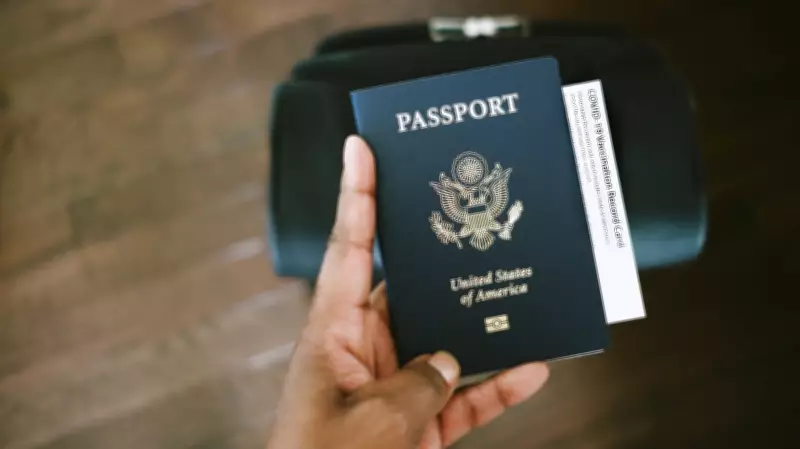
The United States State Department does not explicitly ban smiling in passport photos. Instead, it mandates a "neutral facial expression with both eyes open and mouth closed." Applicants must face the camera directly, looking straight ahead. A State Department spokesperson clarified to HuffPost that smiling is permissible as long as the mouth remains closed and both eyes are open. This means a subtle, closed-mouth smile might pass muster, but showing teeth will not.
The primary driver behind this requirement is the widespread adoption of facial recognition software at airports and border control checkpoints. Karolina Turowska, a biometric photography expert at Passport-Photo.Online, explains that while humans can easily recognize faces across different expressions, machines require consistency. "Algorithms don't work as we do," Turowska said. "To compare a 3D face with a 2D passport photo, they need to pinpoint and measure facial features like the distance between pupils, ears, nose, and mouth. Smiling alters these proportions, making verification harder."

Global Standards and Technological Limitations
This rule against smiling is not unique to the United States. Most countries follow similar guidelines established by the International Civil Aviation Organization (ICAO), which sets global standards for travel documents. However, interpretations of "neutral facial expression" can vary. For instance, France prohibits even neutral expressions with upturned mouth corners.
Katy Nastro, a travel expert with Going, emphasizes that wide, toothy smiles complicate identity verification. "Smiling wide with teeth makes it harder to verify eye color and general face shape," she noted. "With biometric technology needing to confirm your identity, and most border controls using facial recognition, maintaining neutral features becomes crucial."
The current standards were largely updated in 2004 as facial recognition technology evolved. Nastro points out that while faces have always been the standard for biometric identification, computers' limited recognition capabilities necessitated the neutral expression as the gold standard.
Historical Context and Evolving Regulations
Passport photo regulations have not always been so strict. Madison Blancaflor, a senior editor at The Points Guy, recalls that early passport photos had minimal guidelines. "You can find historical examples online of old passports with people playing instruments or wearing distracting hats," she said. Over time, increased security concerns led to more rigorous photo requirements.
Consequences of Non-Compliance
Submitting a non-compliant photo can delay your passport application significantly. Nastro warns that improper photos are the most common cause of processing delays. If you submit a photo with a wide smile, the passport agency will request a new one, sending instructions via letter or email. Failure to provide an acceptable photo by the deadline may result in your application being put on hold indefinitely or rejected.
Additional State Department rules include:
- Eyeglasses are prohibited unless medically necessary, requiring a doctor's signed statement.
- Hats or head coverings are only allowed for religious reasons, with a signed attestation.
- Applicants cannot tighten their mouths, frown, or crinkle their faces.
Children receive slightly more leniency, as maintaining a neutral expression is challenging for them. As long as the child faces the camera with eyes open and the smile doesn't impair facial feature recognition, passport authorities typically accept smiling photos.
For detailed guidelines on lighting, retouching, backgrounds, and other aspects, refer to the State Department website. Ensuring compliance from the start can save time and prevent unnecessary delays in obtaining your travel document.